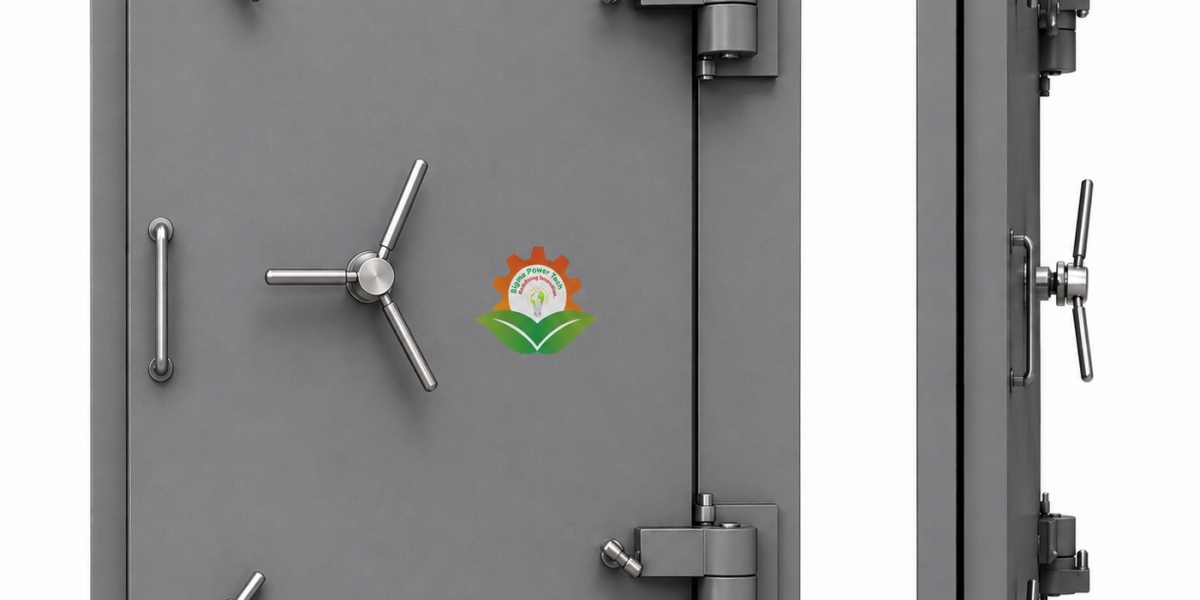

Today, defence installations, embassies, government buildings, oil and gas facilities, power plants, and hazardous industrial units rely on a properly engineered Blast proof door to protect personnel, equipment, and mission-critical operations. Understanding how these doors are designed helps project owners select the right solution based on performance, certification, and long-term reliability rather than appearance or cost alone.
Understanding Blast Proof Door Design
A Blast proof door is a specialised structural door engineered to resist explosive pressure waves without suffering catastrophic failure. Unlike standard industrial or security doors, it functions as part of an integrated blast protection system that includes the door leaf, reinforced frame, heavy-duty hinges, locking mechanisms, anchor assemblies, seals, and surrounding reinforced wall.
Every blast door design begins with a detailed engineering assessment. Designers evaluate the anticipated blast pressure, stand-off distance, occupancy, structural loading, building configuration, and operational requirements before selecting materials and determining the final design.
The goal is not to create a completely rigid door but one capable of absorbing and distributing blast energy while maintaining structural integrity and protecting occupants.
Blast Pressure Ratings and Engineering Validation
Every blast-resistant system must be designed for a defined threat level.
Certified blast resistant doors undergo structural analysis and testing to verify their performance under specified blast conditions. Engineering validation generally includes:
Peak reflected blast pressure
Blast impulse resistance
Door leaf deformation limits
Frame integrity
Hinge performance
Locking mechanism strength
Operational capability after blast loading
Compliance with recognised IS/BIS requirements and internationally accepted blast standards demonstrates that the system has been independently evaluated for its intended application.
Selecting the correct pressure rating is essential because excessive ratings increase project costs, while inadequate ratings reduce overall safety.
Structural Performance Under Blast Loads
When an explosion occurs, the resulting pressure wave reaches nearby structures within milliseconds.
An engineered blast door manages these extreme loads through reinforced steel construction, internal stiffeners, structural ribs, heavy-duty hinges, and multi-point locking mechanisms. Rather than concentrating force at a single location, the assembly distributes energy across the frame and supporting structure.
Well-designed blast resistant door systems help preserve the integrity of protected buildings, minimise debris hazards, and improve occupant safety during blast events.
Frame Anchoring and Wall Integration
Even the strongest blast door cannot perform independently of its supporting structure.
Proper engineering requires the reinforced frame to transfer blast forces safely into the surrounding reinforced concrete or structural steel wall. Critical design considerations include:
Reinforced frame construction
Anchor bolt capacity
Concrete strength
Structural reinforcement
Weld quality
Installation tolerances
Load transfer pathways
Incorrect installation or poor frame integration can significantly reduce the effectiveness of an otherwise certified blast door.
Fire Resistance and Multi-Hazard Protection
Many critical facilities face multiple safety challenges simultaneously.
Modern explosion proof doors and blast-resistant systems can combine several protective functions, including:
Fire resistance
Smoke containment
Corrosion resistance
Airtight sealing
Forced-entry resistance
Weather protection
Integrating multiple protective features enhances overall resilience while reducing lifecycle risks.
Automation and Access Control Integration
Modern security infrastructure requires more than physical strength.
Blast-resistant doors can integrate seamlessly with:
Biometric authentication
RFID access systems
Building Management Systems (BMS)
Remote monitoring platforms
Fire alarm interfaces
Emergency lockdown controls
Automated door operators
These technologies improve operational efficiency while maintaining the structural performance of the blast protection system.
Maintenance and Long-Term Reliability
Engineering performance must be preserved throughout the service life of the door.
Routine maintenance should include inspections of hinges, locking mechanisms, seals, corrosion protection, anchor systems, frame alignment, and automation equipment. Preventive maintenance reduces unexpected failures and ensures the door continues performing according to its certified design specifications.
Proper maintenance also extends operational life and lowers long-term ownership costs.
Key Features of an Engineered Blast Proof Door
A professionally engineered blast door should include:
High structural strength
Certified blast pressure rating
Corrosion-resistant construction
Fire-resistant capability
Airtight sealing
Security-grade locking systems
Reinforced frames and heavy-duty hinges
Long service life
Low maintenance requirements
Compliance with recognised certification standards
Together, these features provide dependable protection in demanding operational environments.
Applications Across Critical Infrastructure
Blast-resistant doors are installed wherever explosion risks or elevated security requirements exist, including:
Defence and military installations
Government and administrative buildings
Embassies and consulates
Oil & gas and petrochemical facilities
Power generation plants
Data centres
Ammunition depots
Industrial process units handling hazardous materials
Each installation is engineered according to site-specific risk assessments and operational requirements.
Cost and Investment Factors
Several engineering variables influence the overall blast door price, including:
Required blast rating or pressure class
Door dimensions and configuration
Steel grade and plate thickness
Frame and anchoring engineering
Testing and certification costs
Automation and locking systems
Installation complexity
Site-specific structural assessment
Long-term maintenance planning
Although higher-performance systems involve greater upfront investment, they deliver superior lifecycle value through improved reliability, durability, and reduced operational risk.
Choosing the Right Manufacturer
When comparing Blast proof door manufacturers in India, buyers should evaluate engineering capability instead of relying solely on catalogue specifications or pricing.
Important considerations include:
Proven industry experience
Blast engineering expertise
Compliance with IS/BIS and recognised international blast standards
Testing and certification credentials
Customisation capability
Precision manufacturing
Professional installation expertise
Comprehensive technical support
After-sales maintenance services
Demonstrated project performance
An experienced Sigma Power Tech manufacturer and service provider delivers complete engineering solutions, including design, manufacturing, installation, testing, and lifecycle maintenance. Every Sigma Power Tech blast door is developed using project-specific engineering calculations to provide dependable protection for defence, industrial, government, and critical infrastructure projects.
Common Mistakes to Avoid
When selecting or designing a blast protection system, avoid these common mistakes:
Choosing products based only on price
Ignoring site-specific blast pressure assessments
Incorrect frame and wall integration
Underestimating fire or corrosion exposure
Skipping certification verification
Neglecting long-term maintenance planning
Overlooking future automation and security upgrades
Addressing these issues early significantly improves long-term structural performance and operational safety.
Conclusion
A properly engineered Blast proof door is far more than a reinforced entrance—it is an essential structural component that protects people, critical assets, and infrastructure against explosive threats. Effective blast door design combines accurate blast analysis, certified engineering, robust frame integration, quality manufacturing, and professional installation to achieve dependable performance. Rather than focusing solely on the initial blast door price, organisations should prioritise verified engineering, certified testing, and long-term structural reliability. Investing in a professionally engineered blast-resistant system ensures lasting protection, regulatory compliance, and operational resilience for the most demanding environments.