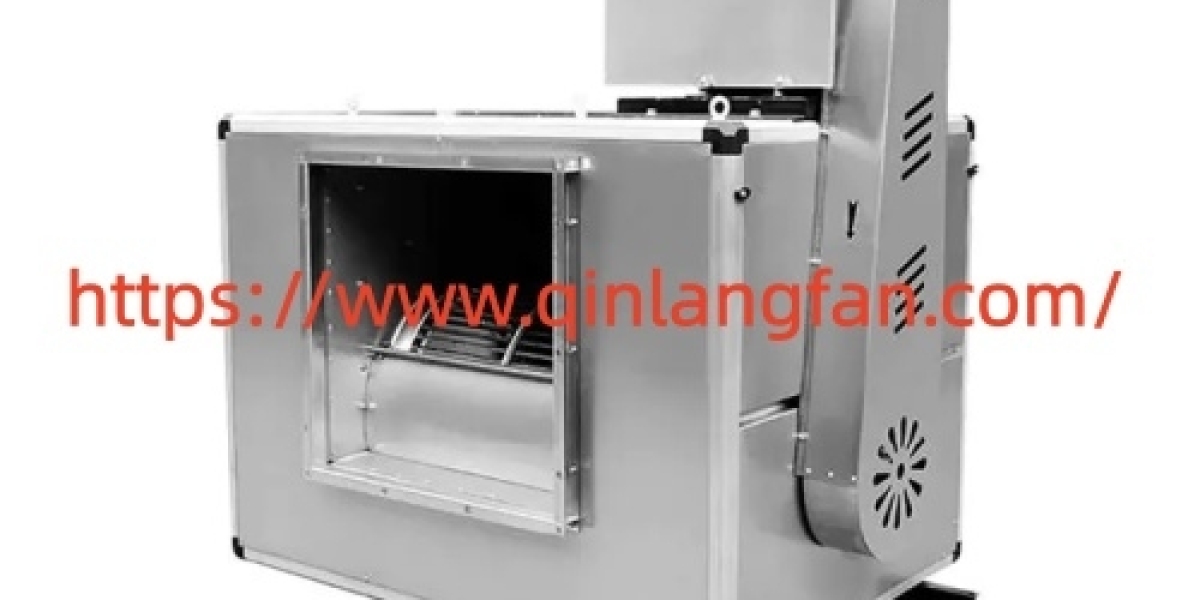

High Pressure Centrifugal Fan Qinlang builds machines that turn rotational energy into the force required to push air through restrictive industrial pathways. When filters load bends multiply or runs stretch longer the unit still delivers the volume the process needs. That ability comes from the way the impeller flings air outward and the housing converts that motion into usable push.
Picture a typical process line. Dust collectors sit downstream. Long straight sections turn into elbows. Temperature changes alter density. Every one of those elements adds friction. A unit sized only for open flow would stall or drop volume the moment those obstacles appear. The design used here builds a steep performance curve so the machine keeps moving air even as total resistance climbs. Operators see steady readings at the far end of the network instead of sudden drops that force downtime.
The same principle shows up in material handling. Fine powders or granules travel inside closed tubes. Velocity must stay high enough to keep particles airborne. If the machine cannot overcome the rising friction the material settles and clogs form. By generating consistent force against that load the unit maintains transport speed without constant manual intervention. Maintenance crews notice fewer blockages and fewer unplanned stops.
Selection starts with the system curve rather than a single number. Engineers calculate friction losses from every length of tube every fitting and every filter. They add a modest margin for future loading. Then they place the operating point on the machine curve near its efficient zone. When those two curves cross at the right spot the unit runs cooler draws less power and experiences less vibration. Soft starts further protect bearings and shafts during each cycle.
Over months the difference appears in the log books. Power meters show lower average draw because the machine is not fighting unnecessary throttling. Vibration readings stay within normal bands. Impeller inspections reveal less uneven wear. In plants that run continuous shifts these small gains add up to measurable savings in both energy and spare parts.
Qinlang focuses on practical matching of machine capability to real pathway resistance rather than adding extra features that complicate daily use. The housing shapes and impeller angles are chosen so the force stays available across the common range of industrial conditions. Once installed the unit settles into a steady rhythm that follows the plant load instead of forcing the plant to adapt to a fixed output.
When a new line is planned or an existing network needs an upgrade the practical next step is to map the full resistance path and then review available models that sit comfortably on that curve. Current product details and performance notes sit at https://www.qinlangfan.com/ ready for direct comparison against site requirements.