
Peyronie’s disease is a penile condition that causes scar tissue to develop inside the penis, often resulting in an abnormal curve during an erection. This condition can affect penile shape, sexual performance, confidence, and overall quality of life. Some men experience only mild curvature, while others develop significant bending, pain, shortening, or difficulty with sexual intercourse.
Although Peyronie’s disease can be concerning, it is generally a noncancerous condition, and treatment is available. Depending on the severity of the symptoms, management may involve observation, medication for pain, plaque injections, penile traction therapy, or surgery.
Recognizing the early signs of Peyronie’s disease and consulting a qualified urologist can help men understand their condition and make informed decisions about treatment.
What Is Peyronie’s Disease?
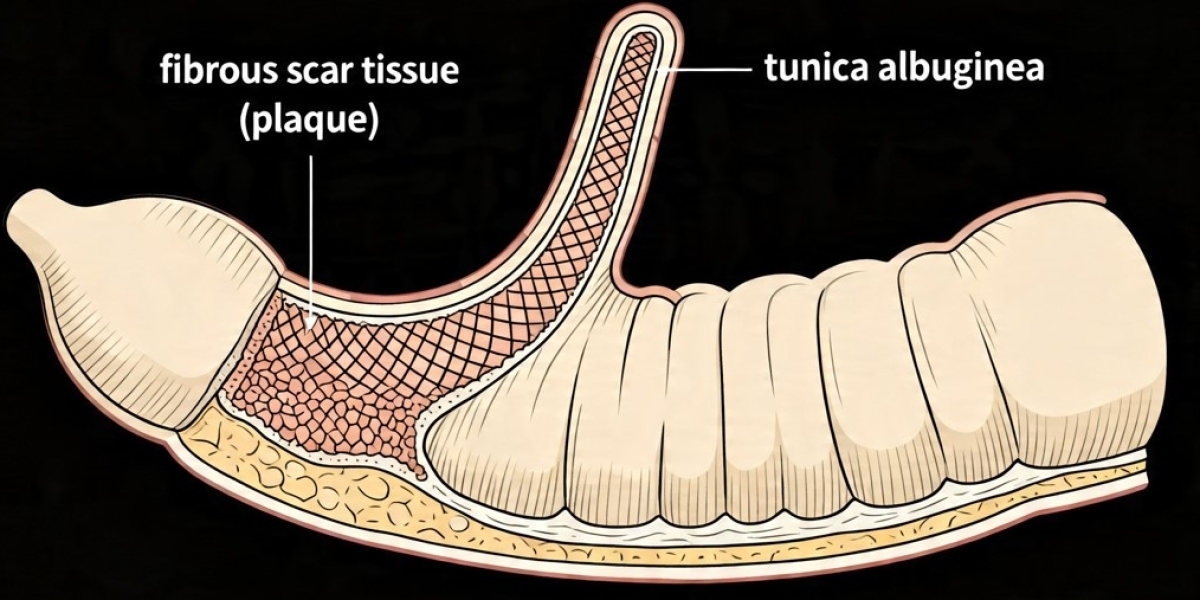
Peyronie’s disease is a condition in which fibrous scar tissue, called plaque, forms in the tunica albuginea, the tough membrane surrounding the erectile chambers of the penis.
Normally, the erectile chambers expand as they fill with blood, allowing the penis to become firm. When scar tissue develops in part of the surrounding membrane, that area may lose some of its flexibility. During an erection, the unaffected tissue expands more easily than the scarred area, causing the penis to bend.
The direction of the curvature depends on the location of the plaque. Some men develop an upward curve, while others experience downward, leftward, or rightward bending. In more complex cases, the penis may develop an indentation or an hourglass-shaped appearance.
Peyronie’s disease can occur at different ages, although it is more frequently diagnosed in middle-aged and older men. The severity varies considerably, and not everyone requires active treatment.
Symptoms of Peyronie’s Disease
The symptoms of Peyronie’s disease may appear gradually or become noticeable over a short period. They can also change as the condition progresses.
1. Abnormal Penile Curvature
A noticeable bend during an erection is one of the main symptoms of Peyronie’s disease. The curvature may be mild or severe and can develop in different directions.
A naturally curved penis does not necessarily indicate a medical condition. However, a new curve that develops in adulthood, particularly when accompanied by pain or a firm lump, should be assessed by a healthcare professional.
2. Plaques or Hard Areas Beneath the Skin
Some men can feel a firm lump or thickened area along the shaft of the penis. This may represent the fibrous plaque associated with the condition.
The size and location of the plaque vary. A physical examination can help determine whether the lump is consistent with Peyronie’s disease or requires further investigation.
3. Pain During an Erection
Pain may occur when the penis becomes erect or during sexual intercourse. It is more common during the active phase, when the plaque and curvature may still be changing.
In many cases, the discomfort gradually decreases as the condition stabilizes. However, the disappearance of pain does not necessarily mean that the curvature has resolved.
4. Changes in Penile Length
Peyronie’s disease can cause the penis to appear shorter during an erection. Scar tissue may restrict normal expansion, particularly when the plaque affects a substantial portion of the surrounding membrane.
This change can cause concern about appearance and sexual confidence.
5. Penile Indentation or Narrowing
Some men develop a narrow section along the shaft, creating an hourglass-like shape. This occurs when part of the penis cannot expand normally because of the scar tissue.
In severe cases, the affected area may become less stable during an erection, making sexual intercourse more difficult.
6. Erectile Dysfunction
Erectile dysfunction is the inability to achieve or maintain an erection firm enough for satisfactory sexual activity. It can occur alongside Peyronie’s disease for several reasons, including changes in penile structure, impaired blood flow, pain, and performance-related anxiety.
Men experiencing both conditions may benefit from an assessment that addresses the curvature and erectile function separately.
7. Emotional and Psychological Effects
Changes in penile appearance can affect self-esteem, intimacy, and relationships. Some men experience anxiety, embarrassment, or fear about sexual performance.
These concerns are common and deserve attention as part of the overall treatment plan. Medical support and open communication with a partner can help reduce emotional stress.
What Causes Peyronie’s Disease?
The exact cause of Peyronie’s disease remains uncertain. However, researchers believe that an abnormal healing response following injury to the penile tissue may contribute to plaque formation.
Penile Trauma
Repeated minor injuries or a more significant injury during sexual intercourse, sports, or an accident may damage the tissues surrounding the erectile chambers.
During healing, excessive scar tissue may develop. Over time, this tissue can become less flexible and cause curvature during erections.
Not every man recalls a specific injury, so the condition can develop without an obvious traumatic event.
Abnormal Tissue Healing
The body normally repairs injured tissue through a controlled healing process. In Peyronie’s disease, the process may result in excessive collagen accumulation and fibrosis.
This scar tissue can interfere with the normal expansion of the penis and contribute to persistent deformity.
Genetic Susceptibility
Some men may have an inherited tendency to develop Peyronie’s disease or other fibrotic conditions. A family history may increase susceptibility, but it does not mean that the condition will inevitably develop.
Age-Related Factors
Peyronie’s disease is more commonly diagnosed in older men. Changes in tissue elasticity and healing may contribute to the increased likelihood of the condition with age, although younger men can also be affected.
Associated Medical Conditions
Diabetes, erectile dysfunction, and certain connective tissue disorders have been associated with Peyronie’s disease. These conditions may influence overall tissue health or sexual function, but the precise relationship varies between individuals.
Understanding the Stages of Peyronie’s Disease
Peyronie’s disease is commonly divided into two phases: active and stable.
Active Phase
During the active phase, the plaque is developing and the penile curvature may change. Men may experience pain during erections, increasing curvature, or the development of new indentations.
This phase can last several months and sometimes extends to approximately 12–18 months, although the duration differs from person to person.
Treatment during this period focuses on assessing progression, managing pain, and considering appropriate nonsurgical options.
Stable Phase
During the stable phase, the curvature generally stops changing significantly. Pain often decreases or disappears, although the physical deformity may remain.
Men with persistent curvature that interferes with sexual intercourse may consider additional treatment. Surgery is usually considered when the condition has stabilized and the deformity is sufficiently troublesome to justify the risks.
How Is Peyronie’s Disease Diagnosed?
An accurate diagnosis helps distinguish Peyronie’s disease from congenital curvature, previous injuries, and other penile conditions.
Medical History
The urologist will ask about the onset of symptoms, changes in curvature, pain, erectile function, and the impact on sexual activity. Previous injuries, medical conditions, and medications may also be discussed.
Physical Examination
The doctor may examine the penis and feel for firm plaques beneath the skin. This can help identify the location of scar tissue and assess the extent of the abnormality.
Assessment of Penile Curvature
Because the curvature is most apparent during an erection, the urologist may request photographs of the erect penis taken from appropriate angles. In selected cases, medication may be used in a clinical setting to produce an erection for a more detailed examination.
Penile Ultrasound
Ultrasound may be recommended to assess the plaque, identify calcification, and examine blood flow. It can be particularly useful when erectile dysfunction is present or when invasive treatment is being considered.
Not every patient requires imaging. The doctor selects tests according to the symptoms and treatment goals.
Treatment Options for Peyronie’s Disease
There is no single treatment that is suitable for every man with Peyronie’s disease. The choice depends on the severity of curvature, the stage of the condition, erectile function, and the impact on daily life.
1. Observation and Regular Monitoring
Men with mild curvature, little pain, and no significant difficulty with sexual intercourse may not need immediate treatment.
Observation allows the doctor to monitor changes and determine whether intervention becomes necessary. Men should seek reassessment if the curvature worsens or new symptoms appear.
2. Medication to Relieve Pain
Anti-inflammatory medicines may help manage pain during the active phase when they are medically appropriate.
These medicines relieve discomfort but do not reliably remove plaques or straighten the penis. A healthcare professional should advise on safe use, particularly for men with kidney disease, stomach ulcers, or cardiovascular conditions.
3. Collagenase Injections
Collagenase clostridium histolyticum is an injectable treatment that breaks down collagen within the plaque. In countries where it is licensed and available for Peyronie’s disease, it may be suitable for selected patients.
Treatment usually involves a series of injections and may include clinician-directed penile modeling.
Possible side effects include swelling, bruising, pain, and, rarely, serious penile injury. Suitability depends on the curvature pattern, plaque characteristics, medical history, and local treatment availability.
4. Other Injectable Treatments
Verapamil and interferon alfa-2b have also been used as injections into penile plaques. However, the evidence supporting these options varies, and their suitability depends on individual circumstances.
A urologist can explain the potential benefits, limitations, risks, and availability before treatment is considered.
5. Penile Traction Therapy
Penile traction therapy uses a medical device to apply controlled stretching to the penis over prescribed periods.
Some men may experience improvements in curvature or preservation of penile length. However, the results vary, and treatment often requires consistent use over weeks or months.
The device should be selected and used according to professional guidance. Forceful stretching or excessive tension may cause injury.
6. Vacuum Erection Devices
Vacuum erection devices create negative pressure around the penis, drawing blood into the erectile chambers. They are sometimes considered when erectile function is also a concern.
Although they may have a role in selected treatment plans, evidence that vacuum devices alone reliably correct Peyronie’s curvature remains limited.
7. Surgical Treatment
Surgery may be recommended when the curvature has stabilized and causes significant difficulty with sexual intercourse or substantial distress.
The main surgical approaches include:
Penile plication: Sutures are placed on the side opposite the curvature to straighten the penis. This procedure can be effective for suitable deformities but may shorten the penis.
Plaque incision or excision with grafting: The surgeon releases or, in selected cases, removes part of the scar tissue and places a graft to help improve penile straightness. This approach may be considered for complex curvature but carries a risk of erectile dysfunction and changes in sensation.
Penile implant surgery: Men with Peyronie’s disease and significant erectile dysfunction that does not respond adequately to other treatments may benefit from a penile implant. Additional straightening procedures may be performed when necessary.
Surgery requires careful assessment and realistic expectations. The best option depends on the curvature, penile length, erectile function, and the patient's goals.
8. Oral Medicines and Supplements
Many supplements and oral medicines are marketed as treatments for Peyronie’s disease. However, no oral medicine or supplement has been established as a reliable way to reverse penile curvature.
Products claiming to dissolve scar tissue or guarantee a permanent cure should be approached cautiously. Medical advice is preferable to self-treatment with unproven products.
9. Shockwave Therapy
Shockwave therapy has been investigated as a treatment for Peyronie’s disease. It may help reduce pain in some patients, but it has not been established as a reliable method for correcting curvature.
Patients should understand this distinction before deciding whether to pursue the treatment.
Peyronie’s Disease and Erectile Dysfunction
Peyronie’s disease can occur alongside erectile dysfunction, and both conditions may need to be addressed for satisfactory sexual function.
Depending on the cause, treatment may include erectile dysfunction medication, assessment of blood flow, plaque-directed treatment, or surgery.
Medicines such as sildenafil and tadalafil may help improve erections in suitable patients, but they do not directly eliminate the scar tissue responsible for Peyronie’s disease.
For men with persistent erectile dysfunction and significant penile deformity, a penile implant may be considered after a specialist assessment.
Can Peyronie’s Disease Heal Without Treatment?
Peyronie’s disease sometimes improves naturally, but the outcome cannot be predicted with certainty.
Pain frequently decreases as the condition stabilizes. However, the curvature, shortening, or indentation may persist even when pain disappears.
Men with mild symptoms may choose monitoring under medical supervision. Those experiencing worsening curvature, persistent pain, or difficulty with sexual activity should consult a urologist.
Treatment can still be considered after the condition has stabilized if the deformity continues to affect sexual function or quality of life.
Potential Complications of Peyronie’s Disease
Although Peyronie’s disease is generally not life-threatening, it can cause several complications.
Persistent penile curvature.
Reduced penile length.
Erectile dysfunction.
Pain during erections or intercourse.
Difficulty with penetration.
Reduced sexual confidence.
Anxiety and relationship difficulties.
The severity of these complications varies. An individualized treatment plan can help address the physical symptoms and emotional effects.
Tips for Managing Peyronie’s Disease
Certain lifestyle measures can support general health and reduce the likelihood of additional injury, although they cannot reliably eliminate the existing plaque.
Avoid Activities That Cause Penile Injury
Avoid forceful bending or sexual activity that repeatedly causes pain. Stop if significant discomfort occurs, and seek medical advice about safer approaches to intimacy.
Maintain General Health
Managing diabetes, blood pressure, cholesterol, and cardiovascular health can support erectile function and overall well-being.
Avoid Unsupervised Straightening Techniques
Do not attempt to correct curvature by forcefully bending the penis or using unregulated stretching devices. These methods may cause further injury.
Maintain Open Communication
Discussing concerns about sexual activity and treatment with a partner can reduce stress and improve mutual understanding.
Consider Emotional Support
Counseling may be useful if the condition causes persistent anxiety, embarrassment, or relationship difficulties.
When Should You Consult a Urologist?
Arrange a medical assessment if you notice a new or worsening curve, a firm lump, pain during erections, penile shortening, indentation, or difficulty achieving or maintaining an erection.
Prompt assessment is especially important when symptoms are progressing or interfering with sexual intercourse.
Seek urgent medical attention following an erection-related injury if you hear a popping sound or experience sudden severe pain, rapid loss of erection, significant swelling, or extensive bruising. These may be signs of a penile fracture or another serious injury.
Frequently Asked Questions About Peyronie’s Disease
Is Peyronie’s disease a serious condition?
It is generally benign and noncancerous, but it can significantly affect sexual function and emotional well-being. Severe curvature or erectile dysfunction may require specialist treatment.
Can Peyronie’s disease disappear completely?
Some symptoms may improve naturally, particularly pain. However, established curvature often persists, and complete spontaneous correction cannot be guaranteed.
Does Peyronie’s disease affect fertility?
It does not usually directly affect sperm production. However, severe curvature or erectile dysfunction may make intercourse difficult and reduce the chance of natural conception.
Can Peyronie’s disease be treated without surgery?
Yes. Observation, pain management, selected injections, and penile traction may be appropriate depending on the individual case. Their effectiveness varies.
Is Peyronie’s disease contagious?
No. It is not contagious and is not classified as a sexually transmitted infection.
Can Peyronie’s disease cause erectile dysfunction?
Yes. Some men experience erectile dysfunction alongside penile curvature. A specialist can assess whether the problem is related to blood flow, penile structure, pain, anxiety, or several factors.
Which specialist treats Peyronie’s disease?
A urologist is the appropriate specialist. A clinician experienced in male sexual medicine or reconstructive urology may be particularly helpful for complex cases.
How long does treatment take?
Treatment duration varies. Monitoring may continue for months, traction therapy may require regular use over weeks or months, and injections generally involve multiple appointments. Surgical recovery depends on the procedure and individual healing.
Conclusion
Peyronie’s disease is a condition involving fibrous scar tissue in the penis that can cause curvature, pain, shortening, indentation, and erectile dysfunction. Although these changes can affect sexual confidence and quality of life, several management options are available.
The appropriate treatment depends on the severity of the curvature, whether the condition is still progressing, erectile function, and individual preferences. Some men require only monitoring, while others may benefit from injections, traction therapy, or surgery.
If you notice a new penile curve, a firm lump, pain during erections, or difficulty with sexual activity, consult a qualified urologist. A proper diagnosis can help identify the most appropriate treatment and establish realistic expectations for recovery.
Medical Disclaimer: This article is intended for general educational purposes and does not replace professional medical advice, diagnosis, or treatment.
Medical References
National Institute of Diabetes and Digestive and Kidney Diseases (NIDDK): https://www.niddk.nih.gov/health-information/urologic-diseases/penile-curvature-peyronies-disease
American Urological Association (AUA): https://www.auajournals.org/doi/10.1016/j.juro.2015.05.098
Urology Care Foundation: https://www.urologyhealth.org/urology-a-z/p/peyronies-disease/printable-version
Mayo Clinic: https://www.mayoclinic.org/diseases-conditions/peyronies-disease/symptoms-causes/syc-20353468