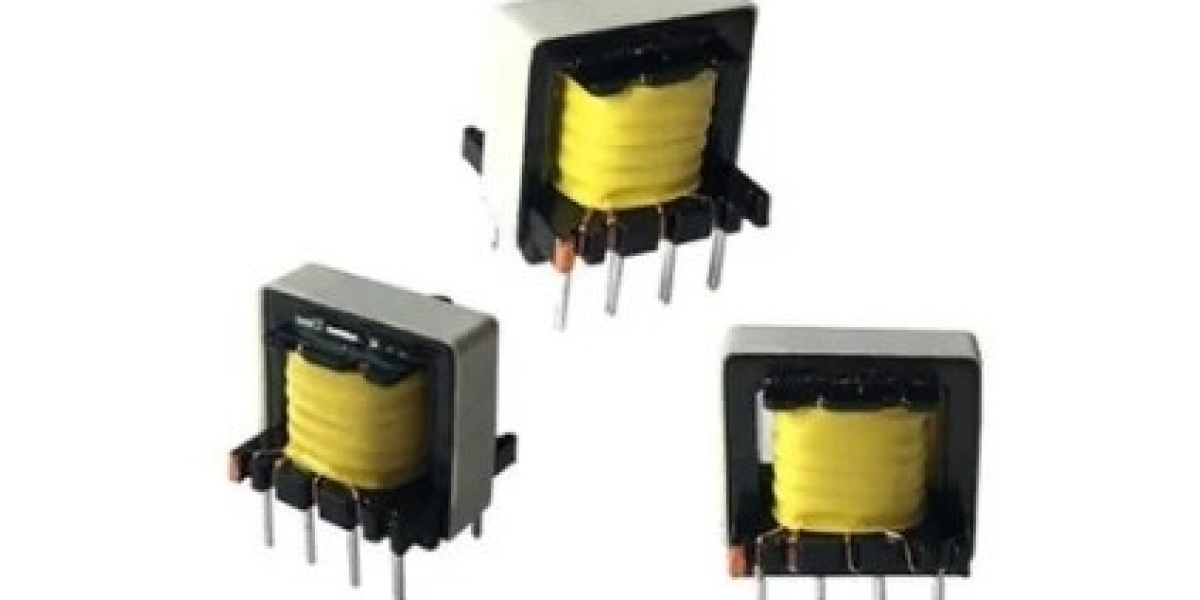

As electronic equipment becomes more compact and functionally integrated, its internal components must work together within increasingly demanding electrical environments. During product development, a High Frequency Transformer Factory can help buyers explore magnetic components designed for switching power supplies, conversion circuits, and other electronic applications. The suitability of a transformer depends not simply on its physical size, but on how its magnetic materials, winding structure, insulation system, and manufacturing quality support the complete circuit.
Core material selection is central to this process. Ferrite is widely used in high-frequency transformer designs because its electrical characteristics help limit certain magnetic losses under suitable operating conditions. However, not every ferrite material behaves identically. Magnetic properties, temperature response, and the intended electrical environment all influence the choice. Buyers should discuss the application with the manufacturer rather than assuming that a familiar core material will perform equally well in every design.
Winding construction requires similar attention. Conductors carry energy between the transformer's circuits, while their arrangement influences resistance, magnetic coupling, and unwanted losses. At higher frequencies, current distribution can become less uniform within conductors, increasing the importance of winding design. Depending on the application, manufacturers may consider specialized wire, layered winding arrangements, or alternative conductor layouts. The most appropriate construction depends on the electrical design and should be evaluated as part of the complete component.
Insulation is another fundamental element. Primary and secondary windings may need electrical separation to support the safety requirements of the finished equipment. Insulating materials, winding spacing, barriers, and the physical arrangement of conductive parts all contribute to the overall design. Buyers should communicate the intended end use and relevant compliance requirements early, allowing the manufacturer to evaluate the insulation system and provide appropriate documentation for the application.
Selecting a suitable transformer starts with understanding the circuit in which it will operate. Engineers should clarify the converter topology, electrical input and output requirements, expected load behavior, available mounting space, and surrounding operating conditions. These details help determine whether a standard product can meet the application's needs or whether a customized design deserves consideration. Clear technical communication also reduces the risk of choosing a component based only on a general product description.
Thermal management becomes particularly important when magnetic components are installed inside compact enclosures. Energy losses in the core and windings produce heat, while nearby components and restricted airflow can affect temperature conditions. A transformer should therefore be assessed in relation to the complete equipment layout, not as an isolated part. Prototype testing under realistic operating conditions can help reveal whether the selected construction works appropriately with the intended cooling arrangement.
Electromagnetic compatibility also influences transformer development. Switching circuits can generate unwanted electrical noise, and transformer construction may affect how that noise couples between circuits or spreads through surrounding equipment. Winding layout, shielding options, insulation arrangement, and connections can all be relevant to the design. These measures need to work alongside the broader circuit layout and filtering strategy, so buyers should discuss electromagnetic requirements with both the transformer supplier and the equipment design team.
Manufacturing consistency helps turn an approved design into a dependable production component. Core assembly, winding placement, insulation application, lead positioning, and soldering or termination work each require suitable process control. Automated winding and testing equipment can support repeatability, while documented inspection procedures help identify deviations. For buyers, understanding how a supplier manages incoming materials, production checks, and final testing offers useful insight into its manufacturing approach.
The physical design also affects installation and maintenance. Lead arrangements, mounting features, component orientation, and accessibility can influence how easily a transformer fits into a circuit board or equipment enclosure. A compact design is valuable only when it remains compatible with the surrounding components and service requirements. Clear identification and orderly connections can further help technicians assemble equipment and trace components during maintenance.
For procurement teams, supplier evaluation should include technical communication as well as production capability. A useful manufacturing partner should be able to review application requirements, discuss material choices, explain available construction options, and clarify the scope of inspection and testing. Sample evaluation can help engineers assess fit, connection arrangements, thermal behavior, and electrical performance before a design is released for wider production.
Ningbo Chuangbiao Electronic Technology Co., Ltd. develops and manufactures electronic transformers, including high-frequency transformer products for power conversion applications. Its manufacturing services cover design coordination, material sourcing, production, quality assurance, and testing. Buyers can provide application information and discuss construction requirements with the company when evaluating a component for a new or existing electronic system. Further product information is available at https://www.nbcbdz.com/product/