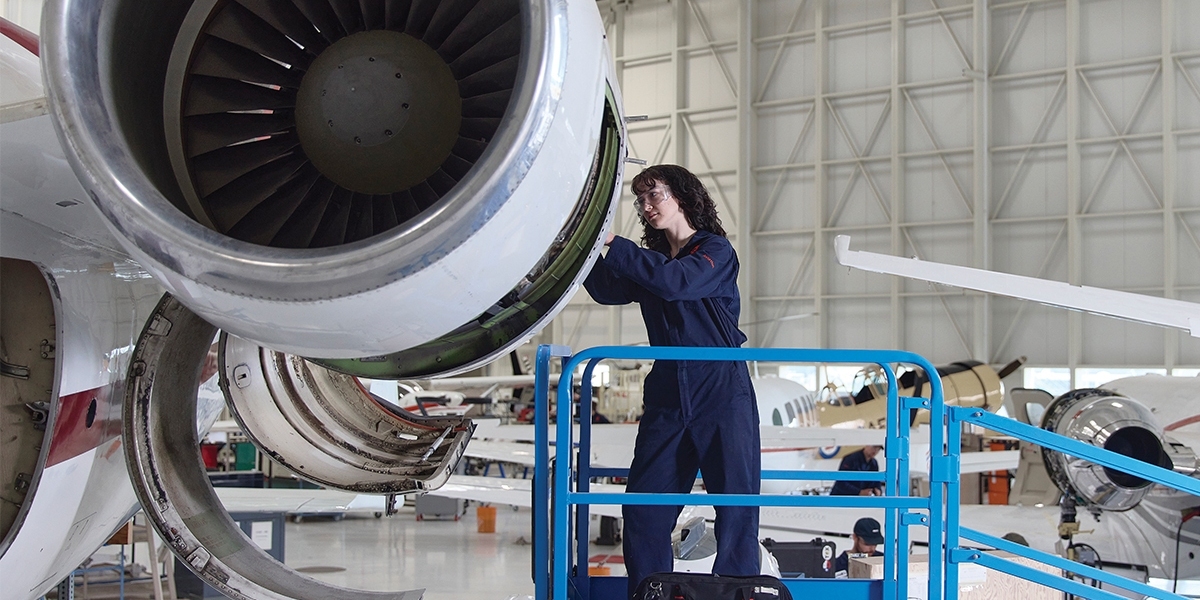

Aviation engineering is evolving as aircraft become more advanced, materials become more complex, and safety expectations continue to rise. Structural integrity and forensic investigations play an important role in identifying damage, understanding component failures, and maintaining aircraft reliability throughout their service life. For aspiring engineers, this field offers opportunities to combine technical knowledge, analytical thinking, and investigative skills to support safer aviation systems.
What is Aviation Structural Integrity and Forensic Engineering?
Aviation structural integrity and forensic engineering focus on understanding how aircraft structures perform under stress, how damage develops, and why structural failures occur. Engineers examine aircraft components, investigate cracks or deformations, review maintenance records, and analyze evidence to determine the possible causes of structural problems.
Aircraft structures experience repeated loading during takeoff, landing, turbulence, pressurization, and flight operations. Over time, these conditions can contribute to fatigue, corrosion, material degradation, or other forms of damage. Engineers use inspections, engineering calculations, testing, and established safety procedures to assess these risks.
An Aviation Structure and Forensic Engineer applies structural engineering principles and investigative methods to aircraft-related problems. The work may involve evaluating damaged components, documenting technical findings, supporting safety investigations, and recommending corrective measures.
Why is This Career Becoming More Important?
The future of aviation engineering will depend on maintaining safety while supporting innovation. Modern aircraft increasingly use lightweight composite materials, advanced alloys, digital monitoring systems, and sophisticated manufacturing processes. These technologies can improve performance, but they also create new challenges for inspection, repair, and failure analysis.
Engineers must understand how different materials respond to stress, temperature changes, vibration, and repeated loading. They may also need to interpret data from structural health monitoring systems that help identify unusual behavior before it develops into a more serious problem.
Another important factor is the continued use of aging aircraft. Older aircraft may require detailed inspections to identify fatigue cracks, corrosion, and deterioration. Forensic engineering helps determine the extent of damage and supports decisions about repair, continued operation, or retirement.
Essential Skills for Aviation Structural Engineers
A successful career in aviation structural engineering requires a strong technical foundation and a commitment to safety. Important skills include:
Structural analysis: Understanding loads, stress distribution, deformation, fatigue, and fracture mechanics.
Materials knowledge: Recognizing how metals, composites, fasteners, and bonded joints behave under different conditions.
Inspection and testing: Understanding nondestructive testing methods such as ultrasonic inspection, radiography, and eddy-current testing.
Technical documentation: Preparing clear reports, recording observations, and explaining engineering conclusions.
Analytical thinking: Connecting physical evidence with calculations, maintenance history, and operating conditions.
Communication: Explaining complex findings to engineers, maintenance teams, investigators, insurers, or legal professionals.
Knowledge of computer-aided design, finite element analysis, and digital inspection tools can also improve career prospects. However, software results must be interpreted carefully and supported by sound engineering judgment.
The Role of an Aviation Forensic Engineer
Forensic engineering investigates how and why an engineering component or system failed. In aviation, this may involve examining a cracked structural member, a damaged fuselage section, a failed attachment, or a component showing unexpected deformation.
A Structural Forensic Engineer typically follows a systematic process. First, the engineer collects available evidence, including photographs, inspection records, maintenance documentation, and component histories. Next, the engineer examines the physical damage and considers possible failure mechanisms.
Engineering calculations, laboratory testing, material analysis, and simulations may help evaluate competing explanations. The engineer then documents the findings, distinguishes established facts from assumptions, and explains the limitations of the investigation.
The objective is not simply to identify damage. It is to understand the evidence, determine the most technically supportable explanation, and help prevent similar failures in the future.
How Expert Witness Work Connects With Structural Engineering
Some structural engineers develop careers that involve litigation, insurance disputes, accident investigations, and technical claims. Their responsibilities may include reviewing engineering evidence, preparing independent reports, and explaining technical findings to nontechnical audiences.
An Expert Witness and Structural Engineer may be asked to assess whether a structure was designed, manufactured, inspected, or maintained in accordance with applicable requirements. In aviation-related cases, the scope of work depends on the engineer's actual expertise and the evidence available.
A Structural Engineer Expert Witness must communicate conclusions clearly, remain impartial, and explain the reasoning behind professional opinions. Credibility depends on technical competence, transparent methodology, and a willingness to acknowledge uncertainty.
Engineers entering this area should develop substantial experience before accepting assignments that require specialist opinions. Aviation investigations may also involve additional regulatory, technical, and evidentiary requirements.
Understanding Standards, Causes, and Failure Analysis
Engineering investigations rely on recognized standards, reliable evidence, and appropriate analytical methods. A Standard and Cause and Forensic Engineer evaluates whether applicable requirements were followed and investigates the mechanisms that may have contributed to damage or failure.
In aviation, relevant requirements can include airworthiness regulations, approved maintenance procedures, manufacturer instructions, and applicable technical standards. The precise requirements depend on the aircraft, component, jurisdiction, and type of investigation.
Engineers may consider several possible causes, including material defects, fatigue, corrosion, excessive loading, manufacturing problems, maintenance errors, or environmental exposure. A careful investigation avoids assuming that one visible defect automatically proves the root cause.
Understanding the difference between a contributing factor and the primary cause is essential. Well-supported conclusions can help organizations improve inspection procedures, maintenance planning, repair decisions, and long-term safety management.
Damage Assessment and Structural Defect Investigation
Accurate damage evaluation helps determine whether an aircraft component can remain in service, requires repair, or needs replacement. A Damage Assessment and Forensic Engineer examines the location, size, severity, and possible progression of structural damage.
Depending on the circumstances, the assessment may include visual inspection, dimensional measurements, nondestructive testing, material evaluation, and engineering analysis. Findings must be compared with the relevant approved repair data and airworthiness requirements.
The term Construction Defect Structural Engineer is more commonly associated with buildings and other constructed facilities than with aircraft engineering. However, the investigative principles can overlap, including examining design decisions, workmanship, materials, documentation, and the origin of defects.
Engineers should be careful to distinguish aviation structures from buildings and infrastructure because each field has its own technical requirements, inspection procedures, and regulatory framework.
Education and Career Pathways
A bachelor's degree in aerospace engineering, mechanical engineering, or a closely related discipline is a common starting point for aviation structural engineering. Some roles may benefit from postgraduate study in structural mechanics, materials engineering, fracture mechanics, or forensic engineering.
Students should focus on subjects such as mechanics of materials, structural analysis, aircraft structures, fatigue and fracture, composite materials, and finite element methods. Internships with aerospace manufacturers, maintenance organizations, testing laboratories, or engineering consultancies can provide valuable practical experience.
Professional development is equally important. Depending on the role and location, engineers may need relevant licenses, certifications, specialist training, or experience with approved aviation maintenance and inspection procedures. Engineers pursuing expert witness work should also learn technical report writing, evidence management, and professional ethics.
A practical career progression may begin with a junior structural engineer or materials engineer role, followed by experience in aircraft inspection, stress analysis, damage evaluation, or failure investigation. Specialist and consulting positions may become available as technical knowledge and professional credibility grow.
Future Trends Shaping Aviation Forensics
Several developments are likely to influence the profession:
Artificial intelligence and predictive maintenance: AI tools can help analyze inspection images, sensor readings, and maintenance data to identify patterns that may indicate emerging structural problems. Human expertise remains necessary to validate results and make safety-critical decisions.
Advanced composite materials: Greater use of composites creates demand for engineers who understand delamination, impact damage, bonding defects, and specialized inspection techniques.
Digital twins and simulation: Digital models can help engineers evaluate structural performance, compare possible failure scenarios, and understand how damage may affect a component.
Sustainable aviation: New aircraft designs, alternative propulsion systems, and evolving materials will introduce fresh structural engineering challenges. Engineers will need to assess new configurations without compromising safety or reliability.
Independent investigations: As engineering systems become more sophisticated, organizations may continue to need qualified specialists who can provide evidence-based opinions on failures, disputes, and corrective actions.
Final Thought
The future of engineering depends on professionals who can combine technical knowledge with careful investigation, practical problem-solving, and a commitment to public safety. Skills in structural analysis, materials evaluation, and evidence-based reporting can also create opportunities across related disciplines, including the work of a Building Retrofit and Structural Engineer. By developing a strong educational foundation and gaining relevant hands-on experience, aspiring engineers can prepare for a career focused on safer, more reliable, and more resilient structures.