
Maintaining software quality is essential for creating applications that function correctly, meet user expectations, and perform reliably. Development teams use several quality management practices to identify problems, prevent recurring errors, and improve the final product. Quality Assurance (QA), Quality Control (QC), and software testing are three important concepts in this process. Although they share the goal of improving software quality, their responsibilities and methods differ. Understanding these differences helps aspiring professionals develop a clear picture of modern software development. Enrolling in Software Testing Training in Chennai can help learners explore the principles and practices used to evaluate software applications.
Understanding the Fundamentals of Quality Assurance
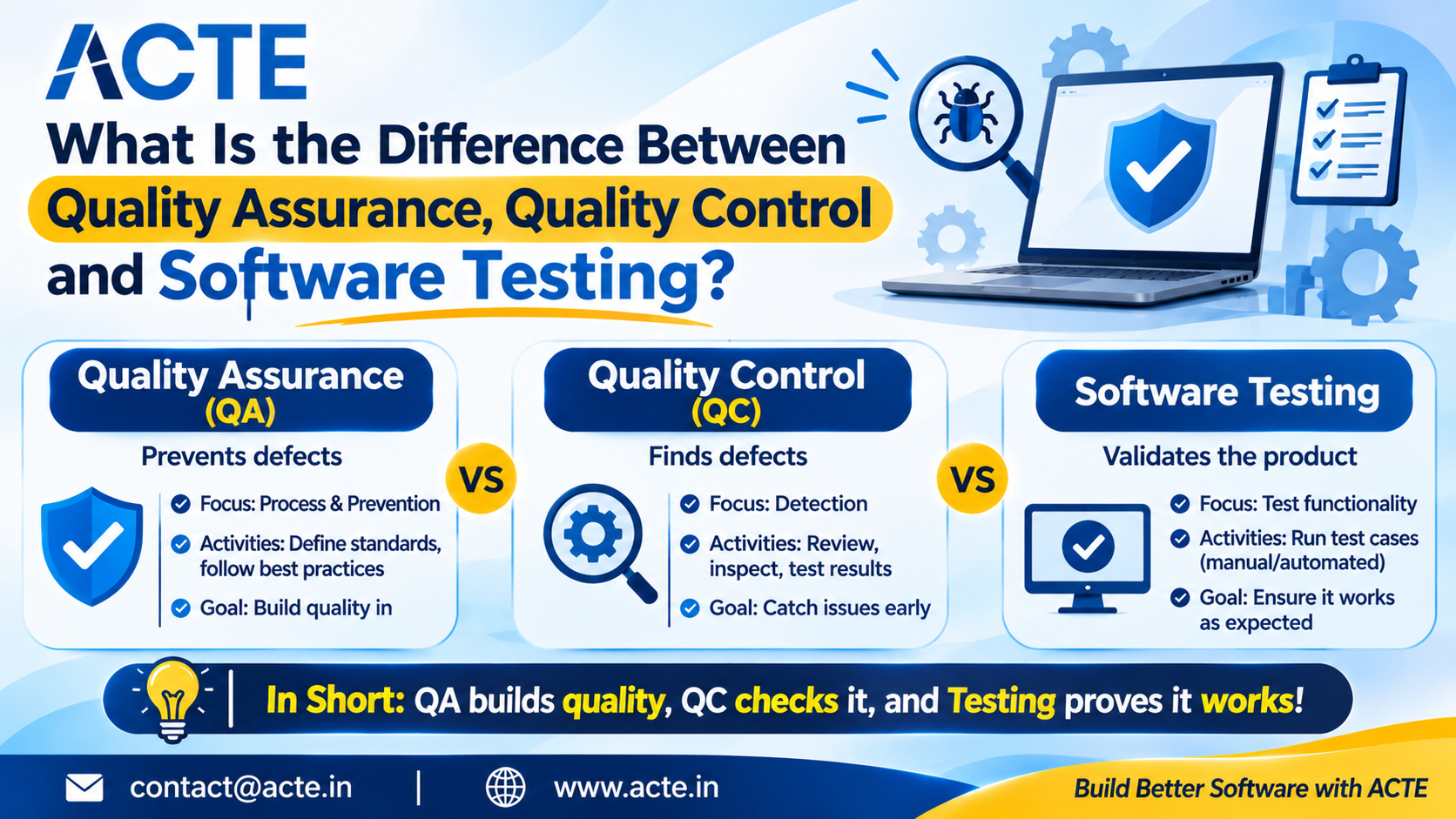
Quality Assurance is a process-driven approach that focuses on preventing defects before they affect the software product. It establishes procedures, development standards, and guidelines that help teams maintain consistency throughout a project. QA professionals may review requirements, assess workflows, conduct process audits, and recommend improvements to development practices. For example, introducing coding standards and regular peer reviews can reduce common programming mistakes. By emphasizing prevention rather than relying solely on defect detection, Quality Assurance helps organizations build more effective development processes and maintain quality throughout the software lifecycle.
Exploring the Objectives of Quality Control
Quality Control concentrates on evaluating software deliverables to determine whether they meet predefined specifications. It helps identify errors, missing requirements, and inconsistencies that could affect the final application. QC activities may include inspections, product evaluations, requirement verification, and reviewing testing outcomes. For instance, a healthcare application must handle patient information accurately and display the correct details to authorized users. Quality Control activities help verify whether these expectations are satisfied. By examining the actual product, QC provides valuable evidence that supports decisions about corrections, acceptance, and release readiness.
How Software Testing Evaluates Application Performance
Software testing examines an application's features and behavior under different conditions to identify defects and verify requirements. Testers prepare test cases, execute them, compare actual results with expected results, and record any failures. Depending on the project, testing may cover functionality, compatibility, performance, security, and usability. For example, testing a travel booking website may involve checking destination searches, booking confirmations, payment processing, and cancellation workflows. Both manual and automated testing methods can be used to evaluate these functions. Learners interested in developing practical testing skills can explore Software Testing Training in Bangalore to understand how testing methods are applied in professional projects.
Major Differences Between Quality Assurance, Quality Control, and Testing
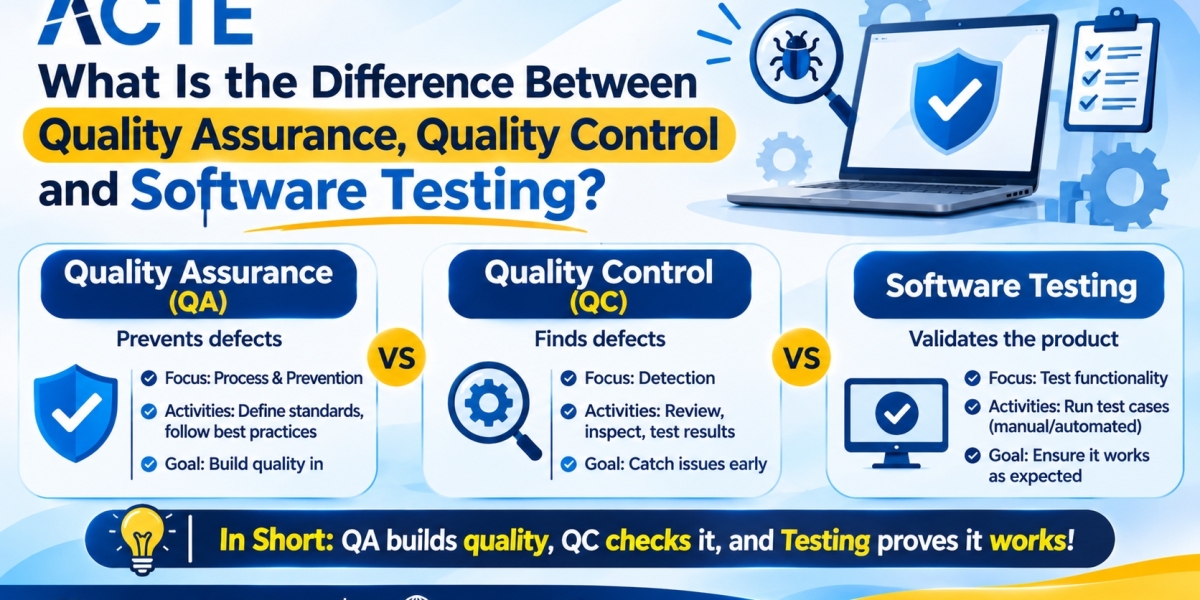
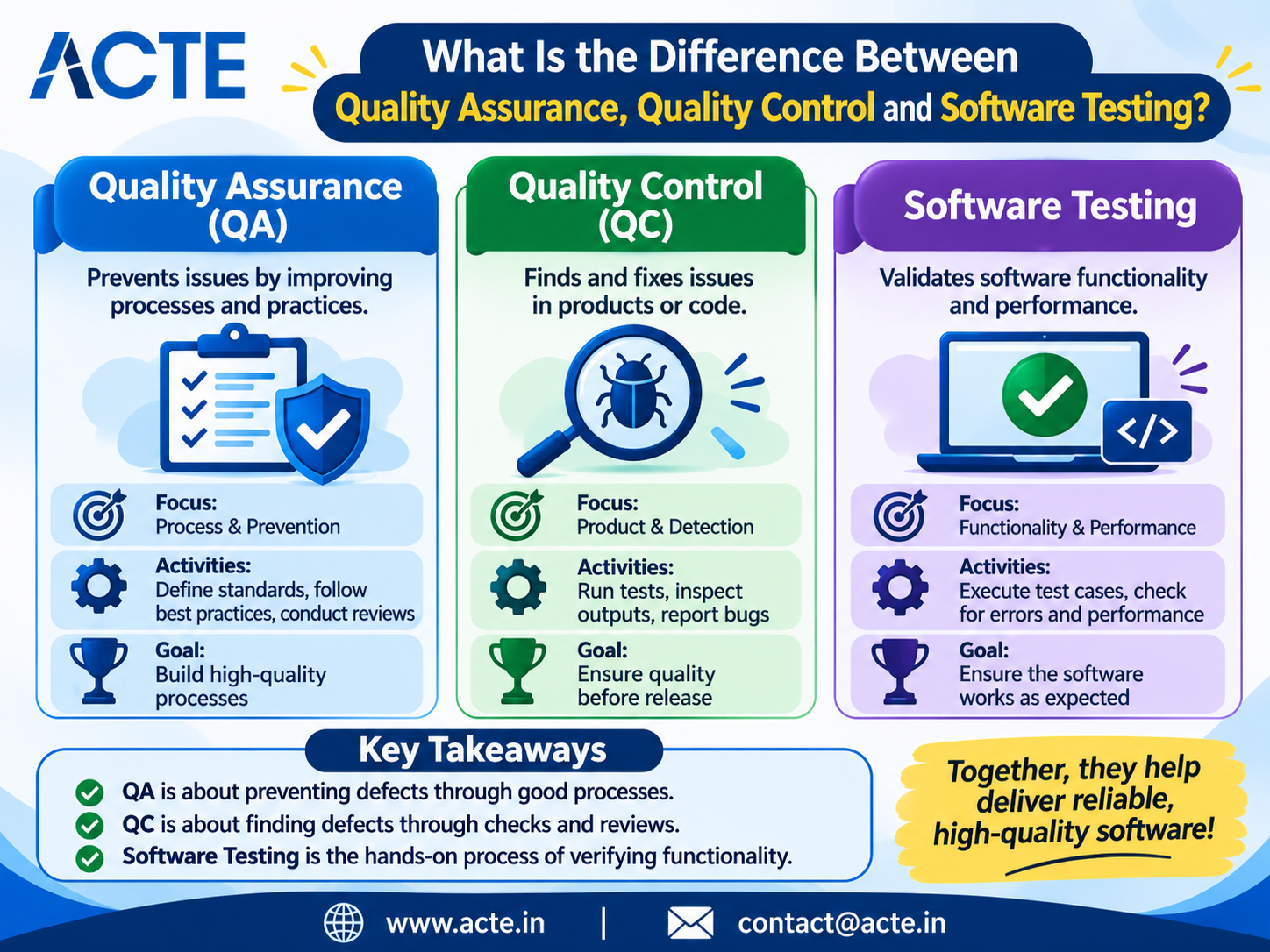
The primary distinction between QA, QC, and software testing is the area each one addresses. Quality Assurance focuses on improving processes to prevent defects. Quality Control examines the product to determine whether it satisfies quality requirements. Software testing evaluates application behavior and identifies defects through planned checks and execution. Testing is generally a key activity within product quality evaluation, while QA covers broader process-related practices. For example, QA may establish testing standards, QC may review whether the deliverable meets requirements, and testers may execute test cases to identify functional issues. Together, these activities provide a more complete approach to software quality management.
Integrating Quality Practices Into the Software Development Lifecycle
Effective software projects incorporate quality activities from planning through deployment and maintenance. During the early stages, QA helps define standards and procedures that guide the team. As requirements and software components are developed, reviews and inspections help identify inconsistencies. Testing then checks whether the application meets its functional and non-functional expectations. When defects are reported, developers make corrections and testers verify the updated behavior. Regression testing may also be used to check that changes have not introduced new problems. Through Software Testing Training in Hyderabad, learners can develop an understanding of how these activities contribute to structured software development and reliable releases.
Important Skills for Quality Assurance and Testing Professionals
Professionals working in software quality need analytical thinking, attention to detail, communication skills, and a systematic approach to problem-solving. Understanding requirements analysis, test planning, test case design, defect tracking, and documentation is particularly useful. Technical knowledge of SQL, API testing, automation frameworks, and programming fundamentals can broaden career opportunities. Beginners may start as software testers or QA analysts and later pursue positions such as automation test engineer, senior QA engineer, or test lead. Practical project work is valuable because it helps learners apply concepts, investigate unexpected results, communicate defects clearly, and understand the collaboration required in software development teams.
Building Industry-Relevant Software Testing Knowledge
Developing software quality expertise requires a balance of conceptual understanding and hands-on practice. Learners can begin by analyzing application requirements, preparing test scenarios, executing test cases, recording defects, and verifying fixes. They can then progress to regression testing, API validation, and automation techniques as their skills improve. Working on realistic applications provides experience with common testing challenges and helps develop structured problem-solving habits. A focused learning option such as the Software Testing Training Course can help aspiring professionals strengthen their understanding of software testing methods and prepare for practical responsibilities in quality-focused roles.
Conclusion:
Quality Assurance, Quality Control, and software testing serve different but complementary purposes in software development. QA improves processes to prevent defects, QC checks whether software meets established standards, and testing evaluates application behavior to uncover issues. Combining these practices helps development teams improve consistency, identify problems before release, and deliver applications that better meet user expectations. Understanding how each discipline works is a useful foundation for professionals who want to pursue careers in software quality and testing.