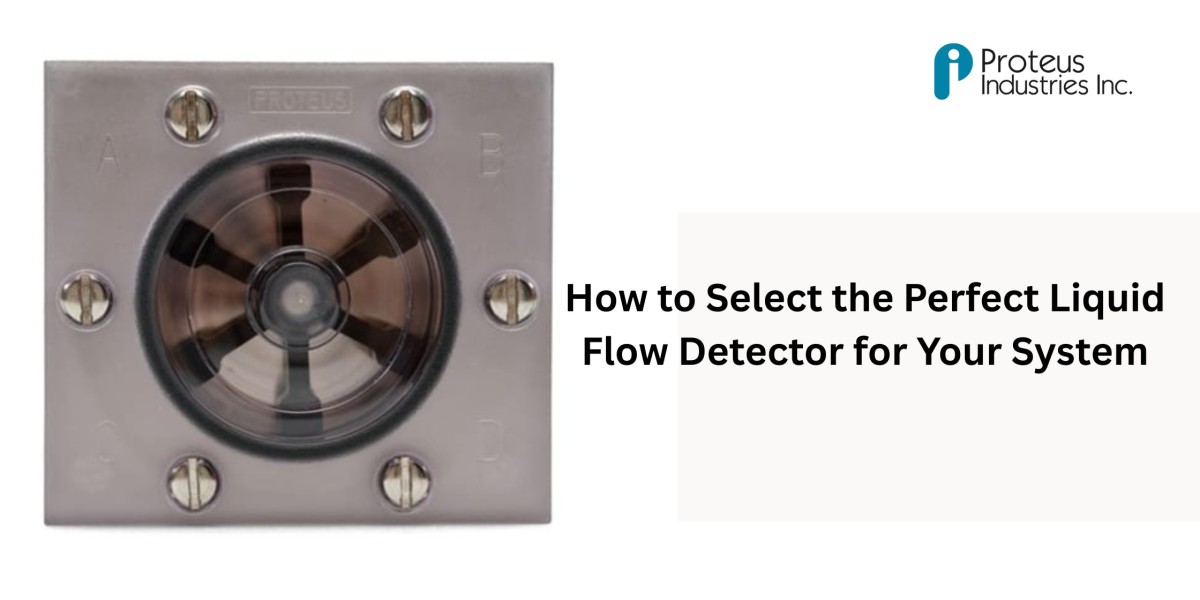

In modern industrial processes, precise monitoring of fluid movement is crucial for maintaining operational efficiency, ensuring safety, and ensuring product quality. A liquid flow detector serves as a critical component in various systems, providing real-time data about fluid flow rates, volumes, and patterns. Whether you're managing a chemical processing plant, water treatment facility, or manufacturing operation, selecting the appropriate liquid flow detector can significantly impact your system's performance and reliability. The right detector not only ensures accurate measurements but also helps prevent costly downtime, reduces waste, and maintains compliance with enterprise standards. Understanding the nuances of different flow detection technologies and matching them to your specific requirements is crucial for optimal system performance.
What is a Liquid Flow Detector?
A liquid flow detector is an instrumentation device designed to sense, measure, and monitor the movement of liquids through pipes, channels, or conduits. These sophisticated devices convert physical flow parameters into measurable signals that can be displayed, recorded, or used for process control. Flow detectors come in various configurations, employing different sensing technologies, including electromagnetic, ultrasonic, turbine, paddle wheel, thermal, and differential pressure mechanisms.
The fundamental function of a flow detector extends beyond simply indicating flow. Modern devices provide comprehensive data, including instantaneous flow rates, total volume measurements, flow direction, and even fluid characteristics in some advanced models. They typically consist of a primary sensing element that interacts with the flowing liquid and a secondary component that processes and transmits the signal to control systems or display units. The versatility of these instruments enables them to handle a wide range of applications, from measuring potable water in municipal systems to monitoring corrosive chemicals in industrial environments.
How Does a Liquid Flow Detector Work?
The operational principle of liquid flow detectors varies significantly based on their design type. Electromagnetic flow detectors, for instance, operate on Faraday's Law of electromagnetic induction, where a magnetic field is applied perpendicular to the flowing conductive liquid, generating a voltage proportional to the flow velocity. Ultrasonic detectors utilise sound waves transmitted through or around the liquid to measure flow based on transit time differences or Doppler frequency shifts.
Mechanical flow detectors utilise physical components, such as turbine wheels or paddles, that rotate in proportion to the flow velocity. The rotational speed is then converted into electrical signals through magnetic pickups or optical sensors. Thermal flow detectors measure heat dissipation from a heated element, where faster flows carry away more heat, creating a measurable temperature differential. Differential pressure detectors utilise flow restrictions, such as orifice plates or venturi tubes, to create pressure drops that correlate with flow rates according to established mathematical relationships.
The choice of detection mechanism affects accuracy, installation requirements, maintenance needs, and suitability for specific liquids. Some detectors require direct contact with the fluid (intrusive). In contrast, others can measure flow from outside the pipe (non-intrusive), offering advantages in specific applications such as measuring corrosive or contaminated liquids.
Who Needs a Liquid Flow Detector?
Liquid flow detectors are indispensable across numerous industries and applications. Water and wastewater treatment facilities rely heavily on these devices to monitor distribution systems, ensure proper dosing of treatment chemicals, and track consumption patterns. Chemical and petrochemical industries require precise flow measurement for batch processing, blending operations, and custody transfer applications where accurate volume tracking is financially critical.
Manufacturing operations utilise flow detectors for coolant monitoring, lubrication systems, and process control in various industries, including food and beverage, as well as pharmaceuticals. HVAC systems rely on flow measurement to optimise heating and cooling efficiency in commercial and residential buildings. Agricultural operations utilise flow detectors for irrigation management and fertiliser application systems.
Additionally, energy production facilities, including power plants and oil refineries, utilise sophisticated flow detection systems to monitor cooling water, steam, and various process fluids. Environmental monitoring agencies use flow detectors to track water usage, manage resources, and ensure regulatory compliance. Even smaller applications, such as swimming pools, aquariums, and laboratory equipment, benefit from accurate flow monitoring for maintaining optimal conditions and preventing equipment damage.
Why is Choosing the Right Flow Detector Important?
Selecting an inappropriate flow detector can lead to numerous operational challenges and financial consequences. Inaccurate measurements can lead to product quality issues, wasted materials, or inefficient processes, ultimately resulting in increased operational costs. In critical applications, flow measurement errors can compromise safety, potentially leading to hazardous conditions or environmental violations.
Different liquids possess varying properties such as viscosity, conductivity, temperature, and corrosiveness, all of which affect detector performance. A detector optimised for clean water may fail when used with viscous oils or slurries. Similarly, the flow profile within pipes, whether laminar or turbulent, influences measurement accuracy depending on the detector technology employed.
Economic considerations also play a significant role. Initial purchase cost must be balanced against long-term reliability, maintenance requirements, and energy consumption. A lower-cost detector with frequent calibration needs and shorter lifespan may prove more expensive than a premium option with minimal maintenance requirements.
Furthermore, installation constraints such as available pipe space, electrical power availability, required accuracy levels, and environmental conditions all influence the appropriate choice. Process requirements, including flow range, response time, output signal type, and integration with existing control systems, must also be carefully evaluated to ensure seamless operation and optimal return on investment.
How to Choose the Right Liquid Flow Detector for Your System?
Begin by thoroughly analysing your liquid characteristics, including viscosity, temperature range, pressure conditions, electrical conductivity, chemical composition, and presence of suspended solids or gases. These properties will immediately eliminate certain detector types while favouring others.
Determine your accuracy requirements carefully. Industrial custody transfer applications may require accuracy within 0.5% of the reading, while simple indication applications may function adequately with 5% accuracy. Consider whether you need instantaneous flow rate, total volume, or both, and whether bidirectional flow measurement is necessary.
Evaluate your pipe size and available installation space. Some detectors require substantial straight pipe runs upstream and downstream for accurate measurement, while others can handle installations with minimal space requirements. Consider whether the pipe can be cut for inline installation or if a non-intrusive clamp-on style is preferable.
Assess the operating environment, including ambient temperature extremes, exposure to moisture or corrosive atmospheres, vibration levels, and hazardous area classifications that might require intrinsically safe or explosion-proof designs. Determine your power supply options and preferred output signals—whether analogue (4-20mA), digital (pulse, frequency), or communication protocols (Modbus, HART).
Budget constraints should encompass not only the initial purchase cost but also installation expenses, required accessories such as control valves or display units, ongoing maintenance costs, and the expected service life of the equipment. Consider the availability of technical support, calibration services, and replacement parts from the manufacturer.
Conclusion
Choosing the right liquid flow detector requires careful consideration of multiple technical, operational, and economic factors. By systematically evaluating your specific liquid properties, accuracy requirements, installation constraints, and budgetary concerns, you can identify the optimal detector technology for your application. The investment in proper selection pays dividends through improved process control, reduced operational costs, enhanced safety, and extended equipment longevity. Whether upgrading existing systems or designing new installations, taking time to match detector capabilities with system requirements ensures reliable performance and maximises the value of your flow measurement investment. Consulting with experienced manufacturers and leveraging their technical expertise can further refine your selection process, resulting in a solution that effectively serves your needs for years to come.