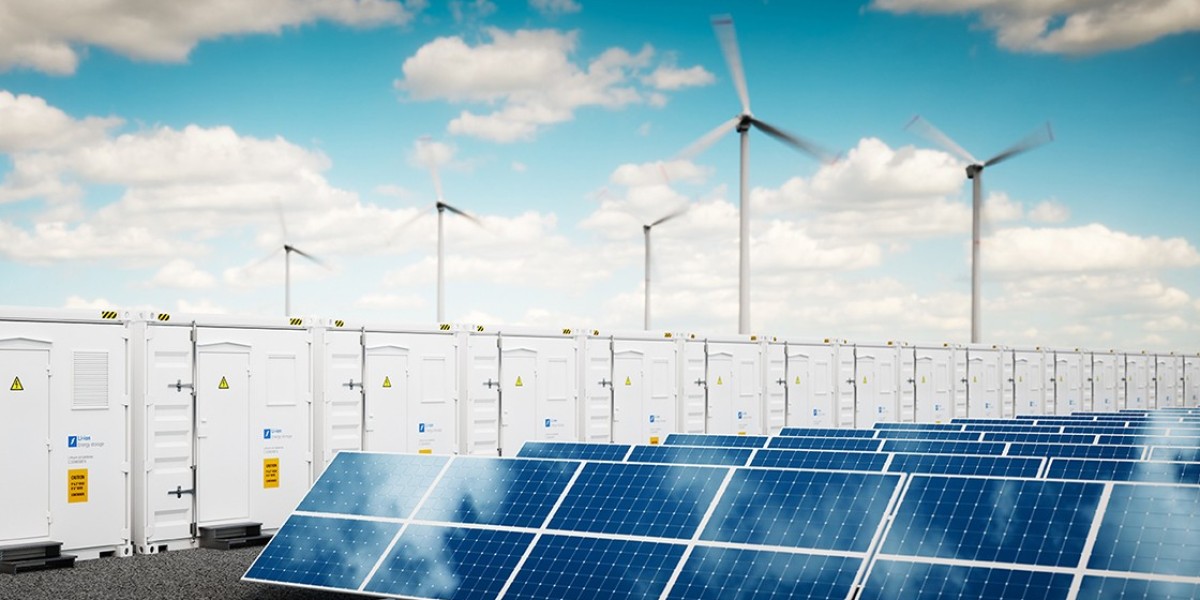

In a world increasingly powered by intermittent renewable energy and rising demand for reliable electricity, modern energy storage has become more than just a convenience — it’s essential. Enter the realm of bess, or Battery Energy Storage Systems, which are rapidly transforming how we manage, distribute, and consume power. By storing energy when it is abundant and releasing it when demand peaks, BESS offers a versatile, efficient solution for utilities, businesses, and homeowners alike. This article explores the inner workings of BESS, examines its benefits and challenges, and looks ahead to how this technology is shaping the future of power management.
What is Battery Energy Storage System (BESS)?
At its core, a Battery Energy Storage System (BESS) is an integrated solution for capturing electrical energy, storing it chemically in batteries, and discharging it as needed. Rather than relying solely on real-time generation and consumption, BESS decouples the time of energy production from when the energy is used. This means energy generated during low-demand periods (or from renewable sources like solar and wind) can be stored and dispatched during high-demand intervals, outages, or other critical moments.
A typical BESS installation comprises battery modules, power conversion systems (such as inverters), battery management systems (BMS), thermal management, and monitoring infrastructure. System sizing can range from small residential setups to massive grid-scale installations capable of supporting entire communities or industrial operations.
Because BESS offers flexibility, scalability, and rapid response, it’s gaining traction worldwide — from stabilizing grids in developed power markets to providing backup power in remote or under-served regions.
Why Modern Battery Energy Storage Matters
1. Integration of Renewables
One of the biggest challenges with solar and wind energy is intermittency — the sun doesn’t always shine, and the wind doesn’t always blow. Without storage, much of renewable generation can be wasted or underutilized. BESS changes that dynamic by capturing excess energy when production spikes (e.g., midday solar peaks) and discharging it when generation is low but demand remains high (e.g., evening hours).
2. Grid Stability and Flexibility
Electric grids were historically designed around predictable generation patterns from conventional sources such as coal, natural gas, or hydro plants. But as renewables and decentralized generation proliferate, grids must become more flexible and responsive. BESS can respond to grid needs in milliseconds — stabilizing frequency, absorbing surplus energy, or injecting power when required.
3. Peak Demand Management
Power demand often varies significantly throughout the day, with peaks that strain generation capacity and infrastructure. By discharging stored energy during these peaks, BESS reduces the need for utilities to fire up costly peaker plants, postpones infrastructure upgrades, and can cut overall energy costs.
4. Resilience and Backup
From natural disasters to grid failures, power outages can disrupt businesses, essential services, and homes. BESS offers a resilient backup solution — instantly available and often renewable-friendly. For critical infrastructure like hospitals, data centers, or telecommunications, this reliability is invaluable.
5. Environmental and Economic Benefits
Storing and using energy efficiently reduces overall waste, decreases reliance on fossil-fueled peaker plants, and lowers carbon emissions. Over time, the cost savings from optimized generation, reduced peak loads, and deferred grid investments can offset the initial cost of installing BESS.
Types of BESS Technologies
Not all battery systems are created equal. Different technologies offer trade-offs in cost, energy density, lifespan, safety, and application suitability. Below are some of the predominant types in use today:
Lithium-ion Batteries
Lithium-ion (Li-ion) remains the most widely adopted battery chemistry for BESS installations worldwide. It offers high energy density, efficient round-trip efficiency (often 85–95%), and relatively compact footprint. Because of these characteristics, Li-ion BESS is ideal for applications requiring frequent cycling, high power output, and space efficiency — such as commercial buildings, residential solar-plus-storage setups, and grid-scale storage.
However, Li-ion does have downsides: thermal sensitivity requires robust cooling or heating systems, and degradation over time (especially under deep or frequent cycling) is a concern. Additionally, the mining and sourcing of lithium and other materials raise environmental and supply-chain considerations.
Flow Batteries
Flow batteries store energy in liquid electrolytes contained in external tanks. During charge and discharge, the electrolytes flow through a cell stack to store or release energy. The primary advantage of flow batteries is their scalability: one can simply increase the size of electrolyte tanks to store more energy, without significantly increasing the footprint of the cell stack. They also tend to have long lifespans and can withstand many charge-discharge cycles without rapid degradation.
Flow batteries are well-suited for large-scale, long-duration energy storage where space and weight are less constrained — for example, utility-scale storage for renewable energy load leveling or microgrids serving industrial loads. Their downsides include lower energy density compared to Li-ion and higher upfront capital costs (especially for smaller installations).
Lead-Acid Batteries
Once the standard for backup power solutions (like UPS systems), lead-acid batteries are now less common in modern BESS deployments, but they still have a role — particularly where cost is a major constraint and performance demands are modest. They are inexpensive and well-understood, but they suffer from lower depth-of-discharge, shorter cycle life, and heavier weight compared to newer chemistries.
For long-term and high-performance storage needs, lead-acid tends to fall short — but for occasional backup, emergency power, or budget-limited setups, it remains a viable, albeit increasingly outdated, option.
Emerging and Advanced Technologies
As the demand for energy storage grows, research and development are pushing boundaries. Emerging battery technologies — such as solid-state batteries, sodium-based batteries, metal-air, and advanced flow chemistries — promise longer life cycles, safer operation, higher energy densities, and lower environmental impact. While many of these remain in development or early deployment stages, they represent the future of BESS.
Moreover, hybrid storage systems combining batteries with other storage media — such as thermal storage, compressed air, or hydrogen — are being explored to provide longer-duration storage or enhance grid resilience and flexibility.
Key Components of a BESS Installation
A fully functional BESS setup involves more than just batteries. Below are the core components that make the system work cohesively:
Battery Modules: The heart of any BESS — these are the actual cells or battery units (e.g., Li-ion packs, flow battery stacks).
Power Conversion System (PCS): Typically includes inverters (to convert DC battery power to AC for grid or load use) and rectifiers for charging. Inverters may be bidirectional to allow both charging and discharging.
Battery Management System (BMS): Monitors battery health, voltage, temperature, state-of-charge (SoC), and ensures safe and efficient operation. BMS is critical to prevent over-charging, thermal runaway, and to maximize battery life.
Thermal Management: Batteries generate heat during operation. Thermal systems — such as cooling or heating — maintain optimal temperature ranges to maximize performance, safety, and battery life.
Energy Management and Control Software (EMCS): Software that supervises charging/discharging cycles, load forecasting, grid interaction, and can automate when to store or release energy based on price signals, demand, or renewable generation forecasts.
Safety, Enclosure, and Cooling Infrastructure: Including fire suppression, ventilation, physical enclosures, and required safety mechanisms (especially for large commercial or utility-scale BESS).
Monitoring & Communication: Remote monitoring, data logging, alarms, and communication systems (often SCADA or similar) to integrate with grid operations or facility energy management.
Collectively, these components ensure BESS installations are safe, efficient, durable, and responsive to dynamic energy needs.
Applications and Use Cases
Grid Stabilization and Frequency Regulation
Large-scale BESS installations are increasingly used by utilities to stabilize the grid. During times of surging renewable generation, BESS can absorb excess power to prevent overloading. Conversely, during sudden demand spikes or generation drops, BESS can inject power almost instantaneously — helping maintain frequency, voltage and overall stability.
Peak Shaving and Demand Response
Commercial buildings, shopping malls, industries, and residential complexes can deploy BESS to “peak-shave”: discharging stored power during periods of high consumption to avoid high tariffs or demand charges. This strategy can significantly cut energy bills and reduce stress on the grid during peak hours.
Renewable Integration: Solar & Wind
For solar- or wind-dependent installations, BESS enables clean energy to be utilized whenever needed, not just when generation occurs. For example, solar energy generated during the day can be stored and used during evening hours — boosting self-consumption and reducing reliance on the grid or fossil-based backup generation.
Microgrids and Off-Grid Systems
In remote areas, islands, or off-grid communities where connection to central power grids is unreliable or non-existent, BESS — often combined with solar or wind generation — enables microgrids that deliver stable and continuous power. This can power homes, clinics, schools, irrigation systems, or small industries sustainably and independently.
Backup Power and Resilience
Businesses, data centers, hospitals, telecom towers, and critical infrastructure can benefit from BESS as reliable, fast-response backup power during grid outages. Compared to diesel generators, BESS offers cleaner, quieter, and more responsive backup solutions with lower maintenance needs.
Energy Arbitrage and Time-of-Use Optimization
With dynamic electricity pricing becoming more common, BESS lets users buy electricity when it’s cheap (or generate with onsite renewables) and consume or sell it back to the grid when prices peak. This arbitrage opportunity can generate cost savings or even revenue for utilities, businesses, and prosumers.
Benefits of BESS for Efficient Power Management
The adoption of BESS brings several compelling benefits across different scales — from households to national grids:
Enhanced Energy Efficiency: By smoothing out generation and consumption mismatches and reducing energy wastage.
Reduced Fuel Dependency: Especially for backup or peak power — reducing reliance on diesel or gas peaker plants.
Lower Operating and Maintenance Costs: Compared to traditional generators, batteries require less maintenance, no fuel logistics, and fewer operational constraints.
Environmental Sustainability: By facilitating renewable integration and reducing reliance on fossil fuels, BESS reduces greenhouse gas emissions and pollution.
Grid Cost Savings: Utilities can avoid or defer expensive investments in new power plants, transmission lines, or peaker infrastructure by using BESS for demand balancing, frequency regulation, and load leveling.
Improved Reliability and Resilience: For critical infrastructure and end-users, BESS ensures stable, uninterrupted power, even during outages or blackouts.
Scalability and Flexibility: Systems can be expanded modularly — from small residential units to large grid-scale installations — and configured to match specific energy needs.
Challenges and Considerations
Despite its many advantages, BESS adoption does come with some challenges — technical, economic, and regulatory. Understanding these hurdles is key to successful deployment and long-term viability.
Initial Capital Cost
The upfront cost of acquiring and installing a BESS — including batteries, inverters, thermal management, and control systems — can be substantial. Depending on the chemistry and size, the payback period may extend over several years.
Battery Lifespan and Degradation
Battery performance degrades over time — especially under frequent deep cycling, high temperatures, or heavy use. For example, Li-ion batteries may lose storage capacity over repeated charge/discharge cycles, reducing efficiency and requiring eventual replacement.
Thermal Management and Safety Risks
Improper thermal regulation can lead to overheating, reduced battery life, or in worst-case scenarios, fire or thermal runaway — especially for high-density battery packs. Large-scale installations must invest in robust cooling, fire suppression, and safety systems.
Environmental and Recycling Concerns
Battery production involves mining raw materials (like lithium, cobalt, nickel), which has environmental and social impacts. Additionally, safe disposal or recycling of spent batteries remains a challenge — though progress is being made.
Regulatory, Grid Integration, and Interconnection Issues
In many regions, regulations and standards around energy storage integration, grid interconnection, and utility compensation models are still evolving. Without clear frameworks, deployment may face bureaucratic hurdles, delays, or suboptimal economics.
Energy Efficiency Losses
While round-trip efficiency of modern batteries is high, there are still losses during charge and discharge cycles. Over many cycles, these losses can accumulate. In some applications — particularly where energy is stored for long periods — the efficiency penalty may offset benefits.
Future Trends & Innovations in BESS
As demand for efficient, clean, and reliable energy storage grows, the next generation of BESS technologies and business models is already emerging. Here are some of the most promising trends to watch:
Advanced Battery Chemistries
Research into solid-state batteries, sodium-ion, metal-air, and other advanced chemistries promises higher energy density, longer life, faster charging, and improved safety. Solid-state batteries, for example, replace liquid electrolytes with solid materials — reducing flammability risks and enabling more compact, higher-capacity storage.
Second-Life Batteries and Circular Economy
Used electric vehicle (EV) batteries, which may no longer meet EV requirements but still retain substantial capacity, are being repurposed for stationary energy storage. This “second life” approach reduces waste, lowers costs, and supports a circular economy — giving batteries extended usefulness after their automotive career.
Hybrid Storage Systems
Combining batteries with other storage technologies — such as thermal storage, compressed air, hydrogen, or supercapacitors — can address limitations like duration, dispatchability, or efficiency. For example, a hybrid battery–hydrogen system could provide long-term storage for seasonal renewable energy excess.
Modular and Containerized BESS Solutions
Pre-packaged, containerized BESS units that include battery modules, inverters, BMS, thermal control, and fire suppression are making deployment faster and more standardized. These modular systems simplify installation, reduce engineering time, and make scalability easier — from small commercial sites to large utility projects.
Smart Energy Management & AI Optimization
Using AI, machine learning, and advanced analytics, energy storage systems can now optimize charging/discharging based on forecast, demand patterns, price signals, and grid conditions. Smart control systems also enable predictive maintenance, lifecycle optimization, and integration with distributed energy resources.
Regulatory and Market Evolution
As more grids globally integrate renewables and follow net-zero goals, regulations are adapting to accommodate energy storage. Incentives, supportive tariffs, storage-specific grid interconnection frameworks, and energy-as-a-service business models are likely to proliferate — driving further BESS adoption.
BESS in Action: Real-World Use Cases
To make these concepts concrete, let’s consider a few real-world scenarios where BESS is already making a difference:
Urban Commercial Building with Solar + Storage
Imagine a large office building in a city — equipped with rooftop solar panels and a BESS. During sunny midday hours, solar generates more power than the building uses. Rather than feeding excess electricity back to the grid at low feed-in tariffs, the BESS stores it. Then, during evening hours when electricity demand increases and grid rates are higher, the stored energy powers lighting, HVAC, and office equipment. Result: lower energy bills, reduced demand charges, and greater use of clean energy.
Remote Island Microgrid
For an island not connected to a mainland grid, relying solely on diesel generators is expensive, polluting, and logistically challenging. A hybrid microgrid system — combining solar panels, wind turbines, and a BESS — can provide clean, reliable power around the clock. The BESS stores excess renewable energy when generation exceeds demand, then discharges during low generation periods or at night. This reduces diesel consumption, lowers fuel transport costs, and improves overall energy resilience.
Utility-Scale Grid Stabilization
In regions where renewable penetration is high and generation fluctuates, utilities are deploying large-scale BESS installations to smooth supply. When a cloud passes over a solar farm or a gust of wind subsides, BESS can instantly inject or absorb power, maintaining frequency and voltage stability. This fast response reduces the need for expensive spinning reserves or fossil-based peaker plants.
Data Center Backup and Demand Response
Data centers require uninterrupted power. Instead of relying solely on diesel generators — which can take time to start and are noisy — a BESS can provide instantaneous backup in the event of outages. Moreover, during peak demand or high grid prices, data centers can draw on stored energy — reducing operating costs and minimizing stress on the grid.
Is BESS the Right Choice for You?
Whether BESS is appropriate depends on your goals, resources, and context. Here are some guiding questions and considerations:
What’s the main objective? Are you trying to reduce energy bills, manage demand charges, integrate renewables, ensure backup power, or support grid services? BESS suits many of these goals — but each application may require different battery types, sizes, and configurations.
What’s the scale of power usage? Small homes may need only a few kilowatt-hours; commercial/industrial facilities or utility projects may require megawatt-hours or more. Larger-scale projects often get more benefit from economies of scale.
What’s your budget and payback horizon? Initial costs can be high, but savings from lower energy bills, avoided grid upgrades, or generator fuel costs — plus possible incentives — might offset the investment over time.
Do you have the infrastructure and environment to support BESS? Proper thermal management, safety systems, and space for battery racks and inverters are critical — especially for larger installations.
Are you thinking long-term? Consider battery lifespan, maintenance, potential degradation, and eventual replacement or recycling costs.
If you’re a homeowner looking to pair solar energy with storage — or a business aiming to manage peak power costs or backup reliability — BESS can deliver significant value. If you’re a utility, BESS offers tools for stability, flexibility, and cost-effective grid management.
Future Outlook: What’s Next for Energy Storage
The future of energy storage is bright. As battery costs continue to fall, and as technology advances make storage safer, denser, and longer-lasting, BESS will play an increasingly central role in global energy systems. Some trends to watch:
Mass Adoption of Renewable + Storage Projects: As countries accelerate renewable energy deployment, pairing generation with storage will become standard — not optional — for utility-scale solar and wind farms.
More Flexible, Modular Deployment: Containerized BESS units, “storage as a service” models, and modular expansion will lower barriers for small and medium enterprises to access storage solutions.
Grid-Scale Storage for Peak Demand and Blackout Prevention: With the increase in extreme weather events, aging infrastructure, and rising energy demand, utilities will lean more on BESS to ensure resilience, avoid blackouts, and reduce dependence on fossil-fuel backup plants.
Decentralized Energy Systems and Prosumer Growth: Households and small businesses will increasingly become “prosumers” — generating, storing, and selling energy — enabling more decentralized, resilient, and efficient grids.
Advances in Battery Chemistry and Recycling: As second-life batteries, renewable-friendly chemistries, and improved recycling infrastructure mature, the environmental footprint of BESS will shrink, making it a more sustainable long-term solution.
Smart Storage with AI, Forecasting, and Demand Prediction: Advanced energy management will leverage AI and big data to optimize storage operation — charging when demand (or prices) are low, discharging at optimal times, extending battery life, and dynamically interacting with grid signals.
In short: BESS is no longer a niche or emerging technology. It has become a foundational pillar in modern energy systems — enabling cleaner, more efficient, and resilient power networks.
Conclusion
Modern Battery Energy Storage Systems (BESS) are redefining how we generate, store, and consume electricity. By offering flexibility, scalability, and efficiency, BESS bridges the gap between intermittent renewable energy and consistent power demand. From stabilizing national grids and enabling renewable integration to cutting electricity costs and ensuring backup power for homes and businesses, the applications are broad and impactful.
While challenges — such as upfront costs, battery degradation, thermal management, and environmental considerations — remain, ongoing advancements in battery chemistry, system design, and smart energy management are steadily addressing them.