
Medication dosing errors are more common than many people realize. A small miscalculation can alter how a medicine works in the body, leading to ineffective treatment or unwanted side effects. This is especially important when drugs are prescribed in milligrams but taken in liquid form using milliliters. Understanding how to convert mg to mL correctly helps ensure every dose is safe, accurate, and effective.
Why Accurate Dose Conversion Matters
Many liquid medicines are prescribed by weight (mg) but administered by volume (mL). This difference can create confusion for patients, caregivers, and even new healthcare workers. If the conversion is wrong, the person taking the medicine may receive too little or too much of the drug.
Accurate conversion protects patients, improves treatment outcomes, and reduces avoidable medication errors. It is particularly critical for children, older adults, and anyone taking medicines with narrow dosing ranges.
Understanding mg and mL in Simple Terms
Milligrams (mg) measure the weight of a drug. This tells you how much of the active ingredient is needed for the medicine to work properly.
Milliliters (mL) measure the volume of liquid. This tells you how much liquid medicine to give or take.
Because liquids can vary in strength, the same number of milliliters may contain different amounts of medication. That is why direct conversion without checking the concentration can be risky.
The Role of Medication Strength
Every liquid medicine has a concentration, usually expressed as mg/mL. This number shows how much medicine is present in each milliliter of liquid.
For example, if a medicine label says 250 mg per 5 mL, that means each 1 mL contains 50 mg of the drug. Knowing this relationship is essential for safe dosing.
How mg to mL Conversion Works
To convert milligrams to milliliters, you need two pieces of information:
- The prescribed dose in mg
- The medicine’s concentration (mg per mL)
The basic approach is to divide the prescribed mg by the mL strength. This gives the exact volume needed for the dose.
When the concentration is clearly stated, the calculation becomes simple and repeatable, reducing the chance of mistakes.
Conversion Example
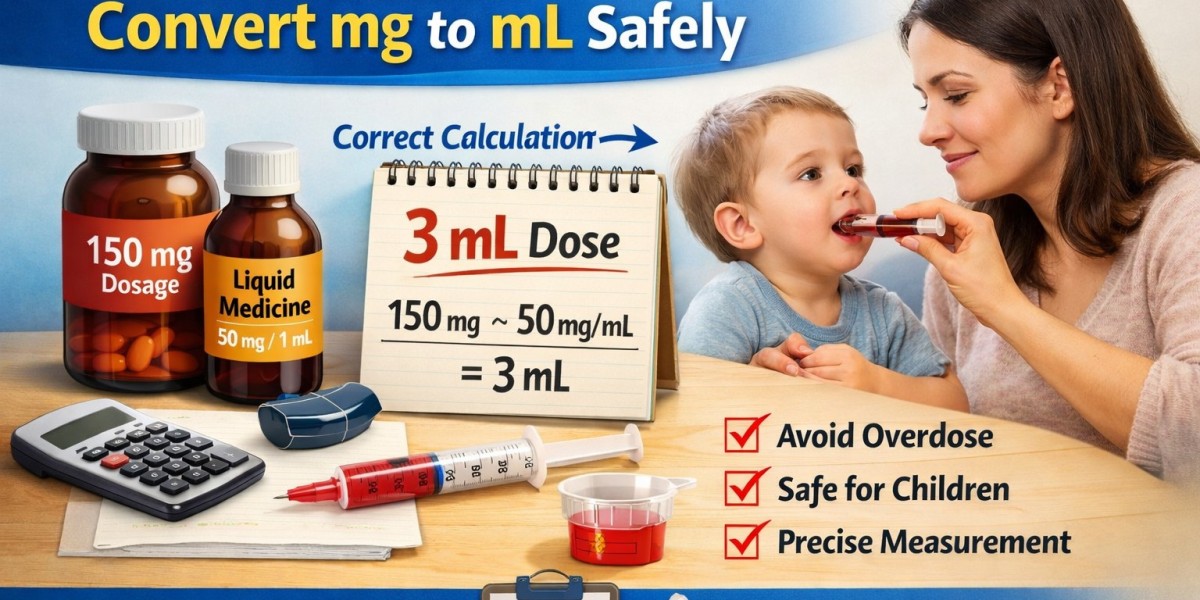
Imagine a prescription that requires 150 mg of a liquid medicine. The bottle label states the strength is 50 mg/mL.
You divide 150 mg by 50 mg/mL.
The result is 3 mL.
This means the correct dose is 3 mL of the liquid medicine. Using a proper measuring device ensures the dose is given accurately.
Why Liquid Medicines Need Extra Care
Liquid medicines are widely used because they are easier to swallow and allow flexible dosing. However, this flexibility also increases the risk of dosing errors if conversions are misunderstood.
Children’s medicines, antibiotics, and pain relievers are common examples where accurate mg to mL conversion is essential. Even small differences can matter, especially when doses are taken multiple times a day.
Using Reliable Tools for Accurate Conversion
Manual calculations can sometimes lead to errors, particularly under stress or time pressure. Digital tools reduce this risk by providing fast, precise results based on correct formulas.
If you ever need to understand the reverse process or check related calculations, a reliable ml to mg conversion tool can help ensure accuracy when working with different medication strengths and liquid volumes.
When Double-Checking Is Especially Important
Some situations require extra attention when converting doses. These include:
- Medicines with high potency
- Very small doses measured in fractions of a milliliter
- Prescriptions for infants or elderly patients
- Changes in medication strength or brand
In these cases, taking a moment to confirm the calculation can prevent serious dosing issues.
Practical Tips for Safe Dosing
Always use a proper measuring device, such as an oral syringe or dosing cup, rather than household spoons. Read the label carefully every time, even if you have taken the medicine before. Keep dosing instructions clear and consistent, especially when more than one person is involved in administering medication.
Clear understanding and careful measurement work together to reduce errors and improve safety.
Who Benefits Most from Understanding mg to mL Conversion?
Accurate dose conversion benefits a wide range of people. Patients gain confidence in taking their medicine correctly. Parents and caregivers feel more secure when giving liquid medicine to children. Students and healthcare professionals build strong habits that support patient safety in clinical settings.
Conclusion
Preventing medication dosing errors starts with understanding how mg and mL relate to each other. When conversions are done correctly, medicines work as intended, and risks are minimized. By learning the basics, reading labels carefully, and using trusted tools when needed, anyone can take an active role in safer medication use.
Clear knowledge leads to safer outcomes, and safe dosing protects health every day.