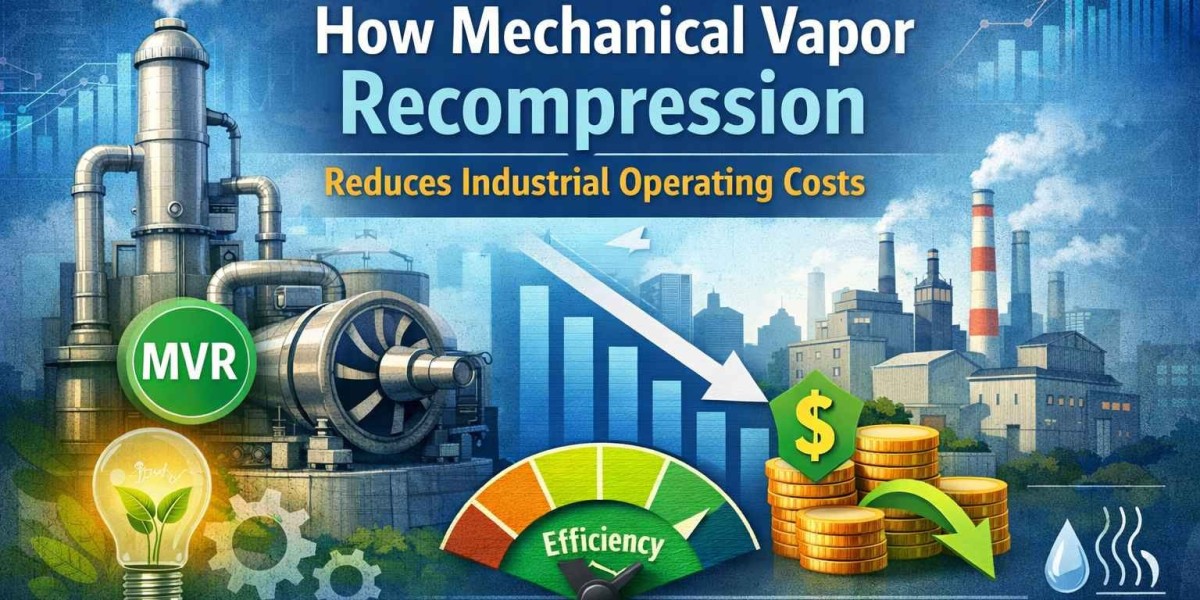

In today’s competitive industrial landscape, companies are constantly seeking innovative technologies that not only boost efficiency but also cut operational costs. One such transformative innovation is Mechanical Vapor Recompression (MVR). This advanced energy recovery system is revolutionizing how industries handle thermal processes, especially in sectors like chemical manufacturing, desalination, food processing, and wastewater treatment. By reusing and compressing vapor energy, Mechanical Vapor Recompression for industry enables significant reductions in both energy consumption and overall operational expenses.
Understanding Mechanical Vapor Recompression (MVR)
Mechanical Vapor Recompression is a process that recycles the latent heat of vapor generated during evaporation or distillation. Instead of allowing the vapor to condense and lose valuable heat, MVR captures it, compresses it using a mechanical compressor or fan, and reuses it as a heating medium. This cycle drastically minimizes the need for external energy sources such as steam boilers or heaters.
In simple terms, MVR transforms waste vapor into reusable thermal energy — creating a closed-loop system that saves power, cuts costs, and supports sustainability.
The Role of MVR in Industrial Applications
Mechanical Vapor Recompression for industry is widely adopted in sectors that rely heavily on evaporation and concentration processes, such as:
Desalination Plants: To recover and reuse vapor energy, significantly reducing energy bills.
Food & Beverage Industry: For concentration of milk, juice, and syrups while maintaining product quality.
Chemical Manufacturing: To separate components efficiently without excessive thermal degradation.
Wastewater Treatment: To recycle process water and minimize disposal costs.
Each of these industries benefits from the core strength of MVR — energy efficiency and resource recovery.
How MVR Reduces Industrial Operating Costs
1. Energy Efficiency and Reduced Fuel Consumption
Traditional evaporation systems depend on external steam, leading to high energy costs. MVR systems, however, reuse vapor energy internally. This can result in energy savings of up to 90% compared to conventional methods, drastically lowering electricity and fuel expenses.
2. Lower Maintenance and Equipment Costs
Mechanical Vapor Recompression systems are designed for durability and efficiency. Since they operate in a closed-loop process, there is minimal scaling, corrosion, or fouling — reducing maintenance frequency and the need for costly equipment replacements.
3. Shorter Payback Periods
While initial installation costs may seem high, industries often experience a payback period of just 1–3 years due to the substantial energy savings. The reduced operational expenditure quickly offsets capital costs, making MVR a sound long-term investment.
4. Optimized Water Reuse and Resource Recovery
In wastewater and desalination applications, MVR enables the recovery of clean water and valuable byproducts. This reduces the need for fresh water intake and raw material purchases, cutting down production costs and improving overall resource efficiency.
5. Decreased Carbon Footprint and Compliance Costs
By significantly lowering energy use, Mechanical Vapor Recompression for industry helps reduce greenhouse gas emissions. This not only aligns with sustainability goals but also helps companies comply with environmental regulations, potentially avoiding costly penalties.
Technological Advancements in MVR Systems
Modern MVR systems are equipped with advanced compressors, automation controls, and smart monitoring technologies. Variable frequency drives (VFDs) and real-time data analytics optimize the compression process, ensuring maximum energy recovery and minimal waste.
These innovations make MVR systems more compact, efficient, and easier to integrate into existing industrial setups. With IoT-enabled systems, industries can also remotely monitor performance, detect issues early, and further reduce downtime costs.
Case Study: Cost Reduction Through MVR Implementation
A large food processing company in the Middle East implemented Mechanical Vapor Recompression for industry to optimize its juice concentration process. By switching from a traditional multi-effect evaporator to an MVR-based system, the company achieved:
70% reduction in steam consumption
50% lower energy bills
Significant reduction in carbon emissions
Improved product quality due to lower thermal exposure
This case demonstrates how MVR not only reduces costs but also enhances process quality and environmental performance.
Integrating MVR with Other Sustainable Technologies
For maximum impact, MVR can be integrated with other sustainable technologies such as heat exchangers, renewable energy sources, and Zero Liquid Discharge (ZLD) systems. When combined, these systems can achieve near-complete resource utilization and minimize waste, offering a holistic solution to industrial sustainability challenges.
For instance, in a ZLD system, MVR helps recover clean water from industrial effluents, reducing discharge volumes and operational expenses associated with wastewater management.
Why Industries Are Choosing MVR Today
The growing global emphasis on sustainability, energy efficiency, and cost reduction has made Mechanical Vapor Recompression for industry a preferred choice across sectors. Its ability to deliver measurable results — from cutting energy costs to meeting environmental targets — makes it one of the most impactful technologies in modern industrial operations.
Moreover, governments and regulatory bodies are increasingly encouraging the adoption of energy-efficient systems through incentives and subsidies. Businesses investing in MVR not only save money but also enhance their brand image as responsible, eco-conscious organizations.
Conclusion
As industries continue to face challenges related to energy consumption, operating costs, and sustainability, technologies like Mechanical Vapor Recompression for industry offer a clear path forward. By recovering waste heat, minimizing energy dependency, and improving process efficiency, MVR transforms industrial operations into more cost-effective and environmentally sustainable systems.
For forward-thinking companies, investing in MVR is not just about reducing expenses — it’s about shaping a cleaner, smarter, and more sustainable industrial future.