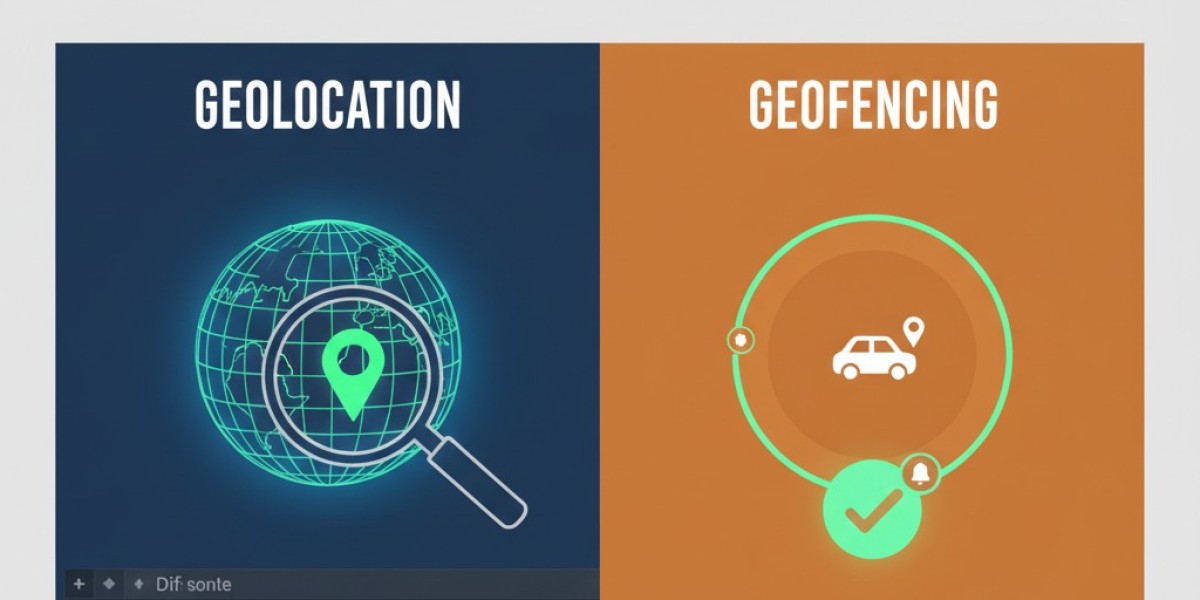

Location-based technology has become a core part of modern digital experiences. From food delivery apps and online banking systems to targeted advertising and smart logistics, businesses increasingly rely on location data to make faster and smarter decisions. Two terms often used in this space are geolocation and geofencing. While they are closely related, they serve different purposes and solve different problems.
Many people assume geolocation and geofencing mean the same thing. In reality, one provides location data, while the other uses that data to trigger actions. Understanding the difference between them can help businesses choose the right tools, design better applications, and improve user experiences. In this article, we explore what geolocation and geofencing are, how they work, and how services like IPstack support geolocation-based solutions.
Recommended Resources: Geofencing vs. Geolocation: Key Differences and Top APIs for Each
What Is Geolocation?
Geolocation is the process of identifying the physical location of a device, user, or system. It answers one basic question: “Where is this user or device located?”
Geolocation can be determined using different technologies, including:
- IP addresses
- GPS signals
- Wi-Fi networks
- Cellular towers
Each method varies in accuracy and use case. GPS offers high precision outdoors, while IP-based geolocation is widely used for server-side detection, fraud prevention, and regional content delivery.
A geolocation API collects signals from one or more sources and converts them into structured data such as:
- Country
- Region or city
- Latitude and longitude
- Time zone
- Internet service provider (ISP)
For example, IPstack is a popular IP-based geolocation service that provides accurate geographic data from IP addresses. Businesses use it to understand user location without requiring hardware sensors or direct device access.
Common Uses of Geolocation
Geolocation is used across many industries, including:
- E-commerce: Displaying correct currency and shipping options
- Cybersecurity: Detecting suspicious login attempts from unfamiliar regions
- Media platforms: Restricting or localizing content
- Travel services: Showing nearby hotels or attractions
- Analytics: Understanding where users come from
In simple terms, geolocation provides location awareness. It gives systems the raw data needed to adapt content and services based on geographic context.
What Is Geofencing?
Geofencing takes location awareness a step further. Instead of just identifying where a user is, it creates a virtual boundary around a real-world area and defines rules for what happens when that boundary is crossed.
A geofence can be set around:
- A store
- A warehouse
- A school
- A city
- A country border
- A custom radius on a map
When a device enters, exits, or stays within that area, an action can be triggered. These actions may include:
- Sending notifications
- Logging events
- Restricting or granting access
- Starting or stopping tracking
- Applying specific business rules
Geofencing typically relies on geolocation data to function. It uses GPS, Wi-Fi, cellular data, or IP-based location data to monitor movement relative to predefined zones.
Common Uses of Geofencing
Geofencing is widely used in:
- Retail marketing: Sending offers when users enter a store area
- Fleet management: Tracking when vehicles reach delivery zones
- Security systems: Preventing access outside permitted locations
- Workforce management: Monitoring employee arrival and departure
- Smart cities: Managing traffic or environmental alerts
Unlike geolocation, which provides static information, geofencing is event-driven. It focuses on what happens when location changes.
Recommended Resources: Geofencing vs. Geolocation: Key Differences and Top APIs for Each
The Core Difference Between Geolocation and Geofencing
Although they work together, geolocation and geofencing serve different roles.
Feature | Geolocation | Geofencing |
Primary purpose | Finds location | Triggers actions |
Output | Coordinates, city, country | Events (enter, exit, dwell) |
Time dependency | Optional | Usually real-time |
Data role | Informational | Behavioral |
Technology | IP, GPS, Wi-Fi, cell towers | Uses geolocation data |
A simple way to understand this difference is:
- Geolocation tells you where something is.
- Geofencing tells you what to do when it moves.
For example, a website may use IPstack to detect a visitor’s country using geolocation. A geofencing rule could then decide whether that visitor is allowed to access certain services based on regional restrictions.
How Geolocation and Geofencing Work Together
Geolocation and geofencing are not competitors. Instead, they form a layered system:
- Geolocation collects location data
- Geofencing applies rules to that data
- Actions are triggered based on movement or position
Think of geolocation as the sensor and geofencing as the control logic.
For instance:
- IPstack identifies that a user’s IP belongs to Germany.
- A geofencing rule checks whether Germany is within an allowed region.
- The system enables local language content and EU pricing.
In this way, geolocation supplies the “input,” and geofencing delivers the “output.”
Real-World Business Use Cases
1. E-commerce and SaaS Platforms
Geolocation allows platforms to show relevant currencies, shipping options, and languages. Geofencing can restrict access to services that are not legally available in certain countries.
2. Finance and Security
Banks use geolocation to identify unusual login locations. Geofencing can automatically block transactions from high-risk regions.
3. Logistics and Delivery
Geolocation tracks vehicle positions. Geofencing defines delivery zones and triggers alerts when vehicles enter or leave those areas.
4. Marketing and Advertising
Geolocation identifies user regions for audience segmentation. Geofencing enables location-triggered campaigns, such as promotions near stores.
5. Software Licensing
Geolocation determines where software is being used. Geofencing ensures compliance with regional licensing rules.
Using Both Technologies
To create smarter systems, businesses can combine geolocation and geofencing in creative ways:
- Soft geofencing with IP ranges: Instead of GPS boundaries, define virtual zones using country or ISP-level data from IPstack.
- Time zone automation: Combine geolocation with time zones to trigger actions at local business hours.
- Geo-based A/B testing: Serve different UI versions to users in different regions and compare performance.
- Predictive geofencing: Use historical location patterns to predict when users are likely to cross boundaries.
- Privacy-first geofencing: Use city-level or country-level data instead of precise coordinates to reduce privacy risks.
These approaches help balance accuracy, performance, and user trust.
Best Practices for Developers
When implementing geolocation and geofencing:
- Always obtain user consent where required
- Avoid collecting more location data than necessary
- Use caching to reduce repeated API calls
- Provide fallback logic when GPS or signals fail
- Prefer IP-based geolocation for server-side systems
- Keep geofence boundaries simple and meaningful
APIs like IPstack are especially useful for applications that need fast, lightweight, and scalable location detection without relying on device sensors.
Why IPstack Is Useful for Geolocation-Based Systems
IPstack provides reliable IP-based geolocation data that supports many business use cases. It enables developers to:
- Identify user location globally
- Access structured geographic information
- Integrate easily into web and backend systems
- Support geofencing logic at country or city level
- Improve fraud detection and localization strategies
By combining IPstack’s geolocation data with geofencing rules, businesses can create intelligent location-aware workflows.
Frequently Asked Questions
What is geolocation in simple terms?
Geolocation is the process of finding a device’s physical location using data like IP addresses or GPS signals.
Is geofencing the same as GPS tracking?
No. GPS tracking shows where a device is, while geofencing defines boundaries and triggers actions when those boundaries are crossed.
Can geofencing work without GPS?
Yes. It can use IP-based or network-based geolocation data instead of GPS.
How accurate is IP-based geolocation?
Accuracy depends on the database and region. Services like IPstack provide reliable country and city-level detection.
Can IPstack be used for geofencing?
Yes. IPstack provides the geolocation data needed to build geofencing logic at regional or national levels.
Choosing the Right Approach
Geolocation and geofencing are not interchangeable, but they are complementary. Geolocation provides the location data that systems need to understand where users are. Geofencing uses that data to automate decisions and trigger actions based on movement or position.
If your goal is to identify where users come from, geolocation is the right choice. If you need to respond dynamically when users enter or leave defined areas, geofencing becomes essential. Most advanced applications benefit from using both together.
By leveraging geolocation services such as IPstack and combining them with well-designed geofencing rules, businesses can build smarter, safer, and more personalized digital experiences.
Recommended Resources: Geofencing vs. Geolocation: Key Differences and Top APIs for Each