
Stained grout has a way of making everything around it look tired. Your tiles might be in perfect shape, but those lines between them tell a different story when they've gone from light to dark. Rooms that see water and traffic every day—kitchens where cooking happens and bathrooms that handle busy mornings—show this wear most clearly.
The good news is you rarely need to start over. The right approach can bring back the original colour, get rid of hidden germs, and make the whole space look better without touching a single tile. This guide explains what actually works, what doesn't, and when it's time to stop cleaning and start restoring.
Why grout changes colour
Grout is porous by nature. Even sealed grout soaks up moisture and dirt over time. Soap, body oils, cooking grease, and minerals from hard water all seep in slowly. Wet areas speed this up by letting mould grow.
Not all stains are the same. Some sit on the surface. Some go deep inside. Some are permanent changes from age or chemicals. Knowing which type you have helps you pick the right fix.
Start with a real clean
Before trying anything drastic, clean the grout properly—not just a quick wipe.
Use a neutral or alkaline grout cleaner and a stiff nylon brush. Don't use metal brushes. Scrub along the grout lines, not across them. Rinse well and let it dry completely. Many people think the grout is still dirty when it's just wet.
If the grout looks lighter after drying, you had surface dirt. If it stays dark, the stain is deeper.
Home remedies: what helps and what hurts
Baking soda and vinegar are popular online. They can help with light surface stains. Make a paste with baking soda and water, scrub gently, rinse and dry.
But vinegar is acidic. It can damage cement grout if used too often or left too long. It also doesn't kill mould properly. Use it sparingly, if at all.
Hydrogen peroxide works better. It lifts organic stains without hurting the grout. Apply it, let it sit a few minutes, scrub, then rinse. This often works for moderately dirty grout.
Steam cleaning for deeper dirt
Steam cleaners can work well if used right. The heat loosens dirt and kills mould. This is especially useful in bathrooms where soap builds up.
Move slowly along the grout lines. Don't hold the steam on one spot too long. Too much heat can weaken grout over time. Always let the grout dry completely after so moisture doesn't get trapped. Use steam as a deep clean, not a regular thing.
When cleaning isn't enough
If grout still looks dark after thorough cleaning and drying, it's likely stained or aged. This is common in older homes and high-traffic areas.
At this point, scrubbing harder won't help. It can make things worse by roughing up the grout so it stains easier. This is where restoration methods come in.
Grout recolouring: the best fix
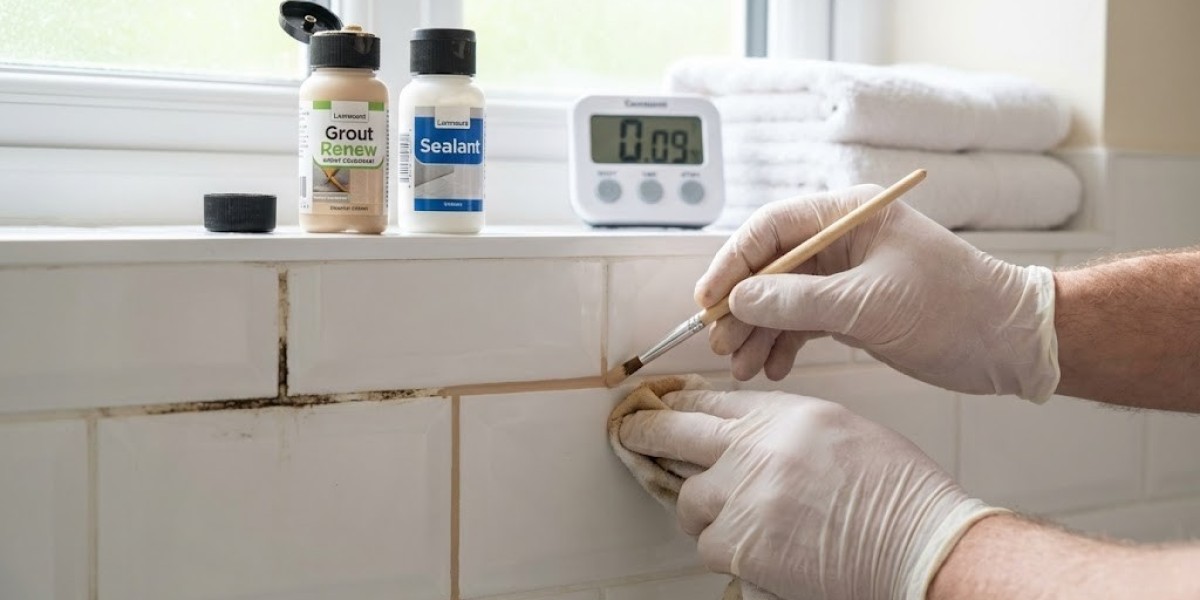
Grout colourants, also called grout stains, are one of the most reliable ways to brighten grout without re-tiling. They don't just sit on the surface—they bond to the grout and seal it.
You can match the original colour or choose a slightly darker shade that hides future wear. Light grout looks fresh but shows stains faster. Mid-tones usually age better.
Apply colourant carefully with a small brush or applicator. Work in sections. Wipe excess off tiles before it dries. Let it cure fully before using the area. Done properly, recolouring can make old grout look new.
Whitening pens and quick fixes
Grout pens are useful for small areas or quick touch-ups. They're easy to use and affordable. But they're not permanent.
Pens sit on the surface and wear off in wet or busy areas. They're best for low-use spaces or quick fixes before guests come. For longer-lasting results, use a proper grout colourant instead.
Sealing grout after cleaning or recolouring
Sealing matters. Clean grout without sealing will stain again quickly. Use a penetrating grout sealer. Apply it after grout is completely dry. Follow the manufacturer's instructions. Wipe excess off tile surfaces.
Sealants don't make grout stain-proof, but they slow absorption and make future cleaning easier. In kitchens and bathrooms, reseal every one to two years to keep things looking good. A ceramic tile shop can recommend sealers suited to your grout type and room conditions.
Dealing with mould properly
Black or dark mould stains often go deeper than surface dirt. Bleach may lighten them temporarily, but it doesn't always kill the spores inside the grout. That's why stains come back.
Use a mould-specific cleaner that gets into porous surfaces. Give it proper dwell time. Ventilate the area well. Rinse and dry thoroughly.
If mould staining persists, recolouring is often the most practical fix. It seals the grout and blocks moisture from feeding future growth.
When grout needs repair, not cleaning
Sometimes grout isn't just dirty—it's cracked, crumbling, or missing. Cleaning won't fix that.
Small repairs can be done by carefully removing damaged grout and regrouting those sections. This takes patience but avoids full re-tiling.
If large areas are failing, it may point to movement or water issues behind the tiles. In those cases, cosmetic fixes won't last.
Changing habits to keep grout brighter
Once grout looks better, keep it that way. Dry wet areas after use when possible. Improve ventilation. Use pH-neutral cleaners instead of harsh chemicals. Avoid abrasive pads that rough up grout.
In kitchens, wipe spills early. In bathrooms, rinse soap residue regularly. Small habits slow discolouration more than most products.
Choosing grout colour for the future
If you ever regrout or recolour, think ahead. Very light grout looks clean but shows wear fast. Very dark grout hides stains but shows soap residue.
Mid-range greys, warm beiges, or soft taupes balance looks and maintenance. These tones age quietly and suit most tiles.
This is worth discussing when you're looking at options at a ceramic tile shop. Grout colour is part of the design, not an afterthought.
When to stop fixing and start planning
If grout is failing across large areas, tiles are loose, or water damage is visible, patch fixes won't last. That's when re-tiling or a larger renovation makes sense. But most discoloured grout doesn't fall into this category—it just needs the right treatment.
Final thought
Discoloured grout doesn't mean your tiles are done. Most of the time, it's a surface problem with a practical solution. Start with proper cleaning. Move to recolouring if needed. Seal everything well. Adjust habits to protect the result.
If you're unsure what product or method suits your grout, a good ceramic tile shop can point you in the right direction. Fixing grout is less about effort and more about choosing the right step at the right time.
Get that right, and your space will look cleaner, brighter, and far more cared for—without the cost and mess of re-tiling.