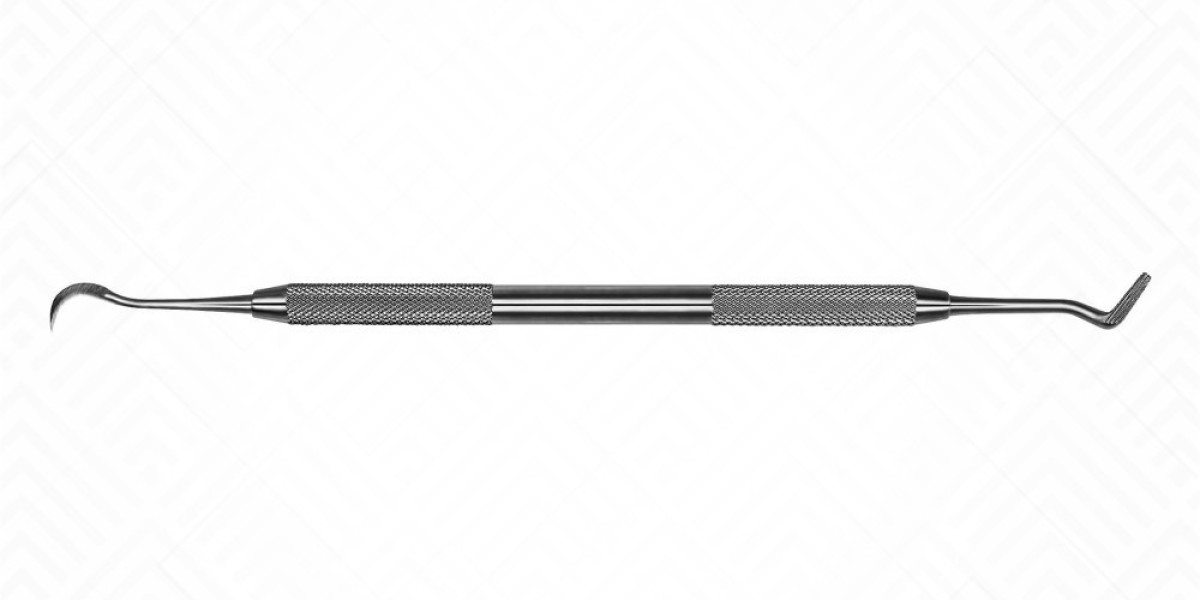

Precision defines the success of every dental and surgical procedure. Healthcare professionals understand that the quality of the tools in their hands directly influences patient outcomes. When removing heavy supragingival calculus, the margin for error is nonexistent, and the need for reliable instrumentation becomes paramount. New Med Instruments is dedicated to supporting surgeons, students, and healthcare experts globally by providing tools that embody durability and exactitude. Among these essential instruments, the scaler hoe stands out as a critical component for effective periodontal therapy. This specific tool allows practitioners to address difficult deposits that other instruments may fail to dislodge.
The Specific Anatomy of the Instrument
Effective calculus removal relies heavily on understanding the unique geometry of the tool being used. This instrument features a single straight cutting edge that is formed by the junction of the face and the beveled toe. The blade is typically bent at a 99-degree angle relative to the shank, a design feature that provides the necessary leverage for dislodging hardened deposits. Unlike universally curved curettes, the design here is specialized. The cutting edge is beveled at a 45-degree angle, which allows the operator to engage the tooth surface effectively. This specific angulation is what makes the scaler hoe so effective for the removal of large, heavy ledges of calculus, particularly in accessible areas where the shank can be positioned correctly against the tooth structure.
Clinical Indications for Effective Use
Dental professionals utilize this instrument primarily for supragingival scaling. It is particularly adept at removing calculus from the buccal and lingual surfaces of teeth. The straight cutting edge dictates that the instrument works best on flat coronal surfaces rather than curved root surfaces. Attempting to use it on curved root surfaces or subgingivally can result in tissue trauma or gouging of the root surface. Therefore, proper case selection is vital. Practitioners often select this tool when they encounter rings of calculus or tenacious ledges that require a strong, pull-stroke motion to dislodge. By using the tool for its intended purpose, clinicians can significantly reduce the time spent on initial debridement before moving to finer finishing instruments.
Mastering the Two-Point Contact Technique
Proper technique ensures safety and efficacy during the procedure. To use the instrument correctly, the clinician must establish a secure fulcrum to control the stroke. The blade is inserted slightly beneath the margin of the calculus deposit. Crucially, the instrument requires two-point contact for stability. This means that both the cutting edge and the side of the shank should maintain contact with the tooth surface during the activation of the stroke. This stabilization prevents the instrument from slipping and causing injury to the gingival tissues. The operator applies a firm, short pull stroke in a vertical direction toward the occlusal or incisal surface. This controlled force fractures the calculus deposit cleanly from the tooth surface.
Uncompromising Material Standards at New Med Instruments
The durability of a surgical retractor is determined by the quality of the steel used in its forging. New Med Instruments prioritizes the use of high-grade surgical stainless steel in the manufacturing of every scaler hoe to ensure longevity and consistent performance. Inferior metals can dull quickly, corrode after sterilization, or even break under the pressure of a heavy working stroke. Our commitment to superior craftsmanship means that our instruments retain their sharp cutting edges longer, reducing the frequency of sharpening required. This focus on material excellence ensures that surgeons and students can rely on their equipment procedure after procedure, maintaining the high standards of care that their patients expect.
Serving a Global Community of Professionals
New Med Instruments recognizes that healthcare is a global endeavor. We provide superior service to a diverse clientele ranging from experienced surgeons to students just beginning their journey in healthcare. Our goal is to equip these professionals with tools that inspire confidence. Whether a practitioner is operating in a high-volume hospital or a private clinic, the need for consistent tool performance remains the same. By distributing high-quality instruments worldwide, we ensure that geographic location does not limit a professional’s access to the best equipment available. We understand that precise results matter to patients everywhere, and we strive to be the partner that professionals trust for their instrumentation needs.
Maintenance and Sterilization for Longevity
Even the highest quality instruments require proper care to maintain their functionality. Regular inspection of the working end is necessary to detect any signs of dulling or damage. Sharpening should be performed periodically to preserve the 45-degree bevel and the sharp cutting edge. A dull instrument requires excessive force, which increases patient discomfort and the risk of operator fatigue. Furthermore, adherence to strict sterilization protocols is non-negotiable. Our stainless steel scaler hoe is designed to withstand repeated autoclaving cycles without degrading. Proper cleaning to remove biological debris prior to sterilization ensures that the instrument remains sterile and safe for every patient encounter.
The Value of Precision in Patient Outcomes
The ultimate goal of periodontal therapy is the restoration of tissue health. By effectively removing local irritants like calculus, the practitioner facilitates the healing process. Using the correct instrument for the task minimizes trauma to the surrounding soft tissues and preserves the integrity of the tooth structure. When a professional chooses a scaler hoe from New Med Instruments, they are investing in a tool that aids in achieving these optimal clinical results. We believe that superior instruments lead to superior service, and ultimately, a higher standard of health for patients. Our commitment to quality control ensures that every instrument that leaves our facility meets the rigorous demands of modern dental and surgical practice.