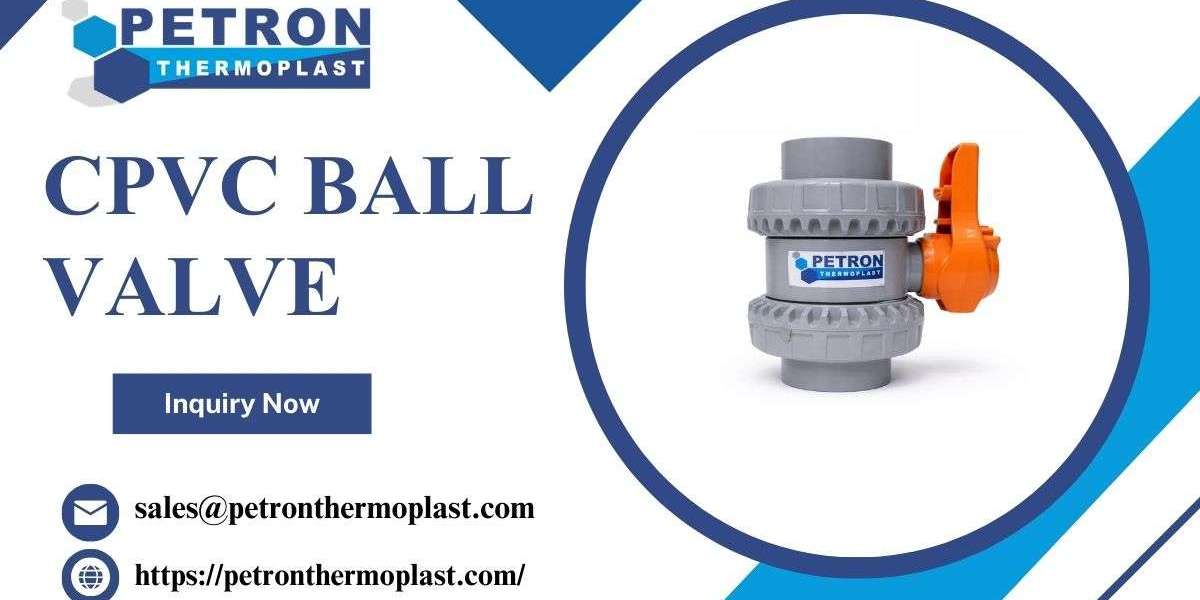

In today’s rapidly evolving industrial landscape, efficiency, safety, and reliability are more important than ever. Modern manufacturing units, chemical processing plants, water treatment facilities, and infrastructure projects demand piping systems that can withstand harsh operating conditions while delivering consistent performance. One of the most critical components in these systems is the ball valve. Among the various options available, CPVC ball valves have emerged as a preferred choice for next-generation industries due to their superior strength, chemical resistance, and long service life.
As a trusted manufacturer and supplier, Petron Thermoplast offers advanced CPVC ball valves engineered to meet the growing needs of modern industrial applications. This blog explores how CPVC ball valves are transforming fluid control systems and why they are essential for future-ready industries.
Understanding CPVC Ball Valves
Chlorinated Polyvinyl Chloride (CPVC) is a high-performance thermoplastic material known for its excellent resistance to heat, pressure, and aggressive chemicals. When used in ball valves, CPVC delivers exceptional durability and operational reliability.
A CPVC ball valve consists of a rotating ball with a central bore that controls fluid flow. By turning the handle, operators can easily open or close the valve, ensuring quick and precise flow regulation. Compared to traditional metal valves, CPVC ball valves are lightweight, corrosion-resistant, and easier to install and maintain.
Why Next Generation Industries Prefer CPVC Ball Valves?
Industries today are moving towards automation, sustainability, and high-efficiency operations. CPVC ball valves perfectly align with these objectives, making them a preferred solution for modern systems.
1. Superior Chemical Resistance
Next generation industries often deal with highly corrosive fluids such as acids, alkalis, solvents, and oxidizing agents. CPVC is inherently resistant to a wide range of chemicals, ensuring long-term performance without degradation. This makes CPVC ball valves ideal for chemical processing, pharmaceuticals, and specialty manufacturing.
2. High Temperature and Pressure Tolerance
Unlike standard PVC, CPVC can operate at higher temperatures, typically up to 93°C (200°F). This makes it suitable for hot water systems, thermal processing units, and high-temperature chemical pipelines. Its excellent pressure rating further enhances safety and reliability.
3. Lightweight and Easy Installation
CPVC ball valves are significantly lighter than metal alternatives. This reduces transportation costs, simplifies handling, and speeds up installation. For large industrial projects, this translates into reduced labor expenses and faster project completion.
4. Corrosion-Free Performance
Metal valves are prone to rust, scaling, and corrosion, especially in aggressive environments. CPVC valves are immune to these issues, ensuring consistent flow performance and eliminating the need for frequent replacements.
5. Low Maintenance Requirements
Thanks to their smooth internal surfaces and corrosion resistance, CPVC ball valves require minimal maintenance. This reduces downtime and operational costs, making them ideal for continuous-duty applications.
Key Features of Advanced CPVC Ball Valves
Modern CPVC ball valves are designed with advanced engineering techniques to meet the demands of next generation industries.
Precision Molded Construction
High-quality CPVC ball valves are manufactured using precision molding technology. This ensures uniform wall thickness, accurate dimensions, and leak-proof joints.
Full Bore Design
Many advanced CPVC ball valves feature a full bore design, allowing unrestricted flow. This minimizes pressure loss and improves system efficiency.
High-Quality Sealing System
Advanced elastomeric seals and seats provide excellent leak prevention, even under fluctuating temperatures and pressures.
Smooth Handle Operation
Ergonomically designed handles enable smooth and effortless operation. This is especially important in automated and semi-automated systems.
UV and Weather Resistance
For outdoor installations, CPVC ball valves are often UV-stabilized, ensuring long-term durability in harsh weather conditions.
Applications in Next Generation Industries
CPVC ball valves are widely used across various sectors that demand high performance and reliability.
Chemical Processing Plants
Chemical industries require valves that can handle aggressive media without contamination or failure. CPVC ball valves provide excellent resistance to acids, bases, and solvents, ensuring safe and efficient operations.
Pharmaceutical and Biotechnology Units
In pharmaceutical manufacturing, maintaining purity is crucial. CPVC ball valves offer smooth internal surfaces that prevent bacterial growth and contamination, making them suitable for high-purity systems.
Water and Wastewater Treatment
Modern water treatment plants rely on corrosion-resistant valves for long-term service. CPVC ball valves are ideal for handling treated water, chemicals, and disinfectants.
Power and Energy Sector
In power plants and renewable energy facilities, CPVC ball valves are used in cooling systems, chemical dosing units, and auxiliary pipelines due to their heat and chemical resistance.
Electronics and Semiconductor Manufacturing
High-tech industries require ultra-clean fluid handling systems. CPVC valves ensure contamination-free performance, supporting precision manufacturing processes.
Advantages Over Conventional Valve Materials
When compared to metal, PVC, or other plastic valves, CPVC ball valves offer several unique advantages.
Feature | CPVC Ball Valves | Metal Valves | Standard PVC Valves |
Corrosion Resistance | Excellent | Moderate | Good |
Temperature Resistance | High | High | Low |
Weight | Lightweight | Heavy | Lightweight |
Maintenance | Low | High | Moderate |
Cost Efficiency | High | Moderate | High |
Role in Sustainable and Smart Manufacturing
Next generation industries are increasingly focused on sustainability and energy efficiency. CPVC ball valves contribute to these goals in several ways:
- Reduced energy consumption due to smooth flow paths
- Longer service life, minimizing material waste
- Lower maintenance requirements, reducing resource usage
- Compatibility with recyclable piping systems
By choosing CPVC ball valves, industries can align their operations with global sustainability standards.
Quality Assurance and Certification
For industrial applications, quality and compliance are non-negotiable. Reputable manufacturers follow strict quality control procedures, including:
- Raw material testing
- Dimensional inspection
- Pressure and leakage testing
- Thermal resistance evaluation
- Chemical compatibility analysis
Certified CPVC ball valves comply with international standards such as ASTM, ISO, and DIN, ensuring reliable performance in global projects.
Customization for Modern Industrial Needs
Every industrial project has unique requirements. Advanced CPVC ball valve manufacturers offer customization options such as:
- Special sizes and pressure ratings
- Customized end connections (threaded, socket, flanged)
- Actuator-ready designs for automation
- Special sealing materials
- Branding and packaging options
These customization capabilities help engineers design optimized piping systems for specific applications.
Why Choose Petron Thermoplast for CPVC Ball Valves?
With years of experience in polymer-based engineering solutions, Petron Thermoplast has established itself as a reliable partner for industrial clients. The company’s CPVC ball valves are designed to meet the highest standards of performance, safety, and durability.
Key strengths include:
- Advanced manufacturing infrastructure
- Stringent quality control systems
- Skilled technical team
- Wide product range
- On-time delivery and strong after-sales support
By focusing on innovation and customer satisfaction, the company continues to support next generation industries across India and global markets.
Future Trends in CPVC Ball Valve Technology
As industries move towards digitalization and automation, CPVC ball valves are also evolving. Future developments include:
- Smart valves with sensor integration
- IoT-enabled monitoring systems
- Improved materials for higher temperature resistance
- Enhanced actuator compatibility
- AI-based maintenance prediction
These advancements will further strengthen the role of CPVC ball valves in modern industrial ecosystems.
Conclusion
Advanced CPVC ball valves play a vital role in shaping the future of industrial fluid control systems. Their superior chemical resistance, high temperature tolerance, lightweight design, and low maintenance requirements make them ideal for next generation industries.
From chemical processing and pharmaceuticals to water treatment and electronics manufacturing, CPVC ball valves deliver reliable performance under demanding conditions. With strong manufacturing capabilities and a commitment to quality, Petron Thermoplast continues to provide innovative valve solutions that support sustainable and efficient industrial growth.
By investing in high-quality CPVC ball valves today, industries can build future-ready piping systems that ensure safety, efficiency, and long-term success.