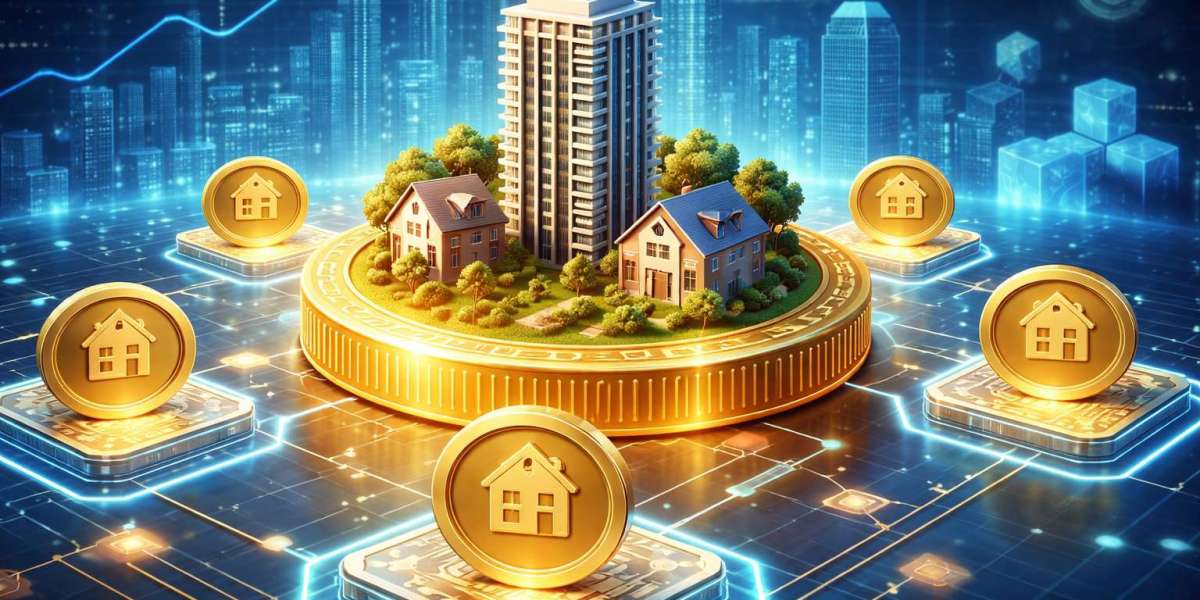

Investing in high-value assets such as commercial real estate, luxury properties, infrastructure projects, or fine art has traditionally been a domain reserved for institutional investors and high-net-worth individuals. These assets, while lucrative, often require substantial capital, involve complex legal frameworks, and pose significant challenges in terms of liquidity and accessibility. The average investor is usually excluded from these markets due to these barriers. However, with the emergence of Real World Asset (RWA) tokenization, the investment landscape is undergoing a profound transformation. By digitizing ownership and creating blockchain-based tokens that represent a fraction of an asset, tokenization simplifies the process of investing in high-value assets, making it more accessible, transparent, and efficient for a global investor base.
Understanding Real World Asset Tokenization
Real World Asset tokenization refers to the process of creating digital tokens on a blockchain that represent ownership of tangible, physical assets. These assets could include real estate, luxury collectibles, commodities, industrial facilities, or infrastructure projects. Each token corresponds to a share of the asset, allowing investors to purchase fractions rather than the whole property or item.
For example, consider a commercial property valued at $10 million. Traditionally, buying such a property would require the full amount, or at least a significant portion of it, and involve lengthy due diligence, legal processes, and intermediary coordination. Through tokenization, the property can be divided into thousands of digital tokens, each worth a smaller, manageable amount. Investors can acquire these tokens, gaining proportional ownership without the complexities of full-scale transactions. Blockchain ensures secure, immutable records of ownership, while smart contracts automate processes like dividend distribution or voting rights.
Simplifying Access to High-Value Assets
1. Fractional Ownership
One of the core advantages of RWA tokenization is fractional ownership, which lowers the barrier to entry for high-value investments. Instead of requiring millions of dollars to participate, investors can purchase tokens representing small fractions of the asset. This approach democratizes access, allowing a wider audience to invest in previously exclusive markets.
Fractional ownership also encourages diversification. Investors no longer need to put all their capital into a single property or asset; they can distribute investments across multiple tokenized assets, such as residential real estate in one city, commercial office space in another, and industrial infrastructure elsewhere. This spreads risk and enhances portfolio flexibility.
2. Increased Liquidity
High-value assets are often illiquid, meaning that selling or transferring ownership can be slow and costly. Tokenization transforms these traditionally illiquid assets into digital tokens that can be traded on blockchain-based platforms, offering enhanced liquidity. Investors can sell their tokens without needing to sell the entire property or asset, making it easier to convert investments into cash when needed.
This liquidity feature is particularly valuable for assets like luxury real estate or art, which often require months or years to sell in traditional markets. Tokenized assets provide a near-instant, globally accessible market where ownership stakes can be traded efficiently.
3. Global Market Reach
Investing in high-value assets often involves geographic and regulatory barriers. For instance, foreign investors may face restrictions when purchasing property in certain countries or need to navigate complex legal systems. Tokenization enables cross-border investment, allowing global investors to participate in asset ownership without the need for physical presence or excessive administrative procedures.
For example, an investor in Europe can purchase tokens representing shares in a high-rise commercial building in Singapore or a luxury warehouse in the United States, all through a blockchain platform. This global accessibility expands opportunities for both investors and asset owners seeking capital.
Automation and Efficiency Through Blockchain
1. Smart Contracts
Blockchain technology allows the use of smart contracts, which are self-executing contracts that automatically enforce agreed-upon terms. In the context of tokenized assets, smart contracts can automate dividend payments, rental income distribution, voting rights, and ownership transfers. This reduces reliance on intermediaries such as brokers, lawyers, and banks, cutting costs and minimizing the potential for human error.
Automation through smart contracts ensures that investors receive their returns promptly and securely, while asset managers can operate more efficiently. This level of automation also provides a transparent and auditable system for regulators and investors alike.
2. Transparent Ownership Records
A key challenge with high-value asset investments is verifying ownership and asset provenance. Tokenization addresses this by recording every transaction on a decentralized ledger, providing immutable proof of ownership and a clear audit trail. Investors can track the history of the asset, see how ownership has changed, and confirm authenticity without relying solely on third-party verification.
Transparency not only builds trust but also reduces the risk of fraud or disputes. In sectors such as art, collectibles, and commodities, where authenticity and provenance are critical, blockchain-based tokenization adds a layer of security that was previously unavailable.
Practical Applications of RWA Tokenization
1. Real Estate
Tokenization has had a significant impact on real estate investment. Both residential and commercial properties can be fractionalized, allowing investors to buy tokens that represent shares in a property portfolio. Developers can raise capital faster by offering tokenized assets to a global investor base, and investors gain the benefits of diversified exposure and reduced entry costs.
For instance, luxury apartments in a metropolitan area can be tokenized, and investors worldwide can own a fraction without managing the property directly. Smart contracts can handle rental income distribution, maintenance cost deductions, and periodic valuations, simplifying the entire investment lifecycle.
2. Infrastructure Projects
Large infrastructure projects such as airports, highways, or renewable energy facilities require massive capital investment. Tokenization allows multiple investors to participate in funding such projects through fractional ownership. This not only democratizes access but can also speed up financing, reduce reliance on traditional loans or bonds, and provide investors with steady returns based on revenue generated by the infrastructure.
Tokenization platforms can also facilitate transparent reporting on project milestones, ensuring that investors remain informed about their investments’ performance.
3. Commodities
Physical commodities like gold, oil, or rare metals can be tokenized, enabling investors to gain exposure without dealing with storage, transport, or insurance. Tokenized commodities also allow global trade with real-time settlement, enhancing efficiency and market participation.
Blockchain-based platforms can verify the origin and authenticity of the commodities, providing additional trust for investors. For instance, tokenized gold can be traced back to the specific refinery or mine, ensuring ethical sourcing and ownership verification.
4. Art and Collectibles
The art and collectibles market has traditionally been exclusive, illiquid, and opaque. Tokenization allows multiple investors to own fractions of high-value artworks, antiques, or rare collectibles. Smart contracts can automate royalty payments, secondary sales, and provenance verification, addressing long-standing challenges in these markets.
Investors gain access to previously inaccessible assets, while artists and collectors can monetize their works more efficiently. This creates a more transparent and dynamic market where high-value cultural assets can be shared globally.
5. Industrial Assets
Industrial assets such as warehouses, manufacturing facilities, and logistics hubs can also benefit from tokenization. Investors can hold fractional ownership in these assets, while operators gain access to alternative funding sources. Tokenization platforms can provide transparent reporting on revenue, occupancy, and maintenance, enhancing confidence for all parties involved.
Simplifying Compliance and Risk Management
High-value asset investment involves navigating regulatory frameworks, anti-money laundering (AML) policies, and investor protection laws. Tokenization platforms often integrate compliance measures directly into their systems, using identity verification, automated reporting, and transaction monitoring.
Smart contracts can enforce restrictions on who can buy or sell tokens based on legal requirements, ensuring adherence to regulations across jurisdictions. This integration of compliance into the blockchain ecosystem simplifies risk management for both investors and asset managers, reducing legal complexity and potential liabilities.
Benefits for Asset Owners
Tokenization is not only beneficial for investors; it also provides significant advantages for asset owners. By converting assets into digital tokens, owners can access global capital more efficiently, reduce dependency on traditional financing methods, and increase liquidity for their holdings.
For example, a property developer can tokenize a commercial complex, raise funds from a diverse investor base, and maintain partial ownership or control. This approach provides flexibility in capital raising, faster execution of projects, and enhanced visibility in international markets.
The Future of High-Value Asset Investment
As blockchain technology continues to mature, the adoption of RWA tokenization is likely to accelerate. Emerging trends include integration with decentralized finance (DeFi) platforms, allowing tokenized assets to serve as collateral or participate in liquidity pools. Advanced analytics powered by artificial intelligence can provide predictive insights on asset performance and market trends, further simplifying investment decisions.
Moreover, as legal and regulatory frameworks evolve to accommodate tokenized assets, the process of investing in high-value assets will become even more streamlined, transparent, and secure. This evolution will democratize access to traditionally exclusive markets, making investment opportunities more equitable and global.
Conclusion
Real World Asset tokenization is revolutionizing the way high-value assets are accessed, managed, and traded. By digitizing ownership, enabling fractional investment, enhancing liquidity, and simplifying compliance, tokenization makes it significantly easier for investors to participate in markets that were historically out of reach.
From commercial real estate and infrastructure to commodities, art, and industrial facilities, tokenization opens new doors for investors seeking diversification, transparency, and efficiency. Simultaneously, asset owners benefit from faster access to capital, broader investor reach, and reduced operational complexity. As blockchain technology, smart contracts, and regulatory frameworks continue to evolve, RWA tokenization is poised to become a standard mechanism for simplifying investment in high-value assets worldwide, creating a more inclusive, efficient, and innovative global investment ecosystem.









