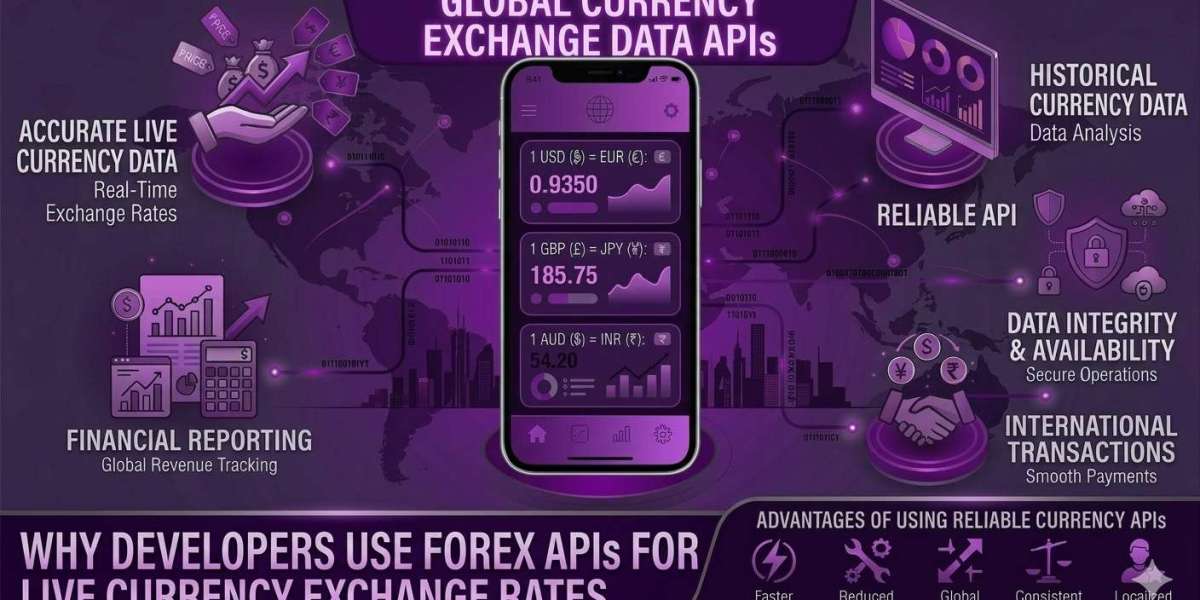

Modern applications increasingly serve users from multiple countries, making currency handling an essential feature for developers. Whether it is an eCommerce store, fintech platform, SaaS product, or travel booking system, applications must display accurate currency values for global users. A currency conversion api helps developers integrate reliable financial data directly into their applications without building complex infrastructure.
Instead of manually collecting and updating exchange rate information, developers can rely on Forex APIs to retrieve accurate currency data in real time. This approach simplifies development, improves accuracy, and ensures users always see the correct currency values when interacting with digital platforms.
This article explains why developers use Forex APIs, how they work, and how they support applications that rely on live currency exchange data.
Understanding Forex APIs
A Forex API is a web-based service that provides currency exchange data to applications through structured requests. Developers connect their applications to the API and retrieve exchange rate information whenever it is required.
These APIs collect financial data from trusted sources such as financial institutions, currency markets, and financial data providers. The data is then delivered to applications in formats that are easy for developers to process, such as JSON or XML.
A typical request to a Forex API may include:
- Base currency
- Target currency
- Amount to convert
- Optional parameters such as historical dates
The API processes the request and returns exchange rate information that can be used for currency conversions, financial calculations, or price displays.
Why Live Currency Data Matters
Currency values change constantly due to fluctuations in the global financial market. These changes are influenced by economic indicators, political developments, international trade activity, and investor behavior.
Applications that rely on outdated exchange rates may display incorrect prices or financial information. This can lead to confusion for users and potential financial discrepancies for businesses.
Live exchange rate data helps solve this problem by providing up-to-date currency values that reflect current market conditions. Developers use Forex APIs to ensure their applications always display reliable financial information.
How Forex APIs Work in Applications
The integration process for a Forex API is designed to be simple so that developers can quickly implement currency features in their applications.
The process usually follows these steps:
- The application sends a request to the API server.
- The request specifies the base currency and the target currency.
- The API retrieves the latest exchange rate data from its database.
- The server sends the data back to the application in a structured format.
- The application uses the information to display prices or perform currency conversions.
This automated system allows applications to retrieve updated currency data whenever it is needed.
Key Benefits of Using Forex APIs
Forex APIs provide several advantages that make them essential tools for developers building global applications.
Real-Time Financial Data
The most important advantage of Forex APIs is access to current exchange rates. Applications can retrieve updated values frequently, ensuring accurate financial calculations.
Faster Development Process
Instead of building systems to gather financial data manually, developers can integrate an API and access ready-to-use exchange rate information.
Improved User Experience
Users prefer seeing prices in their local currency. When applications display familiar currency values, it makes transactions easier to understand.
Reliable Currency Calculations
Accurate exchange rates ensure that financial calculations remain consistent across the entire platform.
Scalability for Global Platforms
As applications grow and attract users from more countries, Forex APIs can support additional currencies without requiring major system changes.
Common Use Cases for Forex APIs
Forex APIs are widely used across industries that operate internationally. These APIs help applications manage currency conversions, display global pricing, and analyze financial data.
eCommerce Platforms
Online stores selling products internationally must display prices in multiple currencies. Forex APIs allow these platforms to convert product prices automatically based on the user’s region.
Fintech Applications
Financial technology platforms depend heavily on currency data. Forex APIs support balance calculations, transaction conversions, and financial reporting.
SaaS Platforms
Subscription services serving international customers must display subscription prices in various currencies to improve clarity during checkout.
Travel and Booking Websites
Travel platforms display hotel prices, flights, and packages in different currencies depending on the user’s location.
Financial Analytics Tools
Businesses analyzing international revenue use Forex APIs to convert financial data into a single reporting currency.
Features Developers Should Look for in a Forex API
Not all Forex APIs provide the same level of reliability or functionality. Developers should evaluate several factors when selecting an API provider.
Wide Currency Coverage
A reliable API should support a large number of global currencies to ensure compatibility with international applications.
Historical Exchange Rate Data
Historical data allows developers to analyze past trends and build financial reporting tools.
Fast Response Times
High-performance APIs return data quickly, which helps maintain smooth application performance.
Secure Data Transmission
Financial data must be transmitted securely using modern security standards.
Clear Documentation
Developer-friendly documentation and integration examples make it easier for teams to implement the API successfully.
Best Practices for Integrating Forex APIs
When integrating a Forex API, developers should follow a few best practices to ensure stable and accurate currency functionality.
- Cache exchange rate data when appropriate to reduce unnecessary API requests.
- Validate API responses before using them in financial calculations.
- Use standard currency codes such as USD, EUR, and GBP.
- Implement error handling in case the API request fails.
- Monitor API usage limits to avoid exceeding request quotas.
Following these practices helps maintain reliable financial features within an application.
Challenges Developers Can Avoid With Forex APIs
Handling currency data without an API can create several problems for development teams.
Some common challenges include:
- Maintaining up-to-date exchange rate data
- Handling multiple currencies manually
- Ensuring consistent financial calculations
- Managing global pricing for international users
Forex APIs eliminate these challenges by automating the entire process of currency data retrieval and conversion.
The Growing Importance of Currency APIs
As digital products continue to expand globally, the demand for reliable financial data services continues to increase. Businesses are building platforms that support users from multiple regions, making currency conversion an essential feature.
Advancements in cloud infrastructure and financial data aggregation have made Forex APIs faster, more reliable, and easier to integrate than ever before. Developers can now add powerful currency functionality to their applications with minimal effort.
Applications that support accurate currency conversions and live exchange rate data provide better user experiences and improve trust among international customers.
For developers building global platforms, integrating a Live currency exchange rates api ensures applications remain accurate, scalable, and capable of handling international financial data efficiently.
FAQs
1. What is a Forex API used for?
A Forex API provides exchange rate data that developers can integrate into websites, mobile apps, and financial platforms. It allows applications to automatically convert values between different currencies.
2. Are Forex APIs suitable for small applications?
Yes. Many Forex API providers offer free plans or affordable pricing tiers, making them suitable for startups, small projects, and large enterprise platforms.
3. How often do Forex APIs update exchange rates?
Most Forex APIs update exchange rate data frequently, ranging from every few minutes to real-time updates depending on the provider and service plan.
Recommended Resources:-
12 Best Financial Market APIs for Real-Time Data in 2025
7 Best Free Currency Converter APIs In 2025