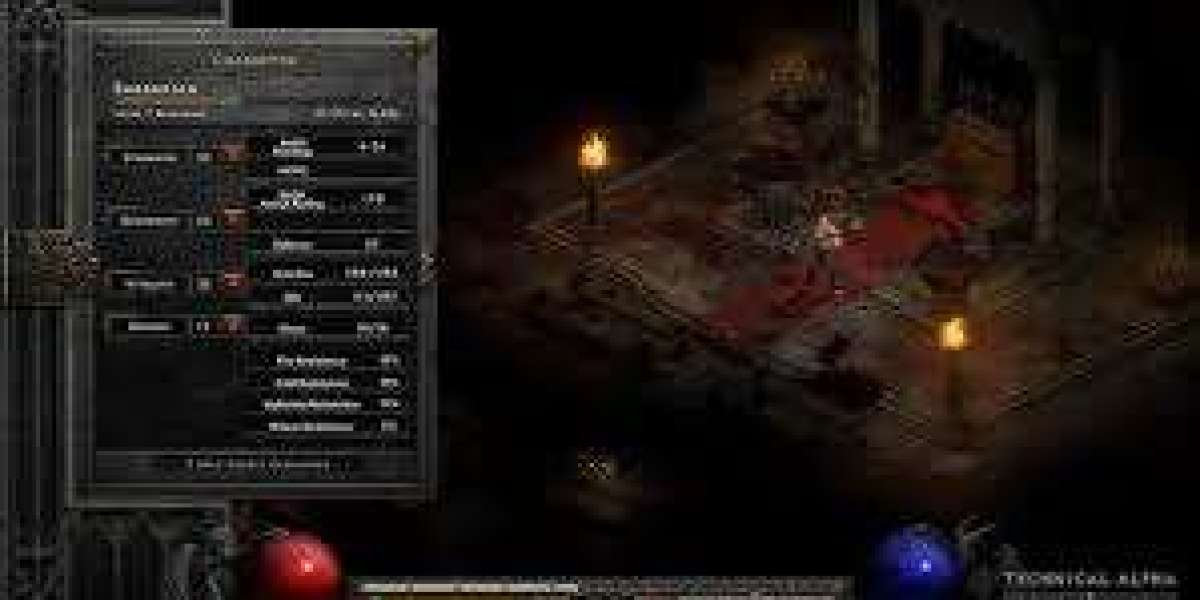

In the darkened halls of the Pandemonium Fortress, a player pauses. Their cursor hovers over a grey phase blade with four open sockets. In their inventory sits a pulsing Ber rune, a cold Mal, and the perfect Ist. They are moments away from creating 'Call to Arms,' a Runeword that will grant their character a battle-commanding shout, fundamentally increasing their kill speed and survivability. This moment encapsulates the genius of Diablo 2 Resurrected: the transformation of abstract numbers into tangible, game-altering power.
The rune system is the hidden engine of the entire endgame. Runes themselves are small stones, ranging from the common El all the way up to the godly Zod. Alone, they offer modest effects. But when inserted into socketed items in a specific order, they awaken into Runewords. These combinations are the most powerful items in the game. 'Enigma,' crafted from Jah, Ith, and Ber, grants any class the sorceress-exclusive teleport skill, revolutionizing character mobility. 'Grief,' requiring five sockets and the rune sequence Eth, Tir, Lo, Mal, Ral, creates a weapon so powerful that it outclasses almost every unique and set item in the game. The pursuit of these runes defines the modern Diablo 2 Resurrected experience.
The rarity of high runes is legendary. A Ber rune, for example, has a drop chance so infinitesimally small that players often spend weeks, if not months, hunting for one. This scarcity creates a unique tension. When a high rune finally drops, the sound is unmistakable. It is a moment of pure adrenaline, a validation of countless hours spent farming. The player community has developed intricate strategies to maximize these odds. Some swear by the ghost enemies in the Arcane Sanctuary, whose drop mechanics are allegedly favorable. Others prefer the density of the Secret Cow Level, cutting down thousands of hellish bovines in search of that golden lettering on the ground.
This hunt is not merely a solo endeavor. The rune economy is the lifeblood of the Diablo 2 Resurrected trading community. Runes themselves become currency. A Pul rune might buy a decent item, while a Jah rune can command almost any piece of equipment in the game. Players hoard mid-level runes like Lem, Pul, and Um, using them as bargaining chips to slowly trade their way up to the high-value Ber and Jah. This barter system requires a deep knowledge of relative value. Is a Sur rune worth a Ber? No, but two Surs can be cubed into one Ber, creating a fascinating dynamic where patience and accumulation can eventually yield the ultimate prize.
diablo2 resurrected, therefore, is not just a game about killing demons. It is a game about economics, about probability, and about the thrill of the chase. The stunning remastered visuals and quality-of-life improvements make the journey smoother, but the destination remains the same. It is the dream of the perfect roll on a Grief phase blade, the satisfaction of finally equipping an Enigma, the quiet pride of knowing you assembled your power one rune at a time. In the end, we are all just farmers in Sanctuary, tilling the fields of hell for those precious little stones.