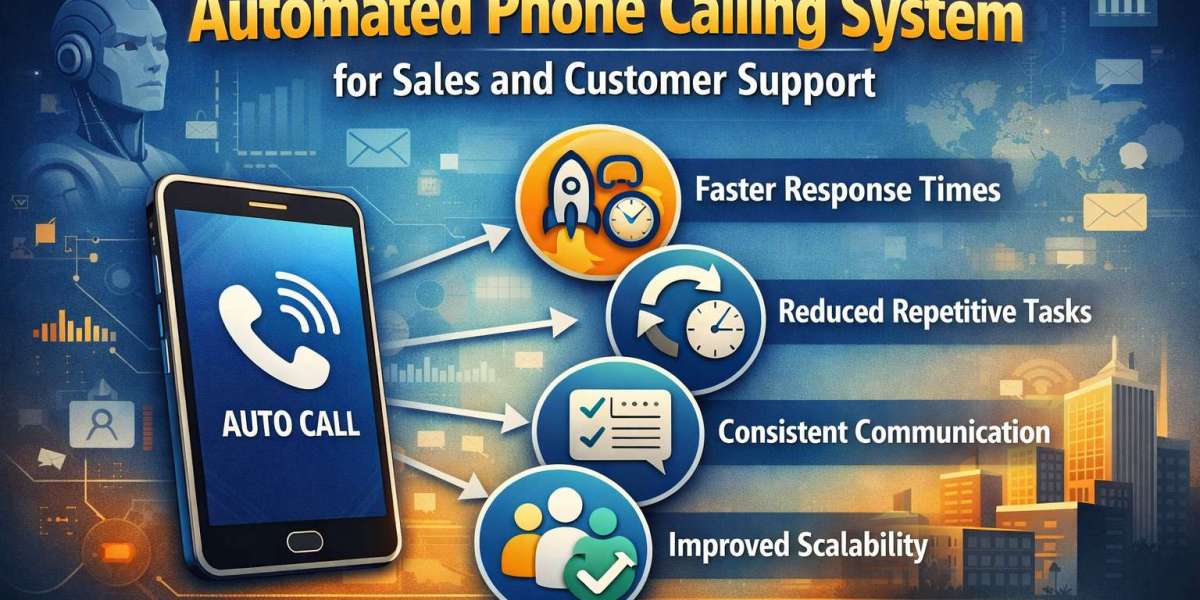

Top Benefits of Using an Automated Phone Calling System for Sales and Customer Support
Businesses today need to communicate faster, respond more consistently, and handle a growing number of customer interactions without overloading their teams. That is why more companies are turning to an automated phone calling system to improve both sales and customer support operations.
Whether it is following up with leads, sending reminders, routing calls, or answering common questions, automation helps businesses save time while improving service quality. Instead of depending only on human agents for every call, companies can use automated calling system technology to manage repetitive communication more efficiently.
For businesses that want to scale outreach and support without increasing costs at the same pace, automated phone calling has become a practical and effective solution.
What Is an Automated Phone Calling System?
An automated phone calling system is a software-based calling solution that can place calls, deliver voice messages, guide conversations, gather responses, and route callers without needing a human agent for every interaction.
These systems can be used for both outbound and inbound communication. In sales, they help teams contact more leads and follow up quickly. In customer support, they help businesses handle common requests, provide updates, and direct customers to the right department.
Modern automated call systems can do much more than basic robocalling. Many now include features such as:
call scheduling
call routing
voice menus
appointment reminders
lead follow-ups
customer notifications
survey calls
support workflows
This makes them useful for businesses across industries such as healthcare, real estate, SaaS, ecommerce, education, finance, and home services.
Why Businesses Use Automated Calling Systems
Sales and support teams often spend a large part of their day on repetitive calls. These may include confirming appointments, reminding customers, following up on inquiries, or answering basic questions. While these calls are important, they also consume time that could be spent on more valuable conversations.
This is where an automated calling system helps. It reduces manual effort, improves speed, and ensures that customers and leads are contacted on time.
For example, a sales team may use automated phone calling to follow up with new leads immediately after a form submission. A support team may use it to send order updates, appointment reminders, or issue resolution follow-ups.
The result is better communication without placing all the pressure on human staff.
Top Benefits of Using an Automated Phone Calling System
1. Faster Response Times
One of the biggest benefits of an automated phone calling system is speed. In both sales and support, timing matters.
If a new lead fills out a contact form and receives a follow-up call quickly, the chances of engagement are much higher. In support, customers appreciate timely updates instead of waiting for an agent to become available.
Automated phone calling helps businesses respond instantly or according to a set schedule, reducing delays and improving the overall customer experience.
2. Higher Calling Efficiency
Human teams can only make a limited number of calls per day. They also need breaks, shifts, and time to manage admin work. By contrast, automated call systems can handle large call volumes more efficiently.
This allows businesses to:
contact more leads
send more reminders
manage more support interactions
maintain communication consistency
For sales teams, this means better outreach productivity. For support teams, it means fewer missed follow-ups and smoother service operations.
3. Reduced Manual Workload
Many business calls are repetitive. These include appointment reminders, payment reminders, welcome calls, lead nurturing, customer notifications, and satisfaction surveys.
Using an automated calling system for these workflows reduces the need for human agents to repeat the same tasks every day. This allows staff to focus on conversations that require empathy, negotiation, or deeper problem-solving.
This is one of the strongest reasons businesses invest in an automated phone calling system. It improves team productivity without sacrificing communication quality.
4. Better Lead Follow-Up for Sales
In sales, missed follow-ups often lead to lost revenue. Leads may go cold simply because the business did not respond quickly enough or consistently enough.
An automated phone calling system helps sales teams stay on top of follow-ups by:
calling new leads faster
reconnecting with older prospects
sending reminders before demos or appointments
nurturing leads across multiple stages
This makes automated phone calling especially valuable for businesses that receive frequent inquiries and want to improve their lead conversion process.
5. Improved Customer Support Experience
Customer support is not only about solving problems. It is also about keeping customers informed and reducing frustration.
Automated call systems can improve support by helping businesses provide:
appointment confirmations
order and delivery updates
service reminders
issue follow-up calls
queue routing and department transfers
When customers receive timely, relevant communication, they feel more supported. This can improve satisfaction and reduce inbound call pressure.
6. Consistent Communication
Human agents may explain things differently, miss details, or forget to ask required questions. An automated phone calling system follows a defined workflow, helping businesses deliver more consistent communication.
This is important in both sales and support because consistency affects brand trust, customer understanding, and operational quality.
For example, if every customer receives the same reminder process or every lead hears the same qualification questions, the business can maintain more control over messaging and outcomes.
7. Lower Operational Costs
Hiring and training large call teams can be expensive. While human agents remain essential for important conversations, not every call needs a person involved from the start.
By using an automated calling system for high-volume, routine communication, businesses can reduce labor pressure and manage growth more cost-effectively.
This does not mean replacing teams completely. It means using automation where it makes sense, while human staff focus on the calls that need personal attention.
8. Better Appointment and Reminder Management
Missed appointments are a common problem in industries such as healthcare, salons, real estate, education, and home services.
An automated phone calling system can send reminder calls, confirm attendance, and even help reschedule if needed. This improves operational efficiency and reduces no-shows.
For support teams, reminder workflows can also be used for renewals, service dates, or maintenance updates. For sales teams, reminder calls can help prospects attend demos and consultations on time.
9. Scalable Communication
As businesses grow, the number of calls usually increases. Managing that growth manually can be difficult and expensive. Automated phone calling helps businesses scale communication without increasing team size at the same rate.
This is especially useful for companies running multiple campaigns, handling seasonal demand, or managing large customer databases.
With the right automated call systems, businesses can scale up outreach and support while keeping workflows organized and performance measurable.
10. Better Call Routing and Workflow Management
A strong automated phone calling system does more than place calls. It can also guide calls based on customer input and route them to the right team or next step.
For example, the system can:
send sales leads to a representative
route support requests to the correct department
identify urgent cases
trigger follow-up actions based on responses
This improves efficiency for both internal teams and customers. Instead of creating confusion, the system helps move each interaction in the right direction.
11. 24/7 Communication Support
Customers and leads do not always operate during standard office hours. One major advantage of automated phone calling is that it can support communication outside regular business times, depending on business rules and compliance needs.
This is especially helpful for businesses that serve customers across different time zones or want to capture opportunities even when teams are offline.
For sales, this can mean immediate lead acknowledgment. For support, it can mean after-hours updates or call routing.
12. Useful Data and Performance Tracking
Many automated call systems include reporting tools that help businesses track outcomes such as:
answered calls
missed calls
completed reminders
lead response rates
appointment confirmations
follow-up performance
This helps sales and support teams understand what is working and where improvements are needed. Better data leads to better decisions, stronger workflows, and improved results over time.
Common Use Cases for Automated Phone Calling
An automated phone calling system can be used in many ways across sales and support functions.
In sales, common use cases include:
new lead follow-up
demo reminders
outbound campaigns
re-engagement calls
prospect qualification
In customer support, common use cases include:
appointment reminders
service updates
order confirmations
renewal alerts
feedback collection
status notifications
Because of this flexibility, automated calling system solutions are useful for businesses of all sizes.
Sales and Support Work Better Together with Automation
One of the biggest advantages of an automated phone calling system is that it helps align sales and support more effectively.
Sales teams benefit from faster outreach, more consistent follow-ups, and better lead management. Support teams benefit from lower call pressure, faster notifications, and smoother workflow automation.
Together, these improvements help create a better customer journey from the first interaction to long-term service.
That is why businesses increasingly see automated phone calling not just as a support tool, but as a growth tool.
What to Look for in an Automated Calling System
Before choosing an automated phone calling system, businesses should consider a few important factors:
ease of setup
call quality
customization options
CRM integration
call routing features
analytics and reporting
compliance support
scalability for future growth
The right solution should fit your workflow, industry, and customer communication needs.
Final Thoughts
An automated phone calling system gives businesses a smarter way to handle sales and customer support communication. It helps teams respond faster, reduce repetitive work, improve consistency, and manage a larger volume of interactions without losing control.
From lead follow-ups and appointment reminders to support updates and call routing, the benefits of automated call systems are clear. Businesses that adopt automated phone calling can improve productivity, enhance customer experience, and scale communication more efficiently.
CallIntel.io take this a step further by offering AI-powered calling, intelligent lead qualification, and seamless automation that helps businesses handle high-volume communication without increasing operational complexity.
As customer expectations continue to rise, using an automated calling system is no longer just a convenience. With platforms like CallIntel.io, it is becoming an essential part of modern business operations.










