
Working with API development becomes much easier when you understand one simple but essential concept, the API key. Whether you are building a small project or a large scale application, API keys play a critical role in how systems communicate securely and efficiently.
This guide explains what an API key is, how it works behind the scenes, and why every developer should understand its importance.
What is an API Key
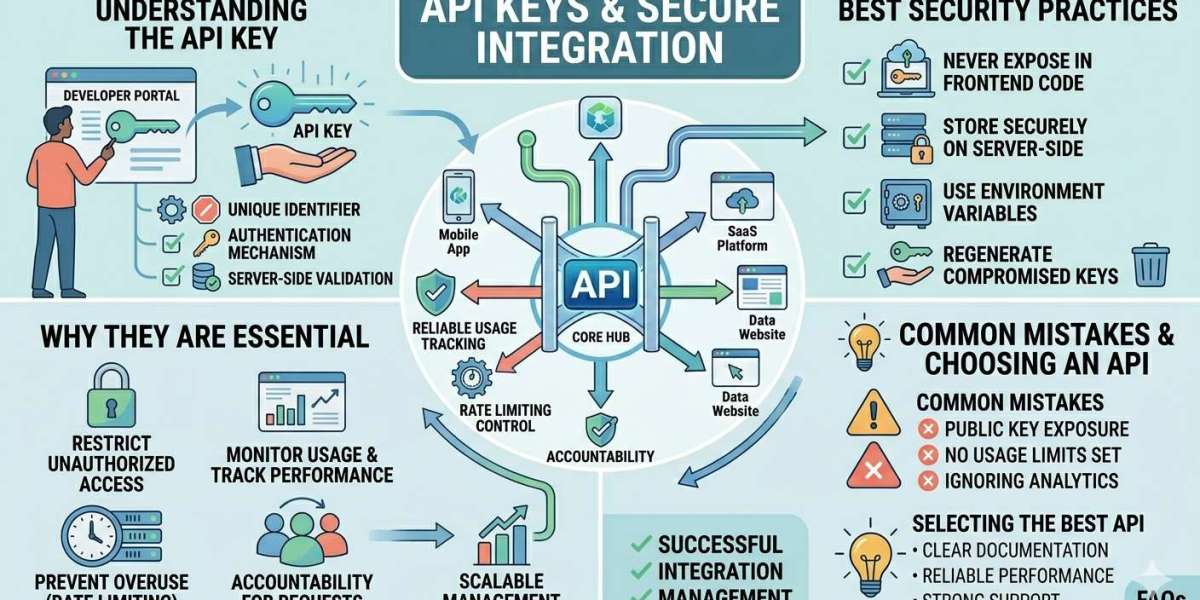
An API key is a unique identifier that is used to authenticate requests made to an API. It acts like a digital key that tells the server who is making the request.
When a developer wants to use an API, they usually sign up for access. After registration, the system generates an API key that is linked to their account. This key must be included in every request sent to the API.
Without this key, the server will not recognize the request, and access will be denied.
How API Keys Work
API keys work as a simple authentication mechanism between the client and the server. When an application sends a request to an API, it includes the API key in the request header or URL.
The server receives the request and checks the key against its database. If the key is valid, the request is processed. If not, the request is rejected.
Here is a simplified flow of how it works:
- A developer signs up on a platform and receives an API key
- The application sends a request with the API key
- The server verifies the key
- The server responds with data if the key is valid
This process ensures that only authorized users can access the API.
Why API Keys Are Important
API keys are not just about access. They also help manage and control how APIs are used.
They allow providers to monitor usage, track performance, and prevent misuse. This is especially important for platforms that offer public APIs, where many developers may be accessing the same service.
Some key benefits include:
- Security by restricting unauthorized access
- Usage tracking for analytics and billing
- Rate limiting to prevent overuse
- Accountability for each request
Without API keys, managing API traffic would be difficult and less secure.
API Keys and Security
While API keys provide a basic level of security, they are not as strong as other authentication methods like OAuth. However, they are still widely used because of their simplicity.
To use API keys securely, developers should follow best practices:
- Never expose API keys in public code repositories
- Store keys securely on the server side
- Use environment variables instead of hardcoding
- Regenerate keys if they are compromised
Security is a shared responsibility between the API provider and the developer using it.
Where You Get an API Key
Most APIs provide keys through a dedicated API Developer portal. This portal acts as a central place where developers can sign up, manage their keys, and access documentation.
Inside a developer portal, you can usually:
- Create and manage API keys
- View usage statistics
- Access documentation and guides
- Test API endpoints
A well designed portal improves the developer experience and makes it easier to start using an API.
API Keys in API Development
In real projects, API keys are used across many types of applications. From mobile apps to web platforms, they enable seamless communication between services.
During API development, developers integrate keys into their applications to fetch data, send requests, and automate tasks.
For example, a weather app may use an API key to request real time weather data. Each request includes the key, ensuring that the API provider can track and manage usage.
API keys also help developers test their applications during the development phase before deploying them to production.
API Keys vs Other Authentication Methods
API keys are just one way to authenticate requests. There are other methods that offer higher levels of security.
OAuth is commonly used for user level authentication, where permissions are granted without sharing credentials.
JWT tokens are another method that allows secure data exchange between parties.
API keys are best suited for simple use cases where basic authentication is sufficient. They are easy to implement and require less setup compared to more advanced methods.
Common Mistakes Developers Make
Even though API keys are simple, developers often make mistakes that can lead to security issues or performance problems.
Some common mistakes include:
- Exposing keys in frontend code
- Sharing keys publicly
- Not setting usage limits
- Ignoring monitoring and analytics
Avoiding these mistakes helps ensure a smooth and secure experience when working with APIs.
Choosing the Best API for Your Needs
Not all APIs are the same. Selecting the Best API depends on your project requirements.
A good API should offer clear documentation, reliable performance, and strong support. It should also provide a simple way to generate and manage API keys.
When evaluating APIs, consider factors like response time, scalability, and ease of integration.
Choosing the right API can save time and improve the overall quality of your application.
The Future of API Keys
As technology evolves, API authentication methods continue to improve. While API keys remain widely used, there is a growing shift toward more secure and flexible solutions.
However, API keys will likely remain a fundamental part of API usage due to their simplicity and ease of implementation.
For developers, understanding how API keys work is a foundational skill that will always be relevant.
API keys are a simple yet powerful tool that enables secure communication between applications and services. They act as a gateway that allows developers to access APIs while maintaining control and security.
By understanding how API keys work and following best practices, developers can build more reliable and efficient applications. Whether you are working with small projects or large scale systems, API keys are an essential part of the development process.
Learning how to use them effectively will help you make the most of modern APIs and create better digital experiences.
FAQs
1. What is an API key used for
An API key is used to authenticate requests made to an API. It helps the server identify the user and control access to data and services.
2. Are API keys secure enough for applications
API keys provide basic security and are suitable for many use cases. However, for sensitive data or user authentication, more advanced methods like OAuth are recommended.
3. Where can I get an API key
You can get an API key by signing up on an API provider’s developer portal. Once registered, you can generate and manage your keys from the dashboard.