The tech industry is currently obsessed with Micro OLED. It is the heart of the next generation of Augmented Reality (AR) and Virtual Reality (VR) headsets. However, there is a significant gap between what a Micro OLED display can do in a lab and what it can do in a real-world product.
For engineers, product developers, and B2B buyers, the biggest hurdle isn't resolution—it’s the Brightness Paradox. If you want a brighter screen for outdoor use, you generate heat that can destroy the display. This is the technical bottleneck that is currently holding back the industry from mass adoption.
Why High PPI is a Double-Edged Sword
Micro OLED (OLED-on-Silicon) achieves incredible pixel density—often over 3,000 pixels per inch (PPI). While this makes images look perfectly sharp and eliminates the "screen door effect," it creates a massive thermal problem.
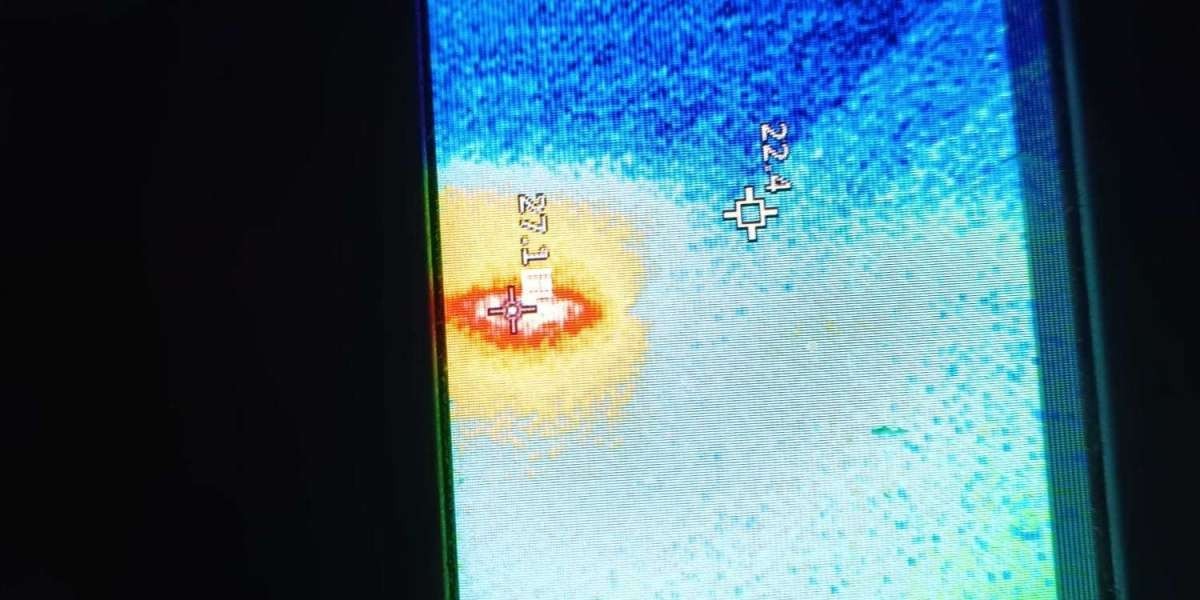
In a standard smartphone OLED, the pixels are relatively large, and heat can spread across a glass substrate. In a Micro OLED, millions of sub-pixels are packed into a tiny silicon wafer smaller than a fingernail. When you push high current through these tiny organic light-emitting diodes to make them bright enough for AR glasses used in sunlight, they generate concentrated heat. Unlike a large TV or a laptop, there is no room for massive heat sinks or cooling fans inside a lightweight headset.
The Thermal Throttling Reality
When a Micro OLED display gets too hot, the physical properties of the display begin to fail. This leads to a phenomenon known as thermal throttling. This is a major pain point for manufacturers who promise high performance but cannot deliver it consistently.
Color Shifting: The organic materials in the display react to heat. When the temperature rises, the blue, green, and red sub-pixels may degrade at different rates, causing the screen to look yellowish or washed out.
The Efficiency Death Loop: As the temperature rises, the electrical resistance increases. The display then requires even more power to maintain the same brightness, which generates even more heat.
To prevent the display from permanent "burn-in" or physical melting, the internal software must automatically lower the brightness. For a B2B supplier, this is a reliability nightmare. You might sell a panel rated for 3,000 nits, but in a real-world tactical viewfinder, it might drop to 1,000 nits after just a few minutes of use to stay cool.
The Yield Rate Crisis: Why Costs Stay High
One of the most frustrating problems in Micro OLED production is the Manufacturing Yield. Unlike traditional displays, these are built on 8-inch or 12-inch silicon wafers, using the same precision equipment used to make computer chips.
The problem is that even a microscopic speck of dust or a minor vibration during the "evaporation" phase of manufacturing can ruin a display. In the early stages of a production line, it is common for only 30% to 40% of the panels on a wafer to be usable.
This low yield rate is the primary reason Micro OLED headsets remain so expensive. Companies aren't just paying for the high-end technology; they are paying for the 60% of wasted silicon that had to be thrown away during the manufacturing process. Until yields reach the 80% mark, Micro OLED will remain a "luxury" component rather than a mass-market one.
The Duty Cycle and Motion Blur Trade-off
For a smooth experience in VR or high-speed tactical optics, the display needs a "low persistence" setting. This means the pixels pulse on and off very quickly to prevent motion blur when you move your head.
This creates a technical conflict:
The Problem: If a pixel is only "on" for 20% of a frame (a 20% duty cycle), the human eye perceives the screen as being much darker.
The Struggle: To make the screen look bright while it is pulsing, you have to "overdrive" the pixels during their "on" phase. This puts immense stress on the organic layers.
This trade-off often results in displays that are either too dim to see in daylight or so bright that they burn out within 500 hours of use. For industrial and defense applications, 500 hours is simply not an acceptable lifespan.
Solving the Integration and Signal Bottleneck
Beyond the screen itself, many manufacturers struggle with Interface Mismatch. Connecting a high-speed, high-resolution Micro OLED panel to a standard processor often results in signal integrity issues.
High-resolution displays require massive amounts of data bandwidth. If the connection (interface) isn't perfectly optimized, the device generates even more heat at the connector level. Professional B2B suppliers are now focusing on "Tandem OLED" structures—literally layering two OLEDs on top of each other. This allows for higher brightness at a lower current, effectively "cheating" the thermal limit. However, this adds even more complexity to the already difficult manufacturing process.
The Future: Reliability Over Resolution
The industry is moving past the "resolution war." We already have enough pixels. The new frontier is Reliability. For tactical applications, medical devices, and high-end consumer AR, a display is a liability if it fails under heat stress.
The next era of Micro OLED will be defined by Material Science. We need organic compounds that can survive the heat of a high-brightness environment without degrading. Until then, the "Brightness Paradox" remains the single biggest challenge for anyone trying to build the future of wearable displays.