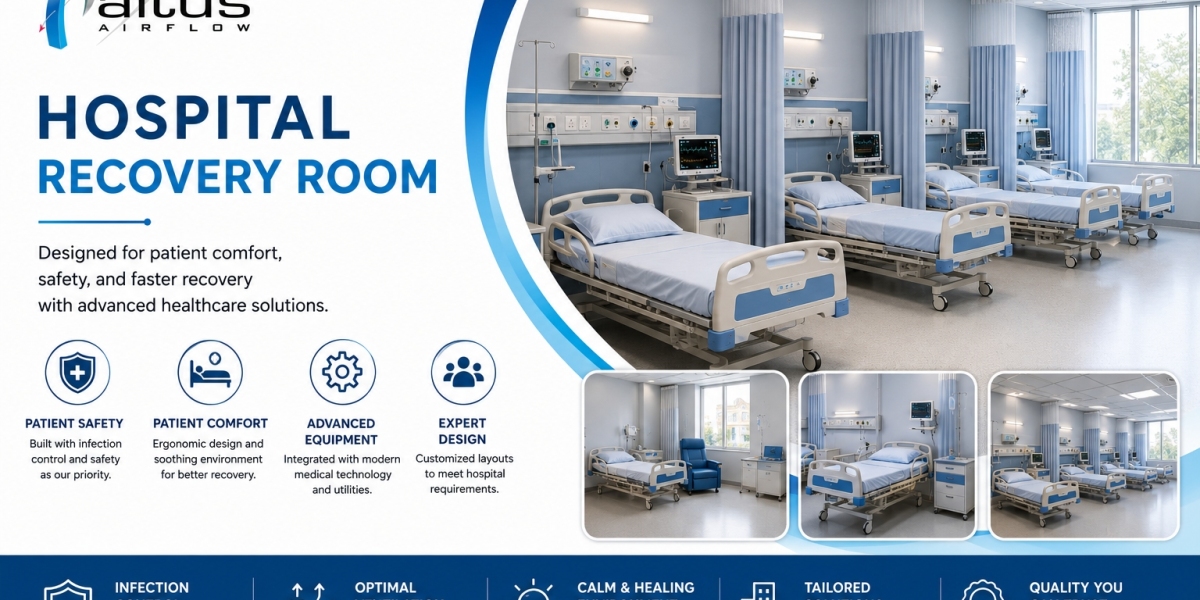

Introduction
A Hospital Recovery Room is equipped with a wide range of medical devices that support patient monitoring and immediate post-operative care. After surgery or medical procedures, patients require continuous observation to ensure a safe recovery from anesthesia and to detect any complications at an early stage. Healthcare professionals rely on advanced medical equipment to monitor vital signs, administer medications, provide respiratory support, and respond quickly to emergencies. A well-equipped recovery room enables hospitals to deliver safe, efficient, and high-quality patient care.
Multi-Parameter Patient Monitors
Patient monitors are one of the most important medical devices in a recovery room.
These systems continuously measure heart rate, blood pressure, oxygen saturation (SpO₂), respiratory rate, ECG, and body temperature. Medical staff use this information to assess patient recovery and detect any sudden changes.
Continuous monitoring allows healthcare professionals to provide timely treatment whenever necessary.
Ventilators
Ventilators provide respiratory support for patients who require assistance with breathing.
These devices deliver controlled airflow to patients recovering from major surgeries or experiencing respiratory complications. Modern ventilators offer adjustable settings based on individual patient needs.
Reliable ventilator support helps maintain stable breathing during recovery.
Infusion Pumps
Infusion pumps are used to administer fluids and medications accurately.
Healthcare professionals use these devices to deliver intravenous fluids, antibiotics, pain medications, and nutritional solutions at controlled rates. Accurate delivery improves treatment safety and effectiveness.
Infusion pumps help ensure patients receive the correct dosage throughout recovery.
Syringe Pumps
Syringe pumps are designed for precise medication administration.
They deliver small volumes of medications such as sedatives, pain relievers, and other critical drugs with high accuracy. These devices are especially useful when precise dosing is required.
Accurate medication delivery contributes to safer patient care.
Oxygen Delivery Equipment
Oxygen support is commonly required after surgery.
Recovery rooms include oxygen outlets, oxygen masks, nasal cannulas, flow meters, and humidifiers to provide respiratory assistance when needed. These devices help maintain healthy oxygen levels during the recovery period.
Proper oxygen therapy supports stable patient recovery.
Suction Units
Suction devices are essential for airway management.
These units remove mucus, fluids, or secretions that may obstruct normal breathing. They are particularly important for patients recovering from major surgical procedures.
Effective suction equipment helps maintain a clear airway and supports respiratory safety.
Defibrillators
Emergency response equipment is an important part of every recovery room.
Defibrillators are installed to provide immediate treatment during life-threatening cardiac emergencies. They allow healthcare professionals to respond quickly if abnormal heart rhythms occur.
Fast access to defibrillators improves emergency preparedness.
Medical Gas Pipeline Systems
Medical gas infrastructure supports several essential recovery room devices.
The recovery room includes oxygen pipelines, vacuum outlets, compressed air systems, medical gas panels, and alarm systems that provide continuous access to required medical gases.
Reliable gas systems ensure uninterrupted patient care.
ECG and Cardiac Monitoring Devices
Cardiac assessment is essential after many surgical procedures.
Specialized ECG monitoring devices help healthcare professionals observe heart activity continuously and detect irregular heart rhythms during recovery.
Early identification of cardiac changes supports timely medical intervention.
Emergency Crash Carts
Crash carts contain essential emergency medical equipment and supplies.
They are equipped with emergency medications, airway management devices, resuscitation tools, intravenous supplies, and other critical care accessories required during emergencies.
Organized emergency equipment improves response speed during critical situations.
Temperature Monitoring Devices
Maintaining normal body temperature is important after surgery.
Digital thermometers and continuous temperature monitoring devices help healthcare professionals assess body temperature and detect signs of infection or other complications.
Regular temperature monitoring supports safe patient recovery.
Nurse Call and Communication Systems
Efficient communication improves patient care.
Nurse call systems enable patients to request assistance immediately, while communication systems help healthcare professionals coordinate treatment and respond quickly to patient needs.
Fast communication enhances both safety and patient satisfaction.
Electrical Backup Systems
Medical devices require uninterrupted electrical power.
Recovery rooms include medical-grade electrical outlets, UPS systems, emergency lighting, grounding protection, and backup generators to ensure continuous operation of life-support and monitoring equipment.
Reliable electrical systems prevent interruptions in patient care.
Conclusion
Modern recovery areas depend on advanced monitoring equipment, respiratory support devices, medication delivery systems, emergency response equipment, medical gas infrastructure, communication systems, and reliable electrical support to provide safe and efficient patient care. Together, these medical devices help healthcare professionals monitor recovery, respond quickly to emergencies, and improve overall treatment outcomes.
FAQs
1. Which medical devices are commonly installed in a Hospital Recovery Room?
A Hospital Recovery Room commonly includes multi-parameter patient monitors, ventilators, infusion pumps, syringe pumps, oxygen delivery systems, suction units, defibrillators, ECG monitors, medical gas systems, crash carts, and communication systems.
2. Why are patient monitors important in recovery rooms?
Patient monitors continuously track vital signs and help healthcare professionals detect changes in a patient's condition quickly.
3. What is the purpose of suction units in a recovery room?
Suction units remove secretions and fluids from the airway, helping patients breathe more comfortably and safely.
4. Why are infusion pumps used after surgery?
Infusion pumps accurately deliver medications and intravenous fluids, ensuring controlled treatment during the recovery period.
5. How do emergency devices improve patient safety?
Emergency devices allow healthcare professionals to respond immediately during critical situations, helping stabilize patients and reduce the risk of complications.
Read Our Previous Blog----------->How do Recovery Rooms Manufacturers In India design advanced patient care spaces?