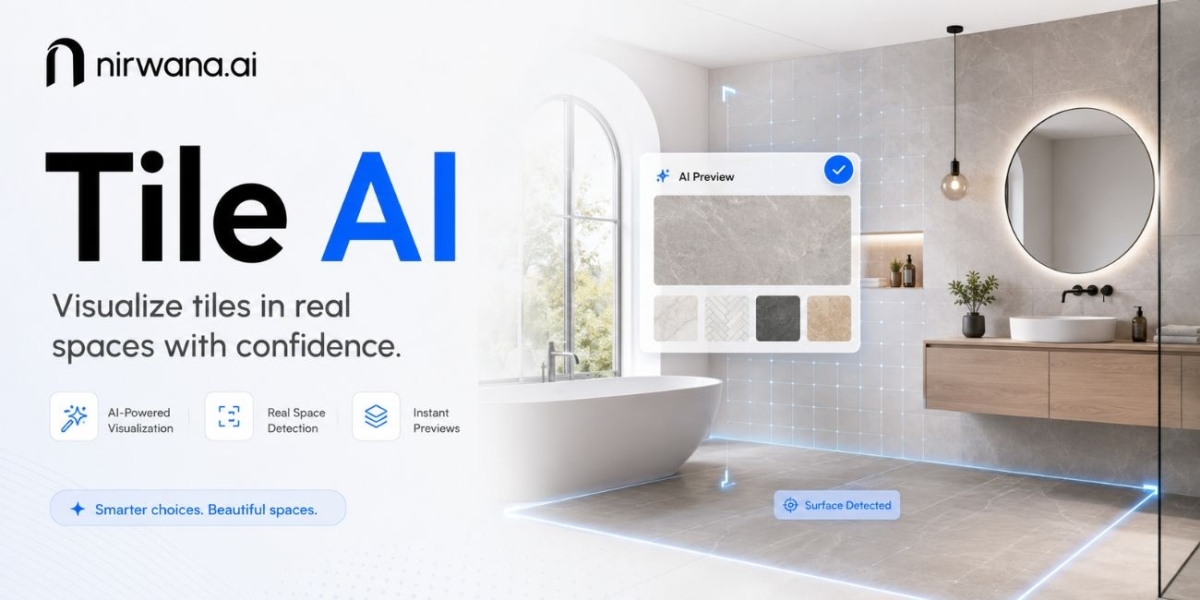

Selecting the right tiles is an important decision because tiles influence the overall appearance, mood, and functionality of a space. However, choosing a product from a small sample, printed catalogue, or standard website image is not always easy. A tile may look attractive individually but appear completely different when repeated across an entire floor or wall. Tile AI helps solve this challenge by allowing customers to preview tile products in realistic interior spaces before making a final purchase.
An AI-powered tile visualization tool enables users to upload a photograph of their bathroom, kitchen, living room, bedroom, showroom, office, or other space. The system identifies suitable surfaces such as floors and walls, allowing users to apply different tiles digitally. Customers can then compare colours, sizes, finishes, textures, and patterns without physically installing any product.
This makes tile selection more interactive, practical, and confidence-driven.
Why Tile AI Is Important for Tile Buyers
Traditional tile buying depends heavily on imagination. Customers must try to understand how a small product sample will look across a much larger area. This creates several questions.
Will the tile make the room look smaller? Will the design appear too repetitive? Will the colour match the furniture and walls? Will the tile look different under warm indoor lighting? Will the selected size suit the room?
With Tile AI, customers can answer many of these questions visually. Instead of imagining the result, they can see a realistic preview before purchasing. This reduces confusion and helps buyers shortlist products more confidently.
For example, a homeowner renovating a bathroom may want to compare white marble-look tiles with darker stone textures. A visualizer allows the customer to apply both products to the same room and understand which option creates the preferred appearance. Similarly, patterned tiles can be tested on a feature wall before the buyer commits to a bold design.
How Tile AI Supports Better Decisions
A reliable visualization system should do more than simply place a flat tile image over a room photograph. It should maintain the correct tile scale, surface perspective, pattern repetition, alignment, and overall visual balance.
If a customer selects a large-format tile, the preview should show fewer joints and realistic proportions. If the product has a decorative pattern, the system should display how that pattern repeats across the complete surface.
These details help customers understand the final design more accurately.
Tile AI can also help customers communicate their choices with architects, designers, contractors, family members, and sales representatives. A saved visualization can act as a clear reference during product selection and installation planning.
Benefits for Tile Brands and Retailers
Tile visualization is not only beneficial for buyers. It can also improve how manufacturers, retailers, dealers, and showrooms present and sell their products.
A standard product page usually contains tile images, dimensions, specifications, and a few lifestyle photographs. An interactive visualizer makes the experience more engaging by allowing users to actively experiment with products.
Customers can explore more tile options, spend more time interacting with the catalogue, and move closer to submitting an enquiry or requesting a quotation. Sales teams can also use visual previews during showroom visits, online meetings, and dealer consultations.
Nirwana.ai helps tile businesses transform product catalogues into interactive visual-selling experiences. Brands can use visualization across their websites, digital catalogues, dealer networks, showroom displays, and sales presentations.
Useful Applications of Tile AI
A tile manufacturer can allow website visitors to upload room photographs and try products instantly.
A retailer can use a large screen or tablet inside the showroom to compare different tiles during consultations.
An architect or interior designer can present several tile combinations to a client without creating a separate manual render for each option.
A dealer can share a visualization through email or messaging platforms, helping the customer review shortlisted products from home.
These practical uses make Tile AI a valuable part of the modern tile-selling journey.
Conclusion
Tile AI is changing the way customers discover, compare, and select tiles. It reduces the gap between viewing a product and understanding how it may look after installation. Customers gain confidence, while tile businesses create a more interactive and effective buying experience.
For manufacturers and retailers looking to modernize product presentation and support better purchase decisions, an AI-powered tile visualization solution from Nirwana.ai can be a practical next step.