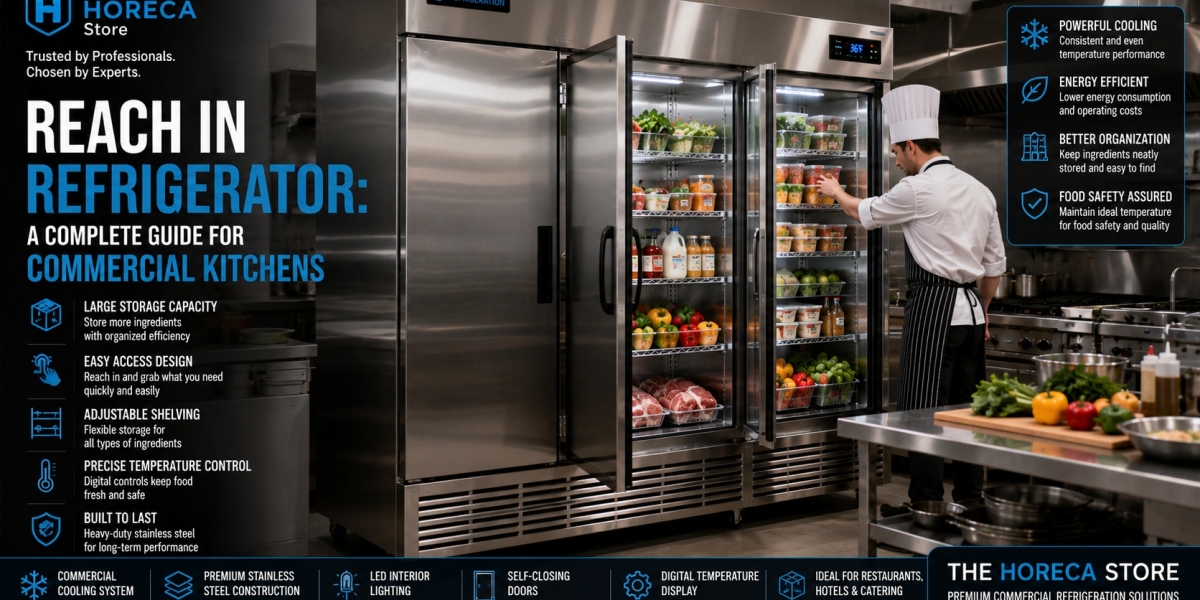

A reliable refrigeration system is one of the most important investments for any professional foodservice operation. Restaurants, hotels, cafés, bakeries, catering companies, supermarkets, and institutional kitchens all need dependable cold storage to protect perishable ingredients and maintain an efficient workflow. Among the most popular refrigeration solutions for these environments is the reach in refrigerator.
Designed for convenient access, large storage capacity, and continuous commercial use, a reach-in refrigerator provides an efficient way to organize fresh ingredients and prepared foods. Unlike compact residential refrigerators, commercial reach-in models are engineered to handle frequent door openings, heavy inventory, and demanding kitchen conditions.
The Horeca Store whether you are opening a restaurant, expanding a commercial kitchen, or replacing outdated refrigeration equipment, understanding the features and benefits of a reach in refrigerator can help you choose the right solution for your operation.
What Is a Reach In Refrigerator?
A reach in refrigerator is a commercial refrigeration unit designed to provide refrigerated storage that employees can easily access by reaching through one or more front doors.
These refrigerators are typically upright and available in different sizes, including one-door, two-door, and three-door configurations. Their vertical design provides substantial storage capacity without requiring the large floor footprint of a walk-in refrigerator.
A commercial reach-in refrigerator can be used to store:
Fresh vegetables
Fruits
Meat
Seafood
Dairy products
Eggs
Sauces
Beverages
Prepared foods
Desserts
Pre-portioned ingredients
The combination of accessibility, capacity, and durability makes reach-in refrigeration an essential part of many professional kitchens.
Why Do Commercial Kitchens Need Reach-In Refrigerators?
A commercial kitchen can have dozens or even hundreds of ingredients that need to remain refrigerated. Employees need to access these products quickly throughout the day.
A reach in refrigerator places commonly used inventory in an organized, easily accessible storage area.
Convenient Access
Employees can quickly open the refrigerator and retrieve ingredients without entering a large walk-in storage area.
Efficient Storage
Adjustable shelves allow businesses to organize products according to size, category, or frequency of use.
Space Efficiency
The upright design uses vertical space efficiently and can provide substantial storage without taking up excessive floor area.
Improved Workflow
Positioning a reach-in refrigerator near food preparation or cooking stations can reduce unnecessary movement around the kitchen.
Additional Refrigerated Capacity
Businesses can use reach-in refrigerators alongside walk-in refrigerators, undercounter units, and other refrigeration systems.
Types of Reach In Refrigerators
Commercial reach-in refrigerators are available in several configurations.
One-Door Reach-In Refrigerators
One-door models are suitable for smaller commercial kitchens, cafés, bakeries, and food preparation areas.
They provide convenient refrigerated storage while taking up less space than larger models.
Two-Door Reach-In Refrigerators
Two-door models offer greater capacity and are popular in busy restaurants, hotels, and institutional kitchens.
They provide more storage while maintaining easy employee access.
Three-Door Reach-In Refrigerators
Three-door units provide even greater storage capacity for high-volume operations.
They are useful for restaurants, catering kitchens, hotels, supermarkets, and other businesses that maintain large inventories.
Glass-Door Reach-In Refrigerators
Glass-door models allow employees to see stored products without opening the door.
They are particularly useful for beverage storage and customer-facing applications.
Solid-Door Reach-In Refrigerators
Solid-door refrigerators provide strong insulation and are commonly used for back-of-house food storage.
They are ideal for kitchens that prioritize storage capacity and temperature retention.
Key Features to Look for in a Reach In Refrigerator
When selecting a reach in refrigerator, businesses should evaluate several important features.
Temperature Control
Accurate temperature control is essential for maintaining appropriate refrigerated storage conditions.
Digital controls make it easier for employees to monitor and adjust the internal temperature.
Adjustable Shelving
Adjustable shelves provide flexibility when storing products of different sizes.
Businesses can rearrange shelves to accommodate containers, food pans, boxes, bottles, and other inventory.
Stainless-Steel Construction
Commercial kitchens require durable equipment that can withstand heavy daily use.
Stainless steel is commonly used because it is durable, professional-looking, and relatively easy to clean.
Door Gaskets
High-quality door gaskets create a tight seal around the refrigerator doors.
A damaged gasket can allow cold air to escape and increase energy consumption.
Self-Closing Doors
Self-closing doors help prevent employees from accidentally leaving the refrigerator open.
This can reduce unnecessary temperature fluctuations and energy loss.
Interior LED Lighting
LED lighting improves visibility inside the refrigerator, allowing employees to identify products quickly.
Efficient Refrigeration System
A reliable compressor and properly designed cooling system help maintain consistent temperatures throughout the cabinet.
Benefits of Using a Commercial Reach-In Refrigerator
A reach in refrigerator provides several advantages for professional foodservice operations.
Large Storage Capacity
Vertical cabinet designs provide significant refrigerated storage while using relatively little floor space.
Easy Product Access
Employees can quickly reach ingredients without walking to a separate storage area.
Better Organization
Shelving allows inventory to be organized by category, delivery date, or frequency of use.
Improved Kitchen Productivity
Quick access to ingredients can help employees work more efficiently during busy service periods.
Flexible Placement
Reach-in refrigerators can be positioned near preparation stations, cooking lines, service areas, or storage zones depending on the kitchen layout.
Reliable Commercial Performance
Professional reach-in refrigerators are designed for demanding environments where equipment may operate continuously throughout the day.
Reach-In Refrigerator vs. Walk-In Refrigerator
Both refrigeration systems are important in commercial foodservice, but they serve different purposes.
A reach in refrigerator is designed for convenient daily access to refrigerated inventory, while a walk-in refrigerator is designed for larger-scale storage.
Reach-In Refrigerator
Compact compared with a walk-in
Easy employee access
Excellent for daily ingredients
Available in multiple door configurations
Requires less installation space
Walk-In Refrigerator
Much larger storage capacity
Employees can enter the refrigerated space
Ideal for bulk inventory
Requires dedicated installation space
Suitable for high-volume storage
Many larger restaurants and hotels use both systems. Bulk inventory can be stored in the walk-in refrigerator while frequently used ingredients remain in reach-in refrigerators near preparation areas.
How to Choose the Right Reach In Refrigerator
Selecting the correct refrigerator requires more than choosing the largest available model.
Consider Available Space
Measure the installation area carefully.
Check:
Width
Height
Depth
Door clearance
Ventilation space
Electrical access
Make sure employees can open the doors comfortably without blocking walkways or other equipment.
Determine Storage Requirements
Consider the amount of food your business stores each day.
A small café may only require a one-door model, while a high-volume restaurant may need a two- or three-door unit.
Consider Door Type
Solid doors are ideal for back-of-house storage, while glass doors can improve product visibility.
Evaluate Interior Layout
Adjustable shelving and suitable interior dimensions can make a major difference in how efficiently inventory is stored.
Consider Energy Efficiency
Because commercial refrigeration equipment typically operates continuously, energy consumption should be considered when comparing models.
Energy Efficiency in Commercial Reach-In Refrigerators
Energy costs can represent a significant operating expense for foodservice businesses.
Choosing an energy-efficient reach in refrigerator can help reduce long-term operating costs.
Important features may include:
Efficient compressors
High-performance insulation
LED interior lighting
Automatic door closing
Efficient evaporator fans
Modern temperature controls
Businesses should also position refrigeration equipment away from excessive heat sources whenever possible.
Regular maintenance is equally important because dirty condenser components, damaged door gaskets, or blocked airflow can reduce efficiency.
Proper Organization of a Reach-In Refrigerator
Organization is essential for making the most of a commercial refrigerator.
Store similar products together and use labeled containers where appropriate.
For example:
Dairy products can be grouped together.
Vegetables can occupy dedicated shelves.
Prepared foods can be stored in clearly labeled containers.
Beverages can be organized separately.
Raw products should be appropriately separated from ready-to-eat foods.
Following an organized inventory system can help employees locate products quickly and reduce unnecessary door-opening time.
Maintenance Tips for Reach-In Refrigerators
Regular maintenance can help protect refrigeration performance and extend equipment lifespan.
Clean the Interior
Remove spills, food particles, and expired products regularly.
Inspect Door Gaskets
Check the door seals for cracks, gaps, or deterioration.
Clean Condenser Components
Dust and debris can reduce cooling efficiency. Follow the manufacturer's maintenance recommendations.
Monitor Temperature
Check internal temperatures regularly and investigate unexpected changes.
Maintain Airflow
Avoid blocking interior air vents with containers or food products.
Keep Doors Closed
Minimize unnecessary door openings to reduce temperature fluctuations.
Schedule Professional Service
Professional inspections can help identify potential issues before they lead to major equipment failures.
Common Mistakes to Avoid
Businesses should avoid several common mistakes when purchasing or operating a reach in refrigerator.
Choosing the Wrong Size
A refrigerator that is too small may become overcrowded, while an unnecessarily large model may waste space and energy.
Overloading Shelves
Overloading can restrict airflow and make temperature control more difficult.
Ignoring Door Seals
Damaged gaskets can cause cold air loss and increase energy consumption.
Poor Organization
Disorganized inventory makes products harder to find and may increase waste.
Neglecting Cleaning
Food spills and debris can create hygiene concerns and affect equipment performance.
Ignoring Maintenance
Even high-quality refrigeration equipment requires regular inspection and servicing.
Why Choose The Horeca Store for Commercial Reach-In Refrigeration?
Choosing a reliable commercial equipment supplier is an important step when investing in refrigeration equipment. The Horeca Store provides professional refrigeration solutions designed for restaurants, hotels, cafés, bakeries, catering businesses, supermarkets, and other foodservice operations.
The reach in refrigerator selection is designed to support businesses that need dependable refrigerated storage with convenient access to frequently used ingredients.
Businesses can choose equipment based on storage capacity, door configuration, available kitchen space, product requirements, and operational needs.
Whether you need refrigeration for a compact café or additional storage for a busy restaurant kitchen, selecting the right commercial refrigerator can help improve organization, workflow, and inventory management.
The Horeca Store focuses on professional restaurant equipment and commercial refrigeration solutions designed to meet the demands of modern hospitality and foodservice environments.
Conclusion
A reach in refrigerator is one of the most practical refrigeration solutions for commercial kitchens. Its combination of vertical storage, convenient access, durable construction, and professional cooling performance makes it suitable for a wide variety of foodservice businesses.
Restaurants, hotels, cafés, bakeries, catering companies, supermarkets, and institutional kitchens can use reach-in refrigerators to store fresh ingredients, prepared foods, beverages, dairy products, meat, seafood, and other refrigerated inventory.
When choosing a unit, consider its size, storage capacity, door configuration, shelving, temperature control, energy efficiency, construction quality, and maintenance requirements. Proper organization and routine maintenance are also essential for achieving reliable long-term performance.
For businesses searching for dependable commercial refrigeration equipment, The Horeca Store offers professional solutions designed for modern foodservice operations. With the right reach in refrigerator, businesses can maximize storage space, improve ingredient accessibility, support organized inventory management, and create a more efficient commercial kitchen.