
A security camera can show you what is happening at home. A smart lock can control who enters. An alarm can make plenty of noise when a sensor is triggered. But what happens when you are asleep, driving, at work, or simply unable to check your phone?
That is where professional monitoring becomes especially valuable.
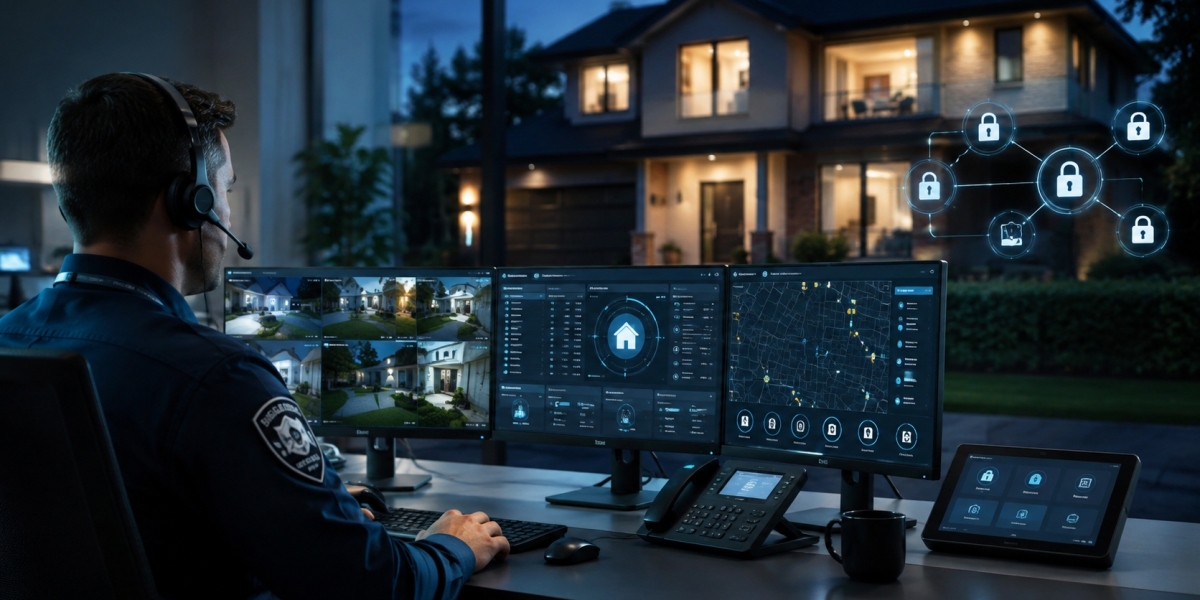
Modern home security has moved well beyond a basic alarm system. Connected devices now give homeowners more control and visibility than ever, but professional monitoring adds a human layer to that technology. When an alarm signal is received, trained monitoring personnel can follow established procedures and help coordinate an appropriate response.
For homeowners considering a new security system or upgrading an existing one, understanding the role of professional monitoring can make it easier to decide whether it belongs in their security plan.
What Is Professional Home Security Monitoring?
Professional monitoring is a service in which a security system communicates alarm signals to a monitoring center staffed by trained personnel.
When a compatible sensor detects an event such as an unauthorized entry, smoke, or another monitored emergency—the system can send a signal to the monitoring center. Depending on the type of event and the provider's procedures, monitoring personnel may contact the homeowner or take other appropriate steps to help address the situation.
This differs from a self-monitored system, where the homeowner is primarily responsible for receiving alerts and deciding what to do next.
Neither approach is automatically right for every household. The difference comes down largely to who is available to respond when an alert occurs.
Why the Human Element Still Matters
Smart technology can detect and report unusual activity, but it cannot replace every aspect of human decision-making.
Consider receiving a security alert while your phone is in another room. Or imagine an alarm occurring while you are on a flight and unable to respond. A notification is only useful if someone sees it and can act.
Professional monitoring provides an additional point of contact. Instead of relying entirely on the homeowner to notice an alert, a monitoring center can receive the alarm signal and follow the provider's response procedures.
That extra layer can be particularly reassuring for families who travel frequently, work long hours, or simply want additional support around the clock.
Professional Monitoring Works With Modern Security Technology
Professional monitoring does not replace smart security devices. It works alongside them.
A modern monitored system may include:
- Door and window sensors
- Motion detectors
- Security cameras
- Glass-break sensors
- Smoke and fire detection
- Carbon monoxide detection
- Panic buttons
- Smart locks
- Mobile alerts
These devices collect information about activity around the property. The monitoring service provides another layer of response when qualifying alarms are triggered.
For example, a door sensor may detect an unexpected entry and transmit an alarm signal. A homeowner may receive a mobile notification at the same time, while the monitoring center receives the corresponding signal and follows its established procedures.
The result is a more connected approach to residential security.
24/7 Coverage Makes a Difference
Security concerns do not disappear after business hours. An alarm can happen in the middle of the night, during a holiday, or while a homeowner is away for several days.
That is why continuous monitoring is one of the most important features to evaluate.
A professional monitoring service should be available around the clock rather than only during traditional office hours. Before signing up, homeowners should confirm exactly what "24/7 monitoring" means, how alarm signals are handled, and what communication channels are available.
Continuous coverage can provide reassurance that there is a monitoring process in place regardless of when an event occurs.
Monitoring Beyond Burglary Alerts
Many people associate professional monitoring exclusively with break-ins. In reality, monitored security systems can often address several types of emergencies.
Depending on the equipment and service plan, monitored events may include:
Fire and Smoke
Smoke and fire detection can provide an early warning of potentially dangerous conditions. When connected to professional monitoring, these alerts can be handled through established emergency procedures.
Carbon Monoxide
Carbon monoxide is difficult to detect without the appropriate sensor because it is colorless and odorless. A compatible monitored detector can alert occupants and, where supported by the service, transmit an alarm signal for professional response.
Emergency or Panic Alerts
Some security systems include emergency buttons that allow occupants to initiate an alert quickly. These can be useful when a person cannot access a phone or wants to activate an emergency signal directly through the security system.
The exact services and response procedures vary between providers, so homeowners should always confirm what their monitoring plan covers.
Professional Monitoring When You Are Away
One of the strongest arguments for professional monitoring is that it does not depend entirely on the homeowner being available.
When people leave for work, vacations, or weekend trips, they cannot realistically watch their security cameras or check every notification. Professional monitoring can provide an additional layer of oversight during those periods.
Homeowners researching professional security solutions can explore PHT Security to learn more about available security and monitoring services.
Remote access still has an important role. Mobile apps can allow homeowners to check cameras, receive notifications, and manage compatible equipment. Professional monitoring complements these features by adding trained personnel to the response process.
Backup Communication and Power
A security system is only useful if it can communicate when an alarm occurs. That makes backup capabilities an important consideration.
Some systems use battery backup to keep essential components running during a power outage. Depending on the equipment and provider, alternative communication methods may also be available if the primary internet connection fails.
Homeowners should ask potential providers:
- Does the system have battery backup?
- How are alarm signals transmitted?
- Is there a backup communication method?
- What happens during an internet outage?
- How long can the system operate without mains power?
Understanding these details can help homeowners choose a system designed to remain functional during unexpected disruptions.
What Happens When an Alarm Is Triggered?
The exact procedure depends on the provider, equipment, and type of alarm, but the general process is straightforward.
First, a monitored sensor or device detects an event and sends a signal. The monitoring center receives that signal and follows its established response protocol. Depending on the event, personnel may attempt to contact the homeowner or take other steps specified by the service agreement.
Homeowners should ask providers to explain this process before purchasing a service. Knowing how alarms are handled can help set realistic expectations and eliminate confusion.
It is also important to understand the difference between an alarm signal and a guaranteed emergency outcome. Monitoring companies facilitate communication and response procedures; they do not eliminate the possibility of false alarms, equipment failures, or delays outside their control.
Choosing the Right Professional Monitoring Service
Not all monitoring plans are identical. When comparing providers, look beyond the monthly price.
Consider the quality of the equipment, monitoring availability, backup options, installation, customer support, contract terms, and the types of events covered.
For homeowners in the Houston area, ADT monitoring services in Houston can be one option to research when comparing professionally monitored security solutions.
It is also worth asking whether the provider supports future upgrades. Your security needs may change as your household, property, or technology changes. A flexible system can make it easier to add compatible cameras, sensors, smart locks, or other equipment later.
Professional Monitoring vs. Self-Monitoring
Self-monitoring gives homeowners direct control over their alerts. It can be a practical choice for people who are comfortable responding to notifications themselves and who can reliably keep their phones accessible.
Professional monitoring adds another layer for situations where the homeowner cannot respond.
Rather than viewing the two approaches as completely separate, some modern systems combine both. Homeowners can receive mobile notifications while a professional monitoring center also receives qualifying alarm signals.
This layered approach can provide convenience without relying entirely on one method of response.
A More Complete Approach to Home Security
Technology has made home security more convenient, but convenience and protection are not necessarily the same thing. A camera can show what is happening. A sensor can detect movement. A smartphone can display an alert. Professional monitoring adds trained human oversight to that chain.
For homeowners who want additional support when they are unavailable, that can be a meaningful advantage.
The best security setup is one that fits the property, household, budget, and level of protection desired. Professional monitoring should be evaluated alongside equipment quality, backup capabilities, mobile access, installation, and customer support.
Ultimately, modern home security works best as a layered system. Technology provides detection and information, while professional monitoring can provide an additional response layer when homeowners need it most. For many households, that combination offers something difficult to put a price on: greater confidence that their home has protection even when they cannot personally be there to respond.
Frequently Asked Questions
What is professional home security monitoring?
Professional home security monitoring is a service where trained monitoring personnel receive signals from a home's security system and follow established response procedures when an alarm or emergency event is detected.
Why is professional monitoring important?
Professional monitoring provides an additional layer of protection when homeowners are asleep, away from home, driving, working, or unable to respond to an alert themselves.
What can professional monitoring detect?
Depending on the security system and service plan, professional monitoring may handle signals from intrusion alarms, smoke and fire detectors, carbon monoxide detectors, panic buttons, and other connected security devices.
Does professional monitoring work 24/7?
Reliable professional monitoring services are generally designed to provide continuous coverage, including nights, weekends, and holidays. Always confirm the monitoring hours and response procedures with the provider.
Can I still use my phone with professional monitoring?
Yes. Many modern security systems allow homeowners to receive mobile notifications, view compatible cameras, and manage certain security features while professional monitoring provides an additional response layer.
Is professional monitoring better than self-monitoring?
Both options have advantages. Self-monitoring gives homeowners direct control over alerts, while professional monitoring provides trained personnel who can receive qualifying alarm signals when the homeowner is unavailable.
Does professional monitoring work during a power outage?
Some systems include battery backup and alternative communication methods to help maintain security during power or internet outages. Available features depend on the equipment and provider.