
One of the most common questions businesses ask about social media is deceptively simple: How often should we post?
The answer is not “as often as possible.” Posting too little can make a brand easy to forget, while posting constantly can overwhelm your audience and put unnecessary pressure on your marketing team. In 2026, the better approach is to find a sustainable posting rhythm that matches your platform, audience, content quality, and business goals.
Current 2026 guidance generally places a practical starting point at around 3–5 Instagram posts per week, 2–5 TikTok posts per week, 2–5 LinkedIn posts per week, and roughly 1–2 Facebook posts per day. These are useful benchmarks, not rules carved in stone.
The real question is not simply how many times you can publish. It is how often you can consistently deliver content people actually want to see.
Why Posting Frequency Matters
Social media rewards consistency because audiences need repeated exposure to a brand before it becomes familiar. If a business posts once every few weeks, followers may have little reason to remember or interact with it.
On the other hand, increasing your publishing frequency does not automatically produce better results. More content means more competition for your audience's attention, and low quality posts can dilute the impact of stronger content.
Recent 2026 research and industry guidance increasingly emphasize a sustainable cadence rather than chasing maximum volume. Buffer's analysis, for example, recommends different frequencies by platform and notes that consistent posting is associated with stronger engagement.
That makes frequency a planning decision, not a race.
How Often Should You Post on Each Platform?
Different platforms encourage different types of content and user behavior. Your schedule should reflect those differences.
Instagram: 3–5 Feed Posts Per Week
For most businesses, 3–5 Instagram feed posts per week is a practical starting point in 2026. Current guides also recommend experimenting with Reels and Stories rather than treating every Instagram format as if it requires the same schedule.
Your weekly mix might include:
- Educational carousels
- Product or service posts
- Short-form videos
- Customer stories
- Behind-the-scenes content
- Industry tips
Stories can be used more frequently because they are designed for ongoing, lightweight interaction. The key is not to turn every post into a sales pitch.
Facebook: Around 1 Post Per Day
For Facebook business pages, around one post per day is a reasonable starting point, with some businesses testing more frequent publishing. Buffer's 2026 guidance puts the general range at 1–2 posts per day.
However, your audience matters more than a generic recommendation. A local business might benefit from timely updates, community content, offers, customer stories, and helpful information, while a B2B company may need fewer but more detailed posts.
TikTok: 2–5 Posts Per Week
TikTok tends to reward brands that can produce entertaining or useful short-form video consistently. A practical 2026 starting point is 2–5 posts per week, with businesses that have strong production capacity potentially testing a higher frequency.
The important distinction is that TikTok content should not simply be recycled advertisements. Educational clips, demonstrations, quick answers, industry commentary, behind-the-scenes footage, and authentic brand moments can give viewers a reason to keep watching.
LinkedIn: 2–5 Posts Per Week
For LinkedIn, 2–5 posts per week is a reasonable range for many businesses.
Quality is particularly important here. A thoughtful industry insight can be more valuable than several generic promotional updates.
Businesses can rotate between:
- Industry insights
- Company updates
- Employee stories
- Case studies
- Expert advice
- Educational content
- Leadership perspectives
A smaller number of useful posts can help establish credibility without making a company's page feel overly promotional.
Small Businesses Should Start With Less
One mistake businesses make is trying to maintain every platform simultaneously.
If you have a small marketing team, posting five times a week on five platforms could quickly become unrealistic. Instead, identify the two or three channels where your customers are most likely to spend time.
For example, a B2B software company might prioritize LinkedIn, while a fashion brand may place more emphasis on Instagram and TikTok.
Start with a manageable schedule, then expand once you know you can maintain quality.
Businesses looking for professional support with planning and maintaining a consistent social presence can explore social media management services in Lahore as one option for handling content strategy and day-to-day management.
Quality Matters More Than Hitting a Quota
A posting schedule should never force your team to publish weak content simply because the calendar says something is due.
Suppose you normally publish five times a week, but you only have three genuinely useful pieces of content. Publishing two filler posts just to reach five may not improve your results.
Instead, ask whether each post has a purpose.
Does it:
- Teach the audience something?
- Answer a common question?
- Entertain or inspire?
- Show the product in context?
- Build trust?
- Encourage conversation?
- Move a potential customer toward a useful next step?
If the answer is consistently “no,” the problem is probably not your posting frequency. It is your content strategy.
Consistency Beats Bursts of Activity
Imagine a business that publishes eight posts in one week and then disappears for an entire month.
That burst may create temporary activity, but it is difficult to build a predictable relationship with an audience that way.
A more sustainable approach is to spread content throughout the month. For example, instead of creating 12 posts at once and publishing them over two days, schedule them across several weeks.
This also makes performance easier to measure because you can compare content over time rather than dealing with irregular bursts.
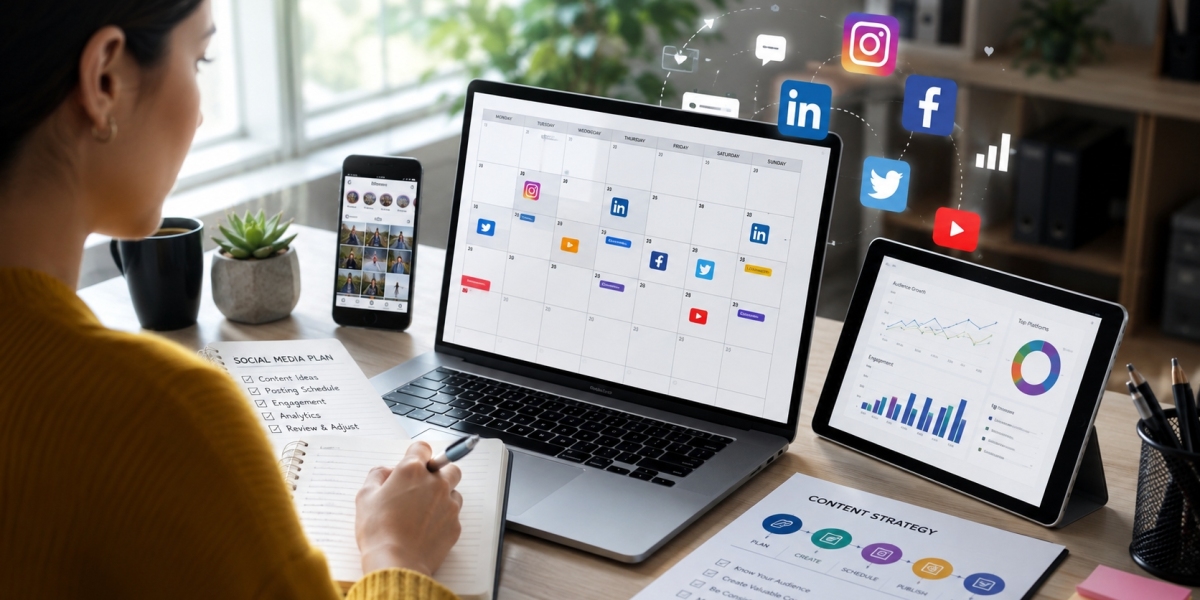
Use a Content Calendar
A content calendar can make a huge difference, particularly for small businesses.
Rather than deciding what to publish every morning, plan content at least one or two weeks ahead. You can organize posts around themes, campaigns, product launches, seasonal events, and recurring customer questions.
A simple weekly calendar might look like this:
Monday: Educational post
Tuesday: Short-form video
Wednesday: Customer story or testimonial
Thursday: Industry insight
Friday: Product or service-focused content
The exact schedule can change depending on the platform and audience. The benefit comes from having a system.
Pay Attention to Your Own Analytics
Generic posting recommendations are useful starting points, but your own data should eventually guide your schedule.
Look at which days and formats generate the strongest results. Monitor reach, engagement, saves, shares, clicks, website visits, leads, and conversions where relevant.
For example, if your audience consistently engages more with educational posts than promotional ones, increase the proportion of educational content.
Similarly, if posting more frequently causes engagement per post to decline, experiment with a slower schedule.
There is no reason to keep following a generic frequency recommendation when your own audience is telling you something different.
Don't Ignore Engagement After Publishing
Posting is only half the job.
If someone comments on your post, asks a question, or sends a message, responding can be just as important as publishing the original content. Social media is a communication channel, not simply a digital billboard.
Build time into your weekly schedule for checking comments and messages. A business that publishes five times a week but never responds to its audience is missing a major part of the opportunity.
When Should You Increase Your Posting Frequency?
There are several situations where increasing frequency can make sense.
You might experiment with more content if:
- You have enough high-quality material
- Your audience responds positively
- You are launching a new product
- You are running a time-sensitive campaign
- You are expanding into a new market
- Your analytics show room for growth
Increase gradually rather than doubling your output overnight. Give the new schedule enough time to produce meaningful data before deciding whether it works.
For businesses that want broader digital marketing support alongside social media strategy, Inclivo can be another resource to consider when evaluating professional marketing services.
A Practical 2026 Posting Schedule
If you need a simple starting point, consider this weekly baseline:
| Platform | Starting Frequency |
|---|---|
| 3–5 posts per week | |
| About 1 post per day | |
| TikTok | 2–5 posts per week |
| 2–5 posts per week | |
| YouTube | Around 1 long-form video per week |
These ranges reflect current 2026 industry guidance, but they should be treated as testing points rather than universal rules. Once you have several weeks of performance data, adjust the schedule based on what your audience actually responds to.
Find the Rhythm Your Brand Can Sustain
There is no magic number that guarantees social media success. The right posting frequency depends on your platform, audience, goals, content resources, and ability to maintain quality.
For many businesses in 2026, a consistent schedule of several useful posts per week is a stronger starting point than trying to publish constantly. Instagram may call for three to five weekly feed posts, LinkedIn may work well with two to five thoughtful updates, and TikTok can support a few videos each week. Facebook often allows for a higher publishing frequency. Start with a schedule your team can realistically maintain. Measure the results. Listen to your audience. Then adjust.
The best social media calendar is not the one with the most posts. It is the one that consistently puts useful, relevant content in front of the right people without sacrificing quality along the way.
Frequently Asked Questions
How often should a business post on social media in 2026?
There is no universal number, but a practical starting point is 3–5 Instagram posts per week, 2–5 TikTok posts per week, 2–5 LinkedIn posts per week, and around 1 post per day on Facebook. Your ideal frequency should be adjusted based on audience engagement and content quality.
Is posting every day on social media necessary?
No. Daily posting is not required for every business. A consistent schedule with high-quality, relevant content is generally more effective than posting every day simply to stay active.
How often should a business post on Instagram?
For many businesses, 3–5 feed posts per week is a reasonable starting point. Stories and Reels can be added based on available content, audience behavior, and marketing goals.
How often should a business post on LinkedIn?
Businesses can start with approximately 2–5 LinkedIn posts per week. Professional insights, educational content, company updates, case studies, and industry commentary can help maintain an engaging presence.
How often should a business post on TikTok?
A starting range of 2–5 posts per week can work well for many businesses. The focus should remain on creating engaging, useful, or entertaining videos rather than simply increasing volume.
Does posting more often increase social media engagement?
Not necessarily. More frequent posting can help increase opportunities for visibility, but excessive or low-quality content may overwhelm followers. Engagement depends on content relevance, quality, timing, audience, and platform behavior.
What is the best time to post on social media?
The best time varies by platform and audience. Businesses should review their analytics to identify when their followers are most active and test different publishing times rather than relying solely on generic recommendations.
Should small businesses post on every social media platform?
Not necessarily. Small businesses often benefit from focusing on the platforms where their target customers are most active. Managing two or three platforms consistently can be more effective than maintaining several accounts poorly.
How can a business maintain a consistent posting schedule?
A content calendar can help businesses plan topics, create content in batches, schedule posts, and coordinate campaigns. Social media management tools or professional assistance can also make maintaining consistency easier.