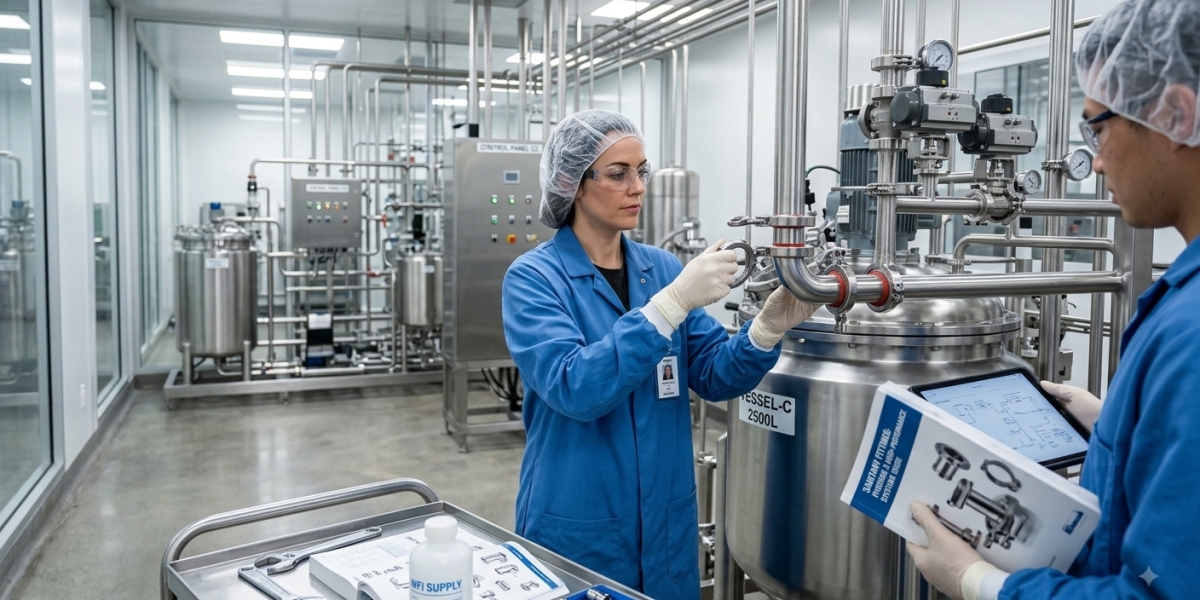

As modern computing environments become more powerful, efficient thermal management has become a major part of data center planning. Artificial intelligence workloads, high-performance computing, and densely packed servers can generate substantial heat that traditional cooling approaches may struggle to manage. Working with dependable data center liquid cooling suppliers can help facilities develop cooling infrastructure that is reliable, scalable, and suitable for demanding operating conditions.
Understanding Liquid Cooling Requirements
Before selecting a supplier, data center operators should understand the specific requirements of their cooling environment. Different facilities may use chilled water, glycol-based solutions, dielectric fluids, or other cooling methods depending on their equipment and thermal targets.
A suitable supplier should understand how tubing, fittings, valves, connectors, and other components work together within a complete liquid cooling loop. This broader knowledge helps ensure that individual components are compatible with the overall system design.
Why Component Quality Matters
Liquid cooling infrastructure depends on many interconnected components. Tubing carries coolant between different sections of the system, while fittings create secure connections and valves provide control over fluid movement.
High-quality stainless steel components can provide excellent durability and resistance to corrosion. They are also suitable for demanding environments where cooling systems must operate continuously. Selecting properly manufactured components can reduce concerns related to premature wear, leakage, and unnecessary maintenance.
Material Selection for Cooling Systems
The material used in a cooling loop can influence its long-term performance. Stainless steel is widely valued for its strength, corrosion resistance, and ability to maintain reliable performance in fluid-handling applications.
Different grades can be selected according to the requirements of the project. For example, 304 stainless steel can be appropriate for many general applications, while 316L can provide additional corrosion resistance for more demanding cooling environments.
The correct material should always be selected according to the coolant, pressure, temperature, and other engineering requirements of the facility.
Supporting High-Density Computing
AI servers and high-performance computing systems can place significant demands on cooling infrastructure. As rack densities increase, liquid cooling becomes an increasingly important part of thermal management strategies.
A well-designed cooling loop can move heat away from equipment more efficiently while maintaining stable operating conditions. Suppliers with experience in data center applications can help provide components designed for the flow rates, connection requirements, and installation conditions associated with high-density computing environments.
Importance of Precision Connections
Connections deserve particular attention during system design. Poorly selected or improperly installed fittings can create potential leakage points and make future maintenance more complicated.
Precision stainless steel fittings can provide secure connections between tubing, valves, manifolds, and other cooling components. Options such as welded and sanitary-style connections can also support clean and organized installations.
Reliable connections are especially important in mission-critical facilities because cooling interruptions can affect equipment performance and operational continuity.
Planning for Future Expansion
A data center cooling system should not only meet today's requirements. Facilities may add new server racks, upgrade computing equipment, or increase processing capacity in the future.
A scalable cooling infrastructure makes these changes easier to manage. When suppliers can provide compatible tubing, fittings, valves, and related components, facility teams can expand existing systems without completely redesigning the cooling network.
This approach can also make maintenance and replacement planning more straightforward as the facility grows.
What to Look for in a Supplier
When evaluating suppliers, businesses should consider product quality, material options, dimensional accuracy, connection types, availability, and technical knowledge. Consistent manufacturing standards are also important because cooling systems depend on components fitting together correctly.
A supplier that understands the requirements of modern liquid cooling can provide more than individual products. The right partner can help businesses build a dependable component network that supports efficient thermal management and long-term facility performance.
Conclusion
Choosing reliable components is an important step toward building an effective liquid cooling infrastructure. High-quality tubing, fittings, valves, and connectors can support dependable fluid circulation, minimize maintenance concerns, and provide flexibility for future expansion. For any business planning a modern data center, selecting experienced suppliers and durable cooling components can help create a more reliable and scalable operation.