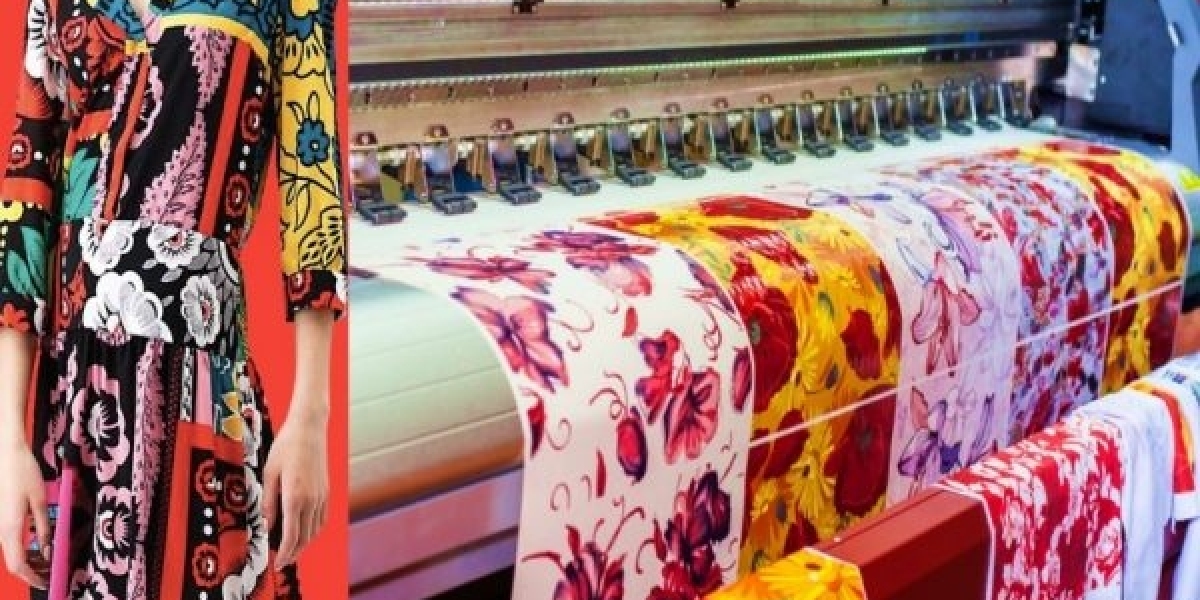

Digital printing on fabric is a modern textile printing method that transfers a digital image directly onto fabric using specialized inkjet printing equipment. Unlike traditional screen printing, which requires separate screens for different colors, digital printing can reproduce detailed artwork from a computer file with minimal setup. This makes it useful for custom clothing, home textiles, promotional products, interior fabrics, and short production runs.
The growth of digital printing on fabric has changed how textile designs are produced. Designers can test patterns, adjust colors, and print complex images without preparing large quantities in advance. Depending on the fabric type and ink technology, digital printing can produce sharp details, smooth color transitions, photographic images, and repeating patterns with considerable design flexibility.
What Is Digital Printing on Fabric?
fabric printing is a process in which textile-compatible ink is applied to the surface of fabric through printheads. The printer reads a digital design file and places tiny droplets of ink in precise locations to create the final image.
The technology resembles an advanced inkjet printer, but textile printers are designed to work with fabrics and specialized inks. The choice of ink is important because different fibers require different chemical properties for proper color development, durability, and wash resistance.
Common fabric printing technologies include:
Reactive printing: Mainly used for cotton, linen, rayon, and other cellulosic fibers. The dye chemically bonds with the fiber and generally provides strong wash durability.
Acid printing: Commonly used for wool, silk, nylon, and other suitable fibers. It is particularly useful when strong, vibrant colors are required on these materials.
Disperse printing: Primarily used with polyester and other synthetic fibers. The color is developed through heat so that the dye becomes associated with the fiber.
Pigment printing: Can be used on a broad range of textiles. Pigment inks sit on the fabric surface and usually require a binder and heat curing to improve durability.
How Does Digital Fabric Printing Work?
1. Design Preparation
The process starts with a digital artwork file. Designers may use photographs, illustrations, logos, patterns, or computer-generated artwork. The file is checked for resolution, color accuracy, dimensions, and repeat requirements before printing.
For large textile designs, a low-resolution image can produce blurred edges and visible pixelation. Preparing artwork at an appropriate resolution is therefore an important part of quality control.
2. Fabric Preparation
The fabric may require pretreatment before it enters the printer. Pretreatment helps control how ink interacts with the fibers and can improve color development and print definition.
The exact preparation depends on the fabric and ink system. Some fabrics require more extensive chemical preparation than others.
3. Printing
The prepared fabric is loaded into the printer, where printheads deposit controlled amounts of ink according to the digital artwork. Modern machines can place very small ink droplets at high speed, allowing detailed patterns and smooth tonal changes.
Unlike screen printing, digital printing does not require a separate physical screen for every color.
4. Fixing and Finishing
After printing, the fabric may require steaming, heat treatment, curing, or washing, depending on the ink technology.
For reactive printing, steaming can help the dye bond with the fiber, followed by washing to remove unfixed dye and chemicals. Pigment printing generally relies on heat curing to set the binder. The finishing stage has a direct effect on color fastness and fabric performance.
Key Benefits of Digital Printing on Fabric
Excellent Design Flexibility
Digital printing allows manufacturers to produce detailed artwork, gradients, fine lines, and photographic images. Designers can also make changes quickly without creating new screens or cylinders.
Suitable for Short Runs
Traditional textile printing can become expensive when only a small quantity is required because setup costs may be significant. Digital printing reduces much of this setup work, making it practical for samples, limited collections, personalized products, and small-batch manufacturing.
Faster Sampling
A designer can send a digital file to production and create a physical sample without preparing traditional printing equipment. This can shorten the design development cycle and make it easier to identify problems before mass production.
Reduced Setup Waste
Digital printing eliminates some of the materials associated with conventional screen and rotary printing setups. It can also reduce overproduction because businesses can produce fabric closer to actual demand.
However, the environmental impact depends on the complete production process, including ink chemistry, pretreatment, washing, energy use, and wastewater management. Digital printing should not automatically be considered environmentally friendly simply because it is digital.
Practical Applications
Digital fabric printing is used across many textile markets.
Fashion and Apparel
Clothing manufacturers use it for dresses, shirts, scarves, sportswear, and fashion collections. Complex patterns can be printed without the limitations of traditional color separation.
Home Furnishings
Curtains, cushions, upholstery fabrics, table linens, and decorative textiles can benefit from customized digital patterns.
Interior Design
Interior designers can order fabrics featuring specific colors, artwork, or patterns to match a particular space. This is especially useful for customized commercial and residential interiors.
Promotional and Personalized Products
Businesses can print logos, artwork, photographs, and branding on suitable fabrics for banners, fabric displays, bags, and other promotional materials.
Common Challenges and Considerations
Fabric Compatibility
Not every fabric works equally well with every digital printing method. Fiber composition, weave, weight, surface texture, and pretreatment requirements all influence the final result.
Color Management
A color displayed on a computer monitor may not appear exactly the same on fabric. Proper color profiles, printer calibration, ink selection, and fabric testing are necessary for consistent results.
Ink and Production Costs
Digital printers can reduce setup costs, but the equipment, specialized inks, maintenance, pretreatment, and finishing systems can require substantial investment. Cost per meter also varies according to fabric type, ink coverage, and production volume.
Durability
Print durability depends on the ink system, fabric, fixing method, and finishing process. A visually attractive print is not necessarily a durable one. Wash testing and rubbing tests can help determine whether the printed fabric is suitable for its intended application.
Key Insights for Better Results
Businesses planning to use digital printing on fabric should consider the complete production chain rather than focusing only on the printer.
First, identify the fiber composition of the fabric. Next, choose an ink technology designed for that fiber. Prepare artwork correctly and establish a reliable color-management process. Finally, test the finished fabric under the conditions it will face during actual use.
For clothing, wash and rubbing performance are important. For curtains and interior fabrics, light exposure and dimensional stability may be more relevant. Matching the printing process to the final application produces more reliable results.
Frequently Asked Questions
1. What fabrics can be digitally printed?
Many fabrics can be digitally printed, including cotton, silk, wool, linen, rayon, nylon, polyester, and blends. The appropriate ink technology depends largely on the fiber composition.
2. Is digital fabric printing better than screen printing?
Neither method is universally better. Digital printing is particularly useful for detailed designs, customization, sampling, and short runs. Screen printing can remain highly efficient for large-volume production with relatively simple designs.
3. Does digital printing on fabric last after washing?
It can provide excellent wash durability when the correct ink, pretreatment, fixing, and finishing process is used. Durability varies according to the fabric and printing technology.
4. Is digital printing suitable for small businesses?
Yes. It can be useful for businesses producing customized clothing, home textiles, samples, limited collections, and made-to-order products. However, equipment and operating costs should be evaluated carefully.
5. Can photographs be printed on fabric?
Yes. Digital printing can reproduce photographs and other highly detailed images on suitable fabrics. The quality of the original artwork, fabric surface, ink system, and printer settings all affect the final image.
Conclusion
Digital printing on fabric provides textile manufacturers and designers with a flexible way to produce detailed, customized, and short-run designs. Its ability to work directly from digital artwork reduces some traditional setup requirements and makes rapid sampling easier.
The best results depend on more than printer quality. Fabric composition, ink selection, pretreatment, color management, fixing, and finishing must work together. When these factors are properly controlled, digital fabric printing can deliver precise designs and dependable performance across fashion, home textiles, interiors, and promotional applications.