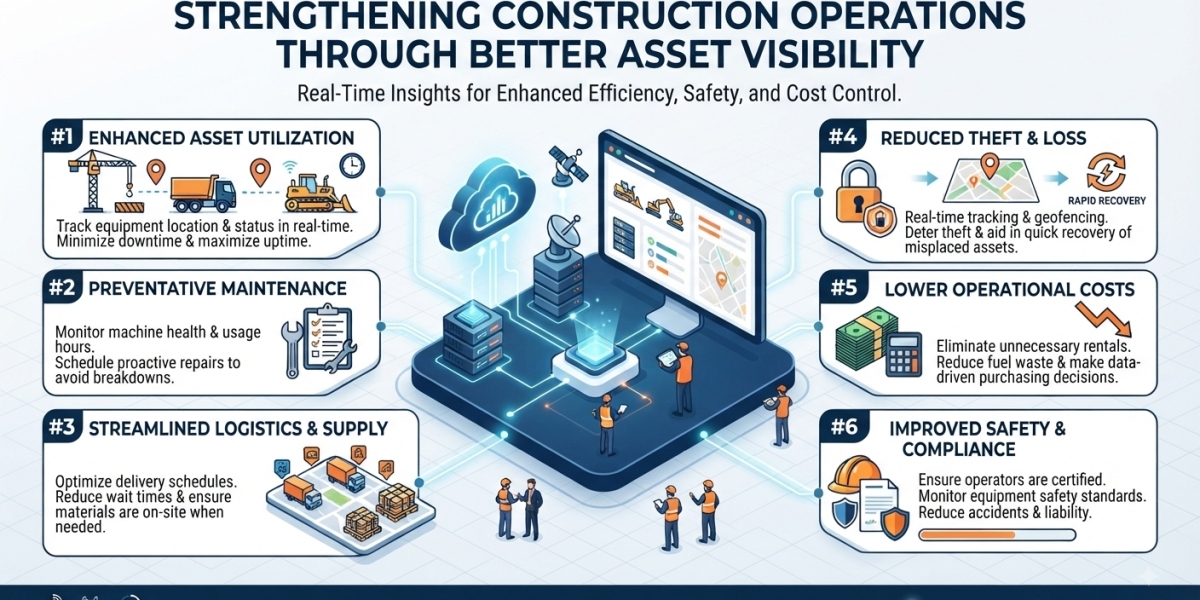

Construction companies manage a wide range of valuable assets every day. Heavy machinery, tools, trailers, generators, attachments, vehicles, and specialized equipment may move between jobsites, storage yards, maintenance facilities, and project locations. As the number of assets grows, keeping accurate information about these resources becomes increasingly important.
When contractors do not have a clear understanding of where their assets are, who is using them, or whether they are available, operational problems can quickly develop. Employees may spend time searching for equipment, project teams may request unnecessary rentals, and managers may make purchasing decisions without having a complete picture of existing resources.
A structured approach to construction asset tracking software can help companies maintain better visibility across their valuable equipment and resources. By organizing asset information, assignments, locations, movement, and status, contractors can make more informed decisions and improve operational control.
Why Asset Visibility Matters in Construction
Construction assets are constantly moving. A generator may be transferred from one project to another, while a trailer may spend several days at a storage yard before being assigned to a new jobsite.
Without accurate records, it can become difficult to answer basic questions such as:
Where is a particular asset?
Which project is currently using it?
Is it available?
Who is responsible for it?
Is it undergoing maintenance?
When will it become available again?
These questions may seem simple, but finding answers can become time-consuming when information is spread across spreadsheets, paper records, emails, and individual employees. Better visibility creates a more reliable foundation for equipment and asset management.
What Counts as a Construction Asset?
Construction businesses manage more than just large machinery.
Depending on the company, assets may include:
Excavators
Loaders
Cranes
Generators
Compressors
Trailers
Trucks
Hand tools
Power tools
Attachments
Safety equipment
Temporary site equipment
Each asset represents a financial investment and may play an important role in project operations.
Maintaining accurate records helps companies protect these investments and use them more effectively.
Create a Centralized Asset Record
One of the first steps toward better asset visibility is creating organized records.
A complete asset record may include:
Asset identification number
Equipment type
Make and model
Current location
Project assignment
Availability status
Condition
Maintenance information
Transfer history
Responsible department
Centralizing these details gives managers a clearer view of the resources available across the business.
Instead of searching through different files or contacting several project managers, authorized users can refer to a consistent source of information.
Know Where Valuable Assets Are Located
Construction equipment can move frequently between projects. A contractor may have machinery spread across several jobsites, company yards, warehouses, and maintenance facilities.
If location records are not updated, equipment can effectively become difficult to find even though it is technically owned by the company.
Accurate location information helps managers determine whether equipment is:
At an active project
In storage
At a maintenance facility
Being transported
Available for assignment
Temporarily unavailable
This level of visibility can reduce unnecessary searches and improve resource planning.
Improve Asset Accountability
Construction assets may be used by different employees, contractors, and project teams. Clear assignment records can improve accountability by documenting who or which project is responsible for an asset.
This can be particularly useful when equipment is:
Damaged
Missing
Misplaced
Transferred
Returned
Taken out of service
A documented history can help managers understand what happened and identify where improvements may be needed.
Reduce Equipment Loss and Misplacement
Small tools and portable equipment can be particularly difficult to manage because they may move frequently between workers and jobsites. Without organized records, items can easily be misplaced.
Although tracking cannot eliminate every loss, maintaining accurate asset information can improve accountability and make it easier to determine when and where an item was last assigned.
This can encourage better handling practices across project teams.
Improve Asset Utilization
Owning equipment does not automatically mean that the equipment is being used efficiently. Some assets may be in high demand, while others remain idle for extended periods. Reviewing asset information can help managers identify:
Frequently used machinery
Underutilized equipment
Idle assets
High-demand resources
Frequently transferred assets
Assets that may no longer match business requirements
This information can support better allocation decisions. For example, if an excavator is sitting unused at one project while another project is considering renting a similar machine, the company may be able to transfer the existing asset instead.
Reduce Unnecessary Equipment Purchases
Limited visibility can also contribute to unnecessary purchases. A project manager may request new equipment because they believe the company does not have a suitable asset available. However, an existing machine may be stored at another location or assigned to a project that no longer needs it.
Reviewing current asset records before purchasing can help determine whether existing resources can meet the requirement.
This can help companies control capital spending and make better use of existing investments.
Coordinate Transfers Between Projects
Asset transfers are common in construction.
As project requirements change, equipment may need to move from one location to another.
A structured transfer process can record:
Current location
Destination
Transfer date
Project assignment
Equipment condition
Responsible personnel
This information helps ensure that asset records remain accurate as equipment moves. It also makes communication between project teams easier.
Connect Asset Tracking With Maintenance
Asset location is only one part of the picture. A machine may be located at a project but unavailable because it is being repaired. Another asset may be stored but ready for immediate deployment.
For this reason, asset tracking should ideally be connected with equipment status and maintenance information.
Managers can then distinguish between assets that are:
Available
Assigned
Under maintenance
Awaiting inspection
In transit
In storage
Out of service
This creates a more accurate understanding of actual asset availability.
Improve Communication Between Departments
Construction asset management often involves several teams. Project managers may need equipment for upcoming work, while maintenance teams need to know where machines are located. Operations managers may need information for allocation, and finance teams may require accurate asset records.
A centralized system can give authorized teams access to consistent information. This reduces dependence on informal communication and helps prevent conflicting records.
Support Better Project Planning
Asset availability can affect project schedules. Before starting a major phase of work, managers need to know whether the necessary resources are available.
Better asset visibility allows teams to review equipment requirements against current assignments.
If a required machine is unavailable, managers can identify the issue earlier and consider alternatives such as:
Reassigning existing equipment
Transferring machinery
Adjusting schedules
Renting equipment
Purchasing additional resources
Early planning reduces the likelihood of last-minute decisions.
Improve Asset Lifecycle Management
Construction assets move through several stages during their useful life.
A typical lifecycle may include:
Acquisition
Assignment
Active use
Transfer
Maintenance
Storage
Reassignment
Replacement or retirement
Maintaining records throughout this lifecycle helps companies understand how assets have been used and maintained.
This information can support decisions about whether equipment should continue operating or be replaced.
Make Better Purchasing Decisions
Asset data can be valuable when planning future purchases.
Before buying new equipment, managers can review:
Existing inventory
Asset utilization
Maintenance requirements
Equipment age
Project demand
Transfer patterns
Idle resources
This provides a more complete picture of whether purchasing is actually necessary. In some cases, reallocating an existing asset may be more practical than purchasing another one.
Strengthen Inventory Control
Construction companies often have equipment and materials distributed across multiple locations. Maintaining accurate asset records helps improve inventory control by providing greater visibility into what the company owns and where those resources are located.
This can make audits and internal reviews more organized. It can also help identify discrepancies between recorded assets and physical equipment.
Scale Asset Management as Operations Grow
Manual tracking may work for a small construction company with a limited number of assets. However, as the fleet grows and projects become more geographically dispersed, spreadsheets and paper records can become increasingly difficult to maintain.
Construction asset tracking software offers a more structured approach for companies managing larger inventories.
Centralized information can help businesses maintain consistent processes across:
Multiple jobsites
Storage yards
Equipment departments
Maintenance locations
Regional operations
This becomes especially valuable when assets move frequently.
Common Challenges With Manual Asset Tracking
Manual asset management can create several operational issues.
Outdated Information
Records may not be updated when equipment moves.
Duplicate Records
Different departments may maintain separate information about the same asset.
Limited Accountability
It can be difficult to determine who currently has responsibility for an asset.
Time-Consuming Searches
Employees may need to contact several people to locate equipment.
Poor Historical Visibility
Past transfers and assignments may not be documented consistently.
Recognizing these limitations can help companies determine when a more organized approach is needed.
Best Practices for Better Asset Visibility
Construction businesses can improve asset management by establishing consistent procedures.
Use Unique Asset Identification
Assigning clear identification numbers makes individual assets easier to distinguish.
Keep Locations Updated
Asset records should be updated whenever equipment moves.
Record Assignments
Document which project or department is responsible for each asset.
Connect Maintenance Information
Include service and repair status when determining availability.
Review Records Regularly
Periodic audits can help identify missing or outdated information.
Benefits of Improved Asset Visibility
A well-organized asset tracking process can provide:
Better equipment visibility
Stronger accountability
Reduced search time
Improved asset utilization
Fewer unnecessary purchases
Better project planning
More organized equipment transfers
Improved maintenance coordination
Better inventory control
More informed investment decisions
These benefits can contribute to greater operational efficiency across the business.
Conclusion
Construction companies invest heavily in equipment and other valuable assets, making effective asset management an important part of long-term operational success. When businesses lack accurate information about where their resources are located, who is using them, and whether they are available, they may experience unnecessary delays, duplicate purchases, equipment losses, and inefficient resource allocation.
Construction asset tracking software provides a structured way to organize asset locations, assignments, status, movement, and history. By creating greater visibility, contractors can make better use of existing resources while improving accountability across multiple projects.
As construction operations become larger and more complex, having accurate asset information becomes increasingly important. A well-organized tracking process can help contractors protect valuable resources, improve project planning, reduce unnecessary costs, and maintain stronger control over their assets throughout their entire lifecycle.