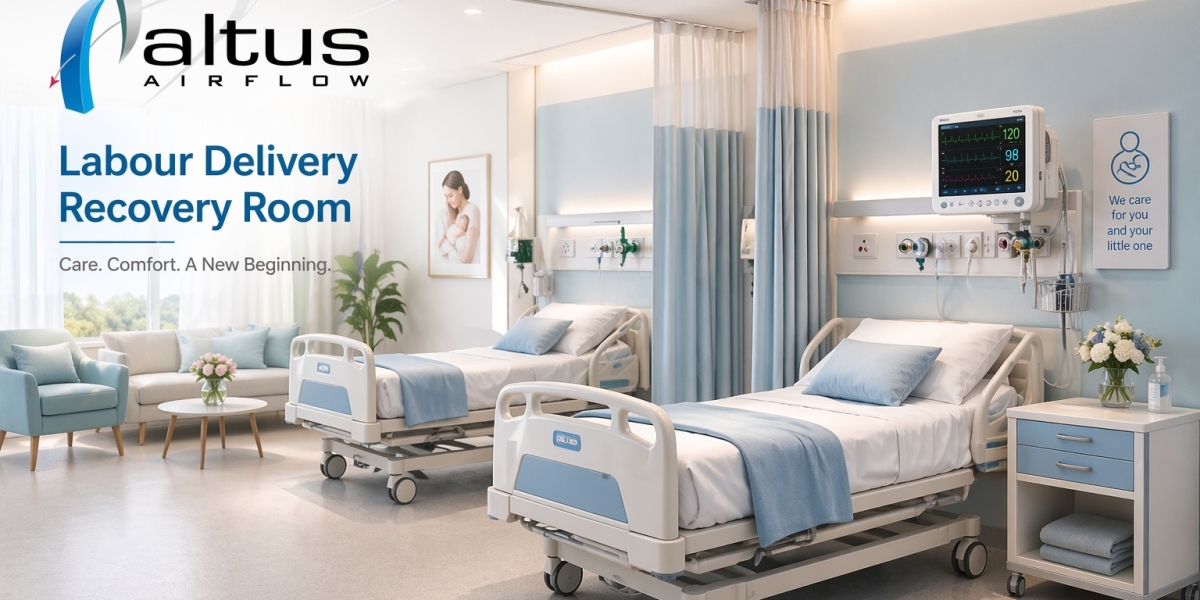

Introduction
A Labour Delivery Recovery Room is designed to provide close observation and supportive care for mothers after labour, delivery, or related procedures. The immediate recovery period may require monitoring of vital signs, bleeding, pain, breathing, and overall condition. Depending on the clinical setting, newborn-related support may also need to be available nearby. A well-planned recovery room combines patient monitoring, medical gases, emergency equipment, infection-control facilities, reliable utilities, privacy, comfortable patient spaces, and efficient staff workflows. The exact facilities depend on the hospital's maternity services, patient capacity, clinical protocols, and applicable requirements.
Comfortable Patient Beds
Suitable beds are a fundamental facility in a labour and delivery recovery area.
Beds should provide sufficient space for clinical assessment and allow healthcare professionals to access the patient easily.
Adjustable positioning can also support comfort and clinical procedures when appropriate.
Patient Monitoring Systems
Maternal monitoring is an important part of post-delivery care.
Depending on clinical requirements, healthcare professionals may monitor blood pressure, heart rate, oxygen saturation, respiratory rate, temperature, and other relevant parameters.
Appropriate monitors should be easily visible to staff.
Oxygen Supply
Oxygen may be required for patients who need supplemental respiratory support.
Medical oxygen outlets can be positioned near patient beds and connected to the hospital's medical gas infrastructure.
Suitable delivery equipment can be provided according to clinical requirements.
Medical Vacuum and Suction
Suction facilities can support airway management and emergency care.
Central vacuum outlets or portable suction equipment may be incorporated into the recovery area.
These facilities should remain accessible to trained staff.
Medical Air
Medical air may be required for selected respiratory equipment.
Where clinically necessary, suitable medical air outlets can be integrated into the room's medical gas infrastructure.
Emergency Equipment
A maternity recovery area should allow rapid access to emergency resources.
Depending on the facility, equipment may include emergency carts, defibrillators, oxygen, suction devices, airway equipment, emergency medications, and other resuscitation resources.
Maternal Emergency Preparedness
Post-delivery patients can occasionally experience complications that require urgent intervention.
The layout should therefore provide adequate space around patient beds and clear access to emergency equipment.
Emergency pathways should remain unobstructed.
Newborn Support Facilities
Depending on the hospital's maternity model, facilities for immediate newborn support may be available nearby.
These can include an appropriate neonatal resuscitation area, radiant warmer, suction, oxygen, monitoring equipment, and other newborn-care resources where clinically indicated.
The exact arrangement depends on the level of maternity and neonatal services provided.
Nurse Call System
A nurse call system can allow mothers to request assistance when they are able to communicate and use the system.
Call points can be positioned conveniently near patient beds and connected to staff areas.
Privacy Facilities
Privacy is important for mothers recovering after delivery.
Curtains, screens, appropriate bed spacing, and controlled access can provide personal space while still allowing healthcare professionals to monitor patients.
Infection-Control Facilities
Maternity recovery areas require effective infection-control practices.
Facilities can include handwashing stations, hand sanitizing points, cleanable surfaces, suitable flooring, appropriate ventilation, and designated areas for waste and equipment handling.
Ventilation and Environmental Control
Appropriate ventilation helps maintain a suitable recovery environment.
Systems can regulate temperature, humidity, filtration, and airflow according to the clinical requirements of the facility.
Electrical Infrastructure
Recovery rooms contain monitors, pumps, lighting, communication systems, and other electrical equipment.
Medical-grade outlets, grounding protection, essential circuits, and appropriate electrical distribution can support safe equipment operation.
Backup Power
Critical monitoring and emergency equipment may need continued operation during power interruptions.
Hospitals can provide emergency power and suitable backup systems for essential recovery room equipment.
Lighting
Good lighting supports both patient comfort and clinical work.
General lighting can be supplemented with task lighting where required for examinations and procedures.
Lighting should be planned to minimize unnecessary discomfort for recovering mothers and newborns.
Patient Comfort
Comfort can be supported through adjustable beds, suitable temperature control, noise management, appropriate lighting, and convenient access to essential facilities.
A comfortable environment can help mothers recover while remaining under clinical observation.
Equipment Storage
Storage facilities help keep the recovery area organized.
Dedicated cabinets or storage areas can hold medical supplies, protective equipment, medications, disposable items, monitoring accessories, and emergency resources.
Waste Management
Appropriate waste collection facilities should be available for clinical and general waste.
Waste containers should be positioned conveniently without interfering with patient movement or clinical activities.
Staff Work Area
Healthcare professionals need a suitable area for documentation, communication, observation, and coordination.
A nursing station or designated staff workspace can be positioned to provide efficient access to patient areas.
Communication Systems
Recovery areas may need communication with labour rooms, operating theatres, neonatal units, wards, laboratories, and other departments.
Intercoms, telephones, data connections, and other hospital communication systems can support coordination.
Safe Patient Transfer Routes
Patients may be transferred between labour rooms, delivery rooms, operating theatres, recovery areas, wards, or intensive care units.
Wide, unobstructed routes and adequate door and turning space can support safe movement of beds and stretchers.
Family Support Areas
Depending on hospital policy, designated seating or waiting areas can provide space for family members.
These areas should be arranged without interfering with clinical care, privacy, or infection-control procedures.
Fire and Life-Safety Facilities
Appropriate fire and life-safety systems should be incorporated into the recovery environment.
These may include fire detection and alarm systems, emergency lighting, fire protection equipment, accessible exits, and appropriate evacuation routes.
Clean and Dirty Utility Areas
Where required by the facility's workflow, separate areas can be provided for clean supplies and used materials.
This separation can support organized housekeeping and infection-control practices.
Flexible Infrastructure
Maternity services may expand or change over time.
Flexible electrical, medical gas, communication, and equipment-support infrastructure can help accommodate future upgrades or changes in patient capacity.
Maintenance Access
Medical gas systems, electrical infrastructure, ventilation, monitoring equipment, and other facilities require regular maintenance.
The design should provide suitable access for inspection and servicing without unnecessarily disrupting patient care.
Conclusion
A Labour Delivery Recovery Room should provide a combination of maternal monitoring, emergency preparedness, patient comfort, and dependable clinical infrastructure. Important facilities can include adjustable beds, monitoring systems, oxygen, medical vacuum, emergency equipment, nurse call systems, privacy provisions, infection-control facilities, ventilation, electrical and backup power, storage, communication systems, staff workspaces, safe transfer routes, and appropriate newborn-support facilities where required. Careful planning helps create a recovery environment that supports mothers and newborns while enabling healthcare professionals to provide timely observation and care.
FAQs
1. What facilities should a Labour Delivery Recovery Room have?
A Labour Delivery Recovery Room can include patient beds, maternal monitoring, oxygen, suction, emergency equipment, nurse call systems, privacy facilities, infection-control provisions, ventilation, electrical infrastructure, storage, communication systems, and appropriate newborn-support facilities.
2. Why is patient monitoring important after delivery?
Monitoring allows healthcare professionals to observe vital signs and identify changes in the mother's condition that may require further assessment or intervention.
3. What newborn facilities may be required?
Depending on the hospital's services, a nearby newborn-support area may include a radiant warmer, oxygen, suction, neonatal monitoring, and resuscitation equipment.
4. How does the recovery room support patient comfort?
Adjustable beds, appropriate lighting, temperature control, privacy arrangements, noise management, and convenient access to essential facilities can support comfort.
5. Why are emergency facilities important in maternity recovery?
Some post-delivery complications can require immediate intervention. Accessible emergency equipment and clear circulation routes help trained healthcare professionals respond efficiently.
Read Our Previous Blog----------->