
A modern industrial park recently completed a comprehensive energy audit after experiencing steadily rising electricity costs. Instead of expanding grid dependency, the facility owners invested in rooftop solar generation to improve energy efficiency and stabilize long-term operating expenses. Similar strategies are now being adopted by residential communities, hospitals, schools, hotels, warehouses, and government buildings across India. Understanding the fundamentals of a solar system for home helps property owners make informed decisions about clean energy, system performance, and long-term financial returns.
Understanding a Solar System for Home
A solar system for home is an integrated power generation solution that converts sunlight into usable electricity through photovoltaic (PV) technology. While residential systems are the most common, the same engineering principles are applied to commercial, institutional, and industrial projects.
A complete solar system is designed to generate electricity safely, distribute power efficiently, and operate reliably for decades. The overall performance depends not only on the quality of individual components but also on proper engineering, installation, and maintenance.
Core Components of a Solar Panel System
Every solar installation consists of multiple components that work together as a single energy system.
Components of a Solar System for Home
Solar Panels:- Photovoltaic modules capture sunlight and convert it into direct current (DC) electricity using semiconductor cells.
Solar Inverter:- The inverter converts DC electricity into alternating current (AC), allowing household appliances and industrial equipment to operate normally.
Mounting Structure:- Properly engineered mounting systems secure the panels while maintaining the ideal tilt angle and orientation for maximum solar exposure.
Electrical Protection:- Circuit breakers, surge protection devices, grounding systems, and isolators ensure safe operation and protect equipment against electrical faults.
Monitoring System:- Smart monitoring platforms provide real-time information on power generation, system efficiency, energy consumption, and fault conditions through web portals and mobile applications.
Battery Storage (Optional):- Battery banks store surplus electricity for use during grid failures or nighttime operation in off-grid and hybrid installations.
Types of Solar Panels
Selecting the best solar panels requires balancing efficiency, durability, installation area, and long-term performance.
The three primary panel technologies are:
Monocrystalline panels, known for high efficiency and superior output in limited roof space.
Polycrystalline panels, offering reliable performance with lower initial investment.
Thin-film panels, commonly used in specialized commercial and industrial applications due to their lightweight construction.
The appropriate panel type should always be selected through engineering analysis rather than relying solely on efficiency ratings.
Types of Solar System Configurations
The system configuration determines how electricity is generated, stored, and consumed.
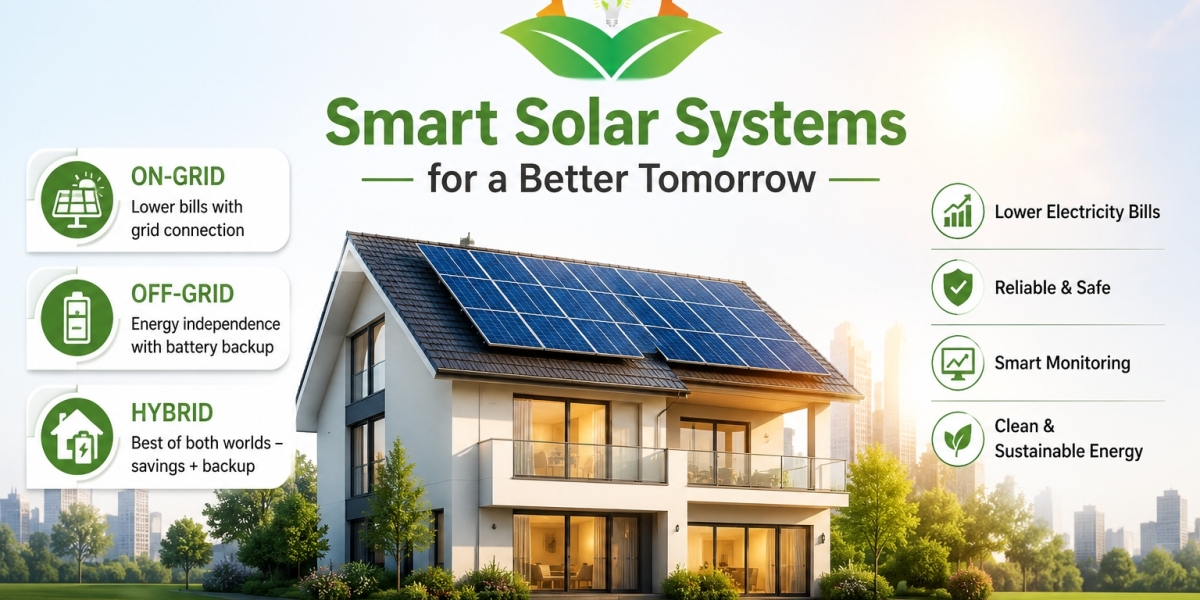
On-grid systems operate alongside the utility network and use net metering to export excess electricity.
Off-grid systems function independently using battery storage where utility supply is unavailable.
Hybrid systems combine battery backup with grid connectivity to improve operational reliability.
Proper inverter selection, battery sizing, and electrical load calculations are essential to achieving efficient system performance.
Benefits of Modern Solar Systems
Today's solar technology delivers advantages beyond reducing electricity bills.
Modern systems provide:
High-efficiency energy generation
Long operational life exceeding 25 years
Low maintenance requirements
Smart energy monitoring
Remote access through mobile applications
Predictive maintenance alerts
Modular system expansion
Grid synchronization capability
Weather-resistant construction
Improved energy security
Lower carbon emissions
Reduced dependence on conventional electricity
These features make solar power suitable for both residential and large-scale commercial infrastructure.
Where Solar Systems Are Commonly Used
Solar energy has become an important part of modern building infrastructure across numerous industries.
Common applications include:
Residential rooftop solar system installations
Apartment complexes and gated communities
Commercial office buildings
Manufacturing plants
Hospitals and healthcare centres
Educational institutions
Hotels and hospitality facilities
Shopping malls
Government buildings
Agricultural irrigation systems
Warehouses and logistics centres
Smart city and rural electrification projects
Each installation is designed according to the building's energy profile, available space, and operational requirements.
What Influences Solar Panel System Cost?
Many buyers compare only the Solar panel system cost, but long-term investment value depends on several technical and operational considerations.
Important factors include:
Roof size and structural capacity
Daily electricity demand
Choice of solar panel technology
Inverter capacity and efficiency
Battery storage requirements
Installation complexity
Grid connection and net metering approvals
Monitoring and automation features
Preventive maintenance planning
Location and shading analysis
Compliance documentation
Expected lifecycle performance and payback period
Likewise, solar system for home price varies depending on project size, component quality, engineering complexity, and installation conditions rather than following a fixed market value.
Choosing the Right Solar Installation Provider
Selecting an experienced engineering company significantly influences system reliability throughout its operating life.
When evaluating providers, consider:
Industry experience
EPC and engineering expertise
Installation capability
Quality testing procedures
Compliance with MNRE and BIS standards
Product warranty coverage
Technical support availability
Commissioning process
Documentation assistance
Solar panel maintenance services
Annual maintenance contracts
Long-term customer support
Organizations delivering integrated renewable energy solutions, including a Sigma Power Tech solar panel system, generally focus on engineering quality, compliance, and long-term operational performance instead of emphasizing equipment alone.
Common Mistakes to Avoid
Several common planning errors can reduce system efficiency and financial returns.
Avoid these mistakes:
Skipping detailed site and load assessments
Ignoring future expansion requirements
Choosing panels based only on purchase price
Underestimating shading effects
Selecting incompatible inverter-panel combinations
Delaying preventive maintenance
Ignoring grounding and surge protection
Overlooking net metering approvals
Defining unrealistic energy-saving expectations
Poor installation and commissioning practices
Educational demonstrations such as a solar system model or school solar system project explain the fundamentals of photovoltaic energy, but real-world installations require professional engineering, electrical safety, and regulatory compliance to achieve dependable long-term performance.
Conclusion
A well-designed solar system for home combines efficient solar panels, intelligent inverters, reliable electrical protection, and advanced monitoring into a single integrated energy solution. Understanding the components, system types, and engineering considerations allows homeowners, businesses, and institutions to make informed investment decisions that deliver reliable power generation for decades. By prioritizing quality engineering, regulatory compliance, professional installation, and lifecycle performance over short-term cost savings, organizations can build resilient, sustainable, and future-ready clean energy infrastructure while reducing operating expenses and improving long-term energy independence.