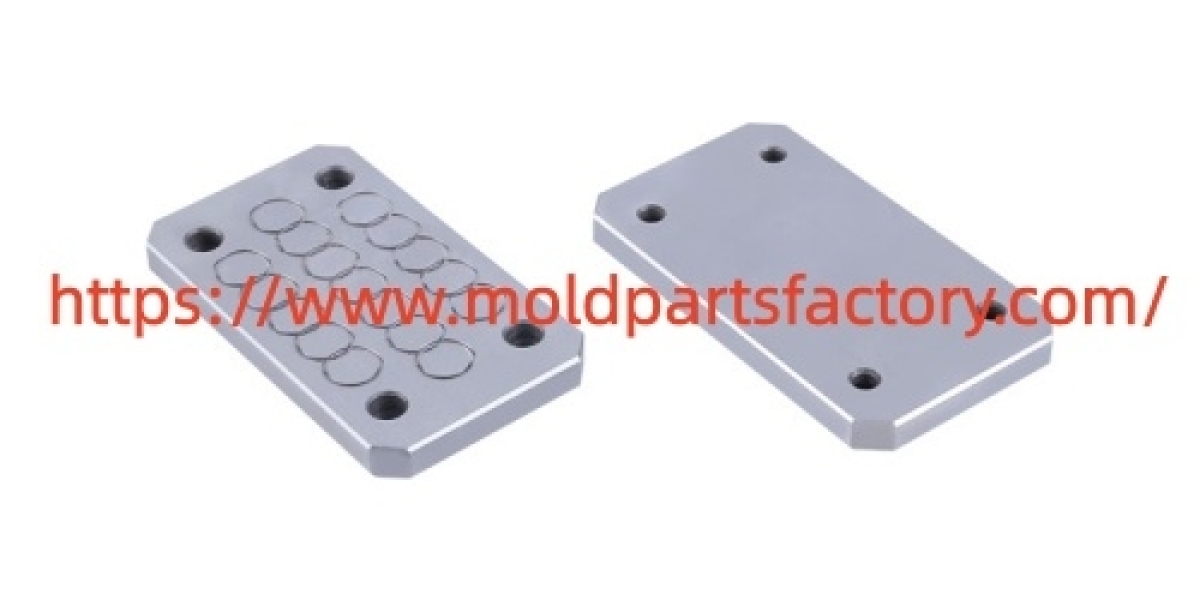

Mold Wear Block damage rarely comes from a single event. Repeated sliding, uneven loading, poor lubrication, contamination, incorrect fitting, and thermal changes can gradually affect a component during production. When a tooling assembly moves through hundreds or thousands of cycles, even a small alignment issue can create concentrated contact on one area. Recognizing these conditions early gives manufacturers a practical way to reduce unnecessary repairs and keep maintenance more predictable. Material selection, surface finish, hardness, and operating conditions should all be considered together because each can influence friction and service behavior.
One common cause is uneven contact between mating surfaces. When two parts are not positioned correctly, pressure may concentrate along an edge rather than being distributed across the intended working area. This can create grooves, scoring, or localized deformation. Installation accuracy therefore matters as much as the component itself. The surrounding tooling should be checked for burrs, distortion, loose fasteners, and changes in clearance. If unusual marks repeatedly appear in the same location, replacing the component without investigating the underlying alignment issue may only provide a temporary solution.
Lubrication is another important consideration. Sliding surfaces operating without an appropriate lubricant can experience increased friction and direct metal contact. Over time, this may produce scratches, galling, heat, and accelerated surface deterioration. The lubricant should match the working temperature, movement pattern, material combination, and maintenance schedule. Different material combinations can also be considered to manage contact conditions and support steady movement during repeated production cycles.
Cleanliness deserves equal attention. Small particles, plastic residue, metal debris, or other contaminants can become trapped between moving surfaces. Once this happens, the contact condition changes and the particle may act like an abrasive. Regular cleaning during scheduled maintenance helps keep working areas free from unnecessary debris. Inspection should not rely only on visual appearance. Technicians can also monitor changes in movement, unusual resistance, surface marks, noise, and clearance. These signs may provide useful clues before visible damage becomes significant.
Material selection should be based on the actual application rather than a general preference. Hardness, friction behavior, surface treatment, dimensional stability, and compatibility with the mating material can influence service performance. Different molding conditions can create different wear patterns, so manufacturers should provide application information when requesting a replacement component. Details such as load, movement frequency, mating material, temperature, lubrication method, and available dimensions can help suppliers recommend a suitable configuration.
Surface finish also deserves careful attention. A rough contact area may increase friction, while an unsuitable finish can interfere with lubrication or accelerate surface damage. Flatness and dimensional accuracy are equally important for sliding assemblies. When purchasing replacement parts, buyers should consider material, hardness, flatness, surface finish, mounting hole accuracy, and dimensional tolerances together. A nominally correct size does not automatically mean the component will fit the working environment correctly.
Preventive maintenance can begin with a simple inspection routine. Before production, check fastening points, contact surfaces, lubrication condition, visible scoring, and movement. During scheduled maintenance, compare current clearances with previous measurements where records are available. If one area shows faster deterioration than others, investigate alignment, loading, contamination, or lubrication before installing another replacement. Keeping basic maintenance records can also help identify recurring patterns and support better planning for future tooling work.
Design can play a role as well. Components intended to absorb repeated contact can protect larger and more expensive tooling structures from direct mechanical damage. A replaceable contact component allows maintenance teams to address localized deterioration without necessarily rebuilding an entire tooling section. This principle is particularly useful around slides, lifters, guide areas, and other locations where repeated movement creates friction.
For manufacturers, consistency begins before production starts. A supplier should be able to discuss dimensions, material options, hardness requirements, surface treatment, tolerances, mounting details, and application conditions. Moldpartsfactory focuses on mold components designed around practical tooling requirements, helping buyers evaluate suitable configurations according to their specific applications. Careful communication at the quotation stage can reduce misunderstandings and make replacement planning easier.
Preventing damage does not require complicated routines. It requires attention to the relationship between component design, installation, lubrication, cleanliness, material selection, and actual operating conditions. When these factors are reviewed together, engineers can identify avoidable sources of stress and create a maintenance routine based on real production behavior rather than assumptions. Buyers looking for suitable mold components can review available product options and application information at https://www.moldpartsfactory.com/product/ and use the relevant specifications to support their tooling decisions.