
Most IV hydration clinics get shut down or sued not because of a clinical mistake — but because of a missing signature.
No consent form. No emergency protocol on paper. No documented collaboration agreement between the RN and the supervising physician. These aren't rare edge cases; they're the most common findings when state boards, insurers, or attorneys go looking for problems in a mobile IV or hydration therapy business.
Here's the exact list of forms your practice needs, why each one exists, and where to get versions built specifically for IV therapy — not generic templates borrowed from an unrelated industry.
Why IV Hydration Businesses Need Different Paperwork Than a Typical Med Spa
IV hydration therapy lives in a gray zone. It's a medical infusion service, often delivered by an RN or NP under physician oversight, but frequently marketed and operated like a wellness or concierge business. That combination means you're subject to:
- Nursing board and medical board oversight
- HIPAA and PHI handling requirements
- Sharps and biomedical waste disposal regulations
- Standard employment and HR law
- Consumer protection rules around advertising and cancellations
Generic legal templates rarely cover all five at once. That's the gap most clinics fall into.
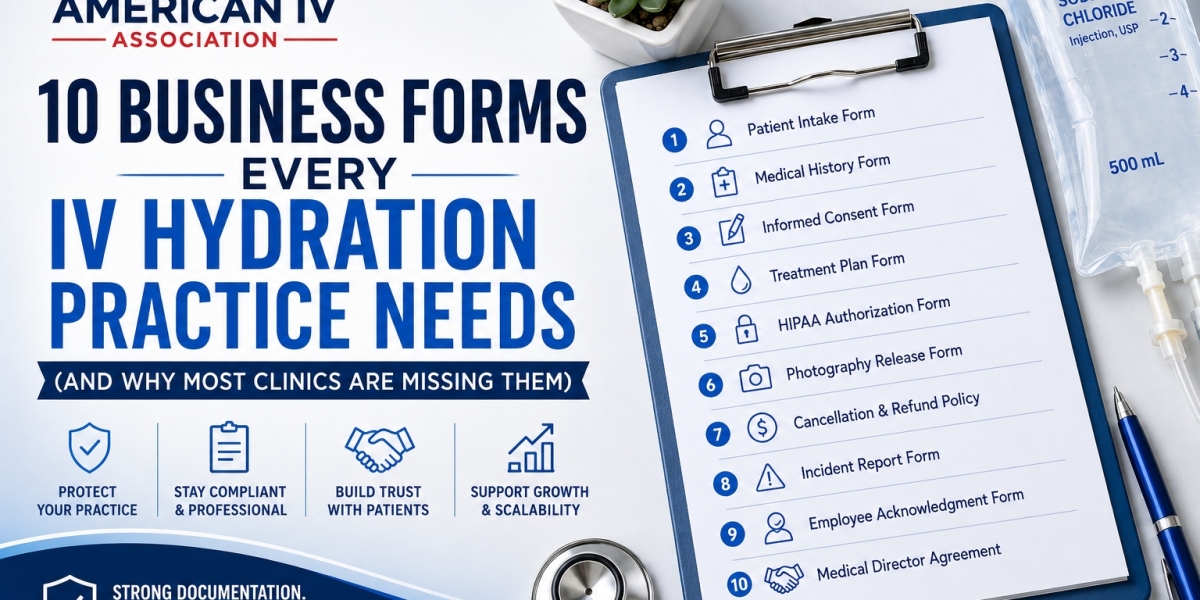
The 10 Forms Every IV Hydration Practice Should Have on File
1. Authorization for Release of PHI Covers any situation where client health data needs to be shared — with another provider, a lab, or an insurer. No signed form, no legal basis to share.
2. Photo & Media Release If you post before/afters, testimonials, or client content on social media, you need explicit written consent — not an assumed "they didn't say no."
3. Biomedical Waste Operating Plan IV therapy produces sharps and biohazard waste. Most states require a documented disposal plan on request, not just proper bins in the back room.
4. Cancellation & No-Show Policy Only enforceable — and only protects your revenue — if clients formally agree to it in writing at intake.
5. Collaboration Agreement Defines scope of practice, oversight, and liability between the RN/NP delivering care and the supervising or collaborating physician. Many states require this to exist as a signed document, not a verbal understanding.
6. Emergency Protocols Written, specific procedures for anaphylaxis, vasovagal syncope, infiltration, and other IV-related emergencies. Staff should train on the document, not just "know the drill."
7. Disaster Risk Management Checklist Non-clinical continuity planning — what happens to client records, staff, and operations during a power outage, natural disaster, or system failure.
8. Employee Handbook Sets conduct, safety, and HR expectations. In a wrongful termination or harassment complaint, an unwritten policy is treated as no policy at all.
9. Employment Contracts Checklist Confirms every hire — clinical or administrative — has the right agreements signed before their first shift.
10. Certification Standards Documentation Formal, verifiable standards for how your practice operates. This is what separates a clinic that can prove compliance from one that's hoping nobody asks.
Frequently Asked Questions
Do I really need a written collaboration agreement if my supervising physician and I have a good working relationship? Yes. Most state boards require it in writing regardless of the relationship, and it's one of the first documents requested in an audit or claim.
Can I use a general small-business template for these forms? You can, but generic templates rarely address IV-specific issues like infusion consent, biomedical waste, or medical direction — the exact areas regulators focus on.
Where do I get forms built specifically for IV hydration practices? The American IV Association (AIVA) maintains a library of IV-specific forms, checklists, and a Certification Standards Book, available free to members.
Get These Forms — Built for IV Therapy, Not Adapted From It
The American IV Association's Education & Resources library includes all 10 forms above, plus 25+ additional documents covering consent, HR, compliance, and clinical operations — all written specifically for IV-centered hydration practices. AIVA members access the entire library at no extra cost, and the AIVA Certification Standards Book (with an optional companion workbook) walks you through building defensible, compliant operating standards from the ground up.
? View the full Books & Forms library →
Quick Self-Audit: Are You Exposed?
- Do you have a signed PHI authorization for every client on file?
- Would your Biomedical Waste Operating Plan hold up if a state inspector asked for it today?
- Is your collaboration agreement current, signed, and stored properly?
- Has your staff actually reviewed a written emergency protocol — not just been told about one?
If any answer is "no" or "not sure," it's worth 20 minutes in AIVA's Education & Resources section — before an audit, a claim, or a bad outcome makes that decision for you.