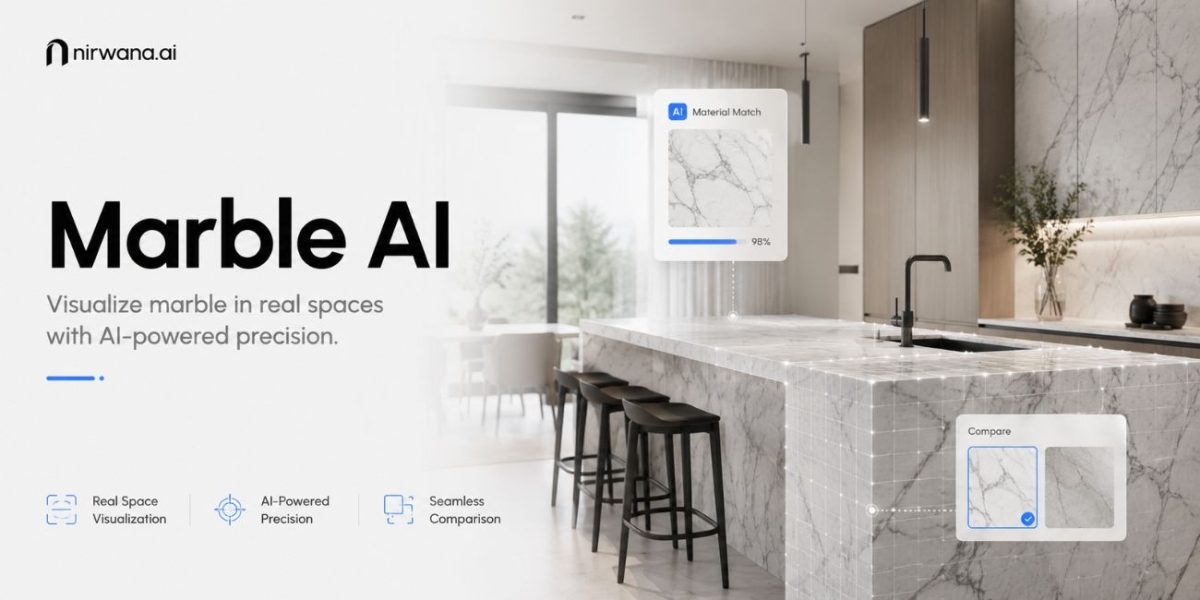

Choosing marble is often more difficult than it appears. A customer may like a slab in a showroom, save a few product images online, or carry home a small sample, but imagining how that same marble will look across a large countertop, floor, bathroom wall, or feature area is not always easy.
This is where marble AI is changing the buying experience.
By combining artificial intelligence with room visualization, marble brands, dealers, manufacturers, designers, and customers can explore different stone options directly inside real spaces before making a final decision.
What Is Marble AI?
Marble AI refers to AI-powered technology that helps users visualize marble products in realistic interiors and understand how different stones may look once applied.
A customer can upload a photograph of a kitchen, bathroom, living room, office, hotel, or commercial interior and preview different marble options on suitable surfaces.
For example, someone planning a kitchen renovation may want to compare a bright white marble with subtle veining against a more dramatic stone with stronger movement. Instead of relying only on imagination, they can see both options applied to the countertop or island and decide which one works better with the cabinets, flooring, lighting, and overall interior style.
This can make the selection process much more practical.
Why Traditional Marble Selection Can Be Difficult
Marble is a natural and highly visual material. Color, veining, pattern movement, scale, finish, and surrounding lighting all affect how it appears.
A small sample cannot always show what the complete installation will look like.
A marble with dramatic veins may appear attractive in a small piece but create a completely different effect when used across a large kitchen island. Similarly, subtle marble may appear simple in a catalog but look elegant once applied across an entire wall.
Lighting also makes a major difference. Warm artificial lighting can make white marble appear slightly creamier, while strong natural daylight may make grey veining more noticeable.
Because of these variables, customers often hesitate before making a final purchase.
How Marble AI Helps Customers Make Better Decisions
The biggest advantage of marble AI is that it gives customers more visual context.
Instead of asking, “Will this marble look good in my kitchen?” they can actually preview how it may look.
Customers can compare several stone options, experiment with different styles, and shortlist the materials that best match their interiors.
This is particularly useful for expensive or permanent applications such as:
- Kitchen countertops
- Waterfall islands
- Bathroom walls
- Flooring
- Backsplashes
- Feature walls
- Commercial reception areas
- Hotel interiors
The ability to preview products can also make conversations with designers, dealers, and fabricators more productive because everyone can discuss a visible design rather than relying only on verbal descriptions.
Benefits for Marble Dealers and Showrooms
For dealers, marble AI can become more than a visualization tool. It can support the entire sales conversation.
A showroom may offer hundreds of marble products, but physically displaying every design in multiple room settings is impossible.
An AI-powered visualizer allows sales representatives to demonstrate a much larger product range digitally.
A customer can bring a photo of their kitchen, and the sales team can apply different stones directly to the space. They can compare lighter and darker options, explore different vein styles, and identify suitable products much faster.
This can create a more engaging showroom experience while helping customers understand exactly what they are considering.
How Marble Brands and Manufacturers Can Use AI
Large marble brands and manufacturers often sell through multiple dealers, distributors, websites, catalogs, and showrooms.
With marble AI, their product catalog can become more interactive.
Instead of displaying only slab photographs or product thumbnails, brands can allow customers to experience the marble in realistic applications.
This is especially valuable when launching a new collection. A brand can demonstrate how different stones may look on kitchen islands, floors, walls, or bathrooms rather than expecting customers to interpret a raw slab photograph.
Nirwana.ai helps natural stone and home improvement businesses create these kinds of AI-powered product visualization experiences.
Improving the Digital Marble Buying Journey
Online product discovery is becoming increasingly important, even for materials that are ultimately purchased through physical dealers.
A customer may discover a marble product online before ever visiting a showroom.
With an AI visualizer, that digital journey can become far more useful.
A buyer could discover a product, upload their own room image, preview the marble, compare alternatives, save the preferred design, and then contact the dealer or request a quotation.
This creates a stronger connection between online browsing and actual sales.
For marble businesses, it can also help generate better-informed enquiries because customers may already know which products interest them before speaking with the sales team.
AI Should Support, Not Replace, Stone Expertise
It is important to remember that natural marble can vary from slab to slab.
AI visualization should therefore be used as a decision-support tool rather than a replacement for physical slab inspection, professional fabrication advice, or installation planning.
Experienced stone professionals still play an important role in helping customers understand natural variation, slab availability, fabrication requirements, edge details, and installation conditions.
The strongest use of marble AI is helping customers explore possibilities before making the final material selection.
Platforms such as Nirwana.ai can help bridge the gap between product discovery and real-world installation by making marble collections easier to visualize and compare.
Conclusion
Marble is a premium material, and customers want confidence before making a significant purchase.
Marble AI gives buyers a smarter way to explore different stones, understand how they may look inside real spaces, and compare options before committing.
For marble manufacturers, dealers, distributors, and showrooms, this technology can create a more modern and interactive sales experience while making large product catalogs easier for customers to understand.
As digital visualization becomes a bigger part of interior product shopping, businesses that make the buying process clearer and more visual will be better positioned to meet changing customer expectations.
If your marble business wants to offer customers a more engaging way to discover and experience products, exploring AI-powered visualization can be a practical next step.