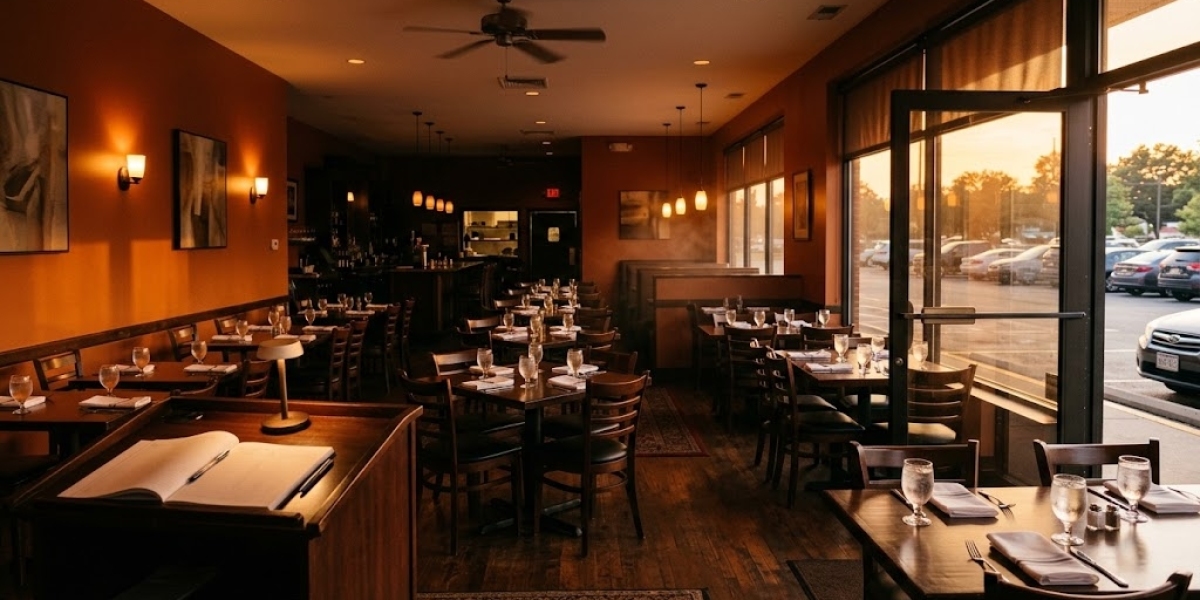

Most operators price that event as the repair bill. The repair bill is the smallest number in the story.
Four cost lines nobody puts in the same spreadsheet
Lost covers come first. At an average check of $38 and 110 covers on a Friday night, a dining room you cannot seat costs $4,180 in sales before anything else happens. Partial service is more common than full closure, and a half-empty room at 88 degrees gets you there more slowly.
Product loss is second. Walk-in coolers work harder when the space around them is hot, and a walk-in that drifts above 41 degrees for four hours puts a decision in front of you about product you have already paid for.
Labor is third. Sending a cook and two servers home mid-shift saves a few hundred dollars in wages and costs more than that in goodwill, in a market where staffing already limits how many nights you can open.
Reviews are fourth and last longest. A guest who paid $70 for two in a hot dining room writes about the temperature, not the food, and that review sits at the top of your listing for months. Several arrive the same week, which is how one mechanical failure dents a rating that took years to build.
A worked example: Friday dinner service at 92 degrees outside
Take a 90-seat neighborhood restaurant, average check $38, Friday dinner doing 110 covers, food cost 30 percent, six front and back of house staff on shift.
The unit fails at 4:40pm. The service company answers at 5:05, sends a technician who arrives at 7:30, finds a failed condenser fan motor, has no motor on the van, and returns at 11am Saturday.
Friday's loss: you seat the bar and patio, turn 45 covers instead of 110, and lose 65 at $38, so $2,470 in sales and about $1,730 in contribution after food cost. Two staff sent home, two comped tables, one large party walked. Saturday lunch goes too, another $600.
The invoice, when it arrives, is $890 for after-hours diagnostics and a motor.
So the repair is under a quarter of the cost of the event, and the entire difference between a $890 evening and a $3,200 one comes down to two variables: how fast a technician arrived, and whether the part was on the truck.
Health code exposure when walk-in and kitchen temperatures drift
The temperature question stops being about comfort once it reaches food.
Cold holding requires 41 degrees or below and hot holding 135 or above under the FDA Food Code as adopted in Florida. Foods held between those points are on a clock, and the clock is short.
An overheated kitchen makes both harder. Reach-in coolers with condensers in the space struggle when ambient temperature passes their design range, and product spends longer in the danger zone during service.
Two practical consequences. Keep a written temperature log through any mechanical failure, because it is your evidence of what you did and when. And set your discard threshold in advance, since deciding at 9pm whether to throw out $1,400 of protein is not a decision anyone makes well under pressure.
Response time is a purchasing criterion, not a nicety
Response time belongs in the contract. Vendors offering commercial HVAC repair in Southwest Florida on a 24/7 basis and stocking common commercial parts on the van are the difference between a two-hour fix and a two-day parts order in the middle of season. A shop charging $40 an hour more, arriving in ninety minutes with a fan motor in stock, is dramatically cheaper than the low bidder who arrives Monday.
Restaurant operators shop mechanical service on hourly rate. Hourly rate is a minor variable in the arithmetic above.
Ask four questions before you sign a service agreement. What is your guaranteed response time for a no-cooling call during business hours, and after hours? Who answers the phone at 9pm, a dispatcher or an answering service? What common parts do you stock for my specific equipment: contactors, capacitors, fan motors, belts, igniters? And what is the after-hours rate, so it is agreed now rather than negotiated during an outage?
Then get the equipment list into their hands. A vendor who has your rooftop models, serial numbers, filter sizes and belt sizes on file can bring the right part on the first trip. A vendor learning your equipment at 8pm on a Friday cannot.
What to put in a service agreement before the season starts
Write the agreement in March, not in July. Everything below is negotiable when nothing is broken and none of it is negotiable when something is.
Scheduled maintenance with dates: at minimum spring and fall visits, and quarterly for kitchen equipment that runs hard. Belt inspection, coil cleaning, drain clearing, refrigerant checks and control verification on each visit, with written readings.
Guaranteed response windows, stated in hours, separately for business hours and after hours, with priority status for agreement holders.
A parts stocking list agreed in advance, and a spare set of the parts most likely to fail on your specific units kept either on their van or in your building.
Rate schedule for the term, including after-hours and holiday rates, so a July invoice contains no surprises.
A documented equipment inventory, including make, model, serial, age, refrigerant type, filter and belt sizes, and photographs of the nameplates. Keep a copy yourself.
A named annual budget line for mechanical work, sized from the last two years of invoices rather than from optimism. Operators who budget zero for HVAC treat every repair as an exception, which is why the conversation about replacing a failing unit never happens until it fails.
And a replacement conversation for anything past twelve years, held in the spring, because equipment at end of life fails on the hottest day rather than a convenient one. Replacing a rooftop unit in April is a capital decision. Replacing it in August is an emergency, at emergency pricing, with whatever is available.
One more clause worth adding: a written escalation path. Name the dispatcher, the service manager and the owner, with mobile numbers, and agree what happens if the first call is not answered within fifteen minutes after hours. Agreements fail on communication far more often than on technical capability, and the failure always happens on the busiest night of the week.
Finally, put someone's name on it. In most independent restaurants the mechanical relationship belongs to whoever happened to answer the phone the last time something broke, which means nobody owns the maintenance calendar, the equipment list or the renewal date on the agreement. Assign it to a manager, review it twice a year, and the whole category stops being a series of emergencies.
Holding temperature requirements are set out in the FDA Food Code, which Florida adopts for licensed food service establishments.