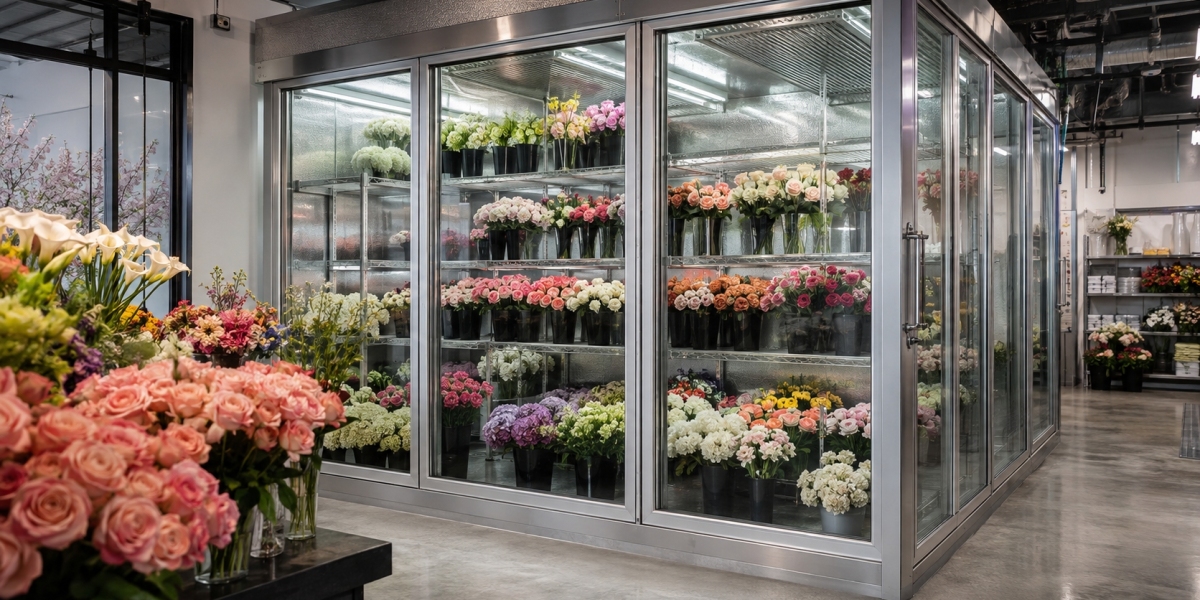

Fresh flowers are highly perishable products that require careful handling, proper humidity, and consistent temperatures to maintain their appearance and freshness. For florists, flower shops, wholesalers, event designers, and floral distributors, having reliable refrigeration is essential. Floral walk in coolers provide a practical solution for businesses that need substantial refrigerated space for storing flowers, arrangements, plants, and other temperature-sensitive floral products.
Unlike standard commercial refrigerators, floral refrigeration is designed around the unique storage requirements of flowers. A properly designed floral cooler can provide enough room to organize large quantities of inventory while creating a controlled environment that helps slow wilting and preserve product quality.
What Are Floral Walk In Coolers?
Floral walk in coolers are large refrigerated storage spaces specifically used by businesses that handle flowers and floral products. They provide enough interior room for employees to walk inside, organize inventory, prepare arrangements, and retrieve products efficiently.
These coolers are commonly used by:
Flower shops
Florists
Floral wholesalers
Garden centers
Event decorators
Wedding planners
Supermarkets
Floral distribution businesses
Hotel floral departments
Large-scale flower retailers
The primary purpose is to create a controlled refrigerated environment where flowers can remain fresh for longer periods than they would at normal room temperatures.
Why Refrigeration Matters for Flowers
Fresh flowers naturally deteriorate after being cut. Heat can accelerate this process, causing flowers to wilt, lose moisture, open too quickly, or develop other quality problems.
Proper refrigeration can slow the natural aging process and help businesses maintain inventory for longer. This is particularly valuable when florists receive large shipments or prepare for events that require significant quantities of flowers.
A controlled floral storage environment can help businesses:
Preserve flower freshness
Reduce premature wilting
Protect inventory
Improve product presentation
Extend usable storage time
Organize large quantities of flowers
Reduce avoidable product waste
For businesses handling valuable floral inventory, effective refrigeration can directly influence profitability.
Floral Walk In Coolers vs. Standard Walk In Refrigerators
Although both systems provide refrigerated storage, floral applications can have different requirements from traditional food storage.
Foodservice walk-in refrigerators are typically designed around food products, shelving, storage containers, and frequent loading and unloading. Floral refrigeration may require different temperature and humidity considerations based on the types of flowers being stored.
Florists may also need specialized interior arrangements that accommodate tall buckets, floral displays, stems, arrangements, and larger decorative products.
When selecting refrigeration for a flower business, it is important to consider the specific requirements of the products being stored rather than assuming that every commercial refrigerator is suitable for floral inventory.
Key Features to Consider
Choosing the right floral refrigeration system requires careful consideration of capacity, construction, temperature control, accessibility, and organization.
1. Adequate Storage Capacity
The size of the cooler should reflect your inventory volume.
A small independent florist may need a compact refrigerated space, while a wholesale flower distributor may require a much larger walk-in environment.
Consider your average inventory as well as seasonal demand. Valentine's Day, Mother's Day, weddings, graduations, and major holidays can significantly increase flower storage requirements.
Choosing a cooler based only on average inventory may leave you short on space during peak seasons.
2. Consistent Temperature Control
Temperature consistency is one of the most important factors in floral refrigeration.
A properly designed system should maintain a stable environment appropriate for the flowers being stored. Digital temperature monitoring can make it easier for staff to identify temperature changes and respond quickly.
Different flower varieties may have different storage preferences, so businesses should follow appropriate recommendations for their specific products.
3. Humidity Management
Humidity can also influence floral freshness.
Excessive moisture can contribute to condensation and other storage problems, while insufficient humidity may cause flowers to lose moisture.
A well-designed floral refrigeration environment should account for humidity conditions and airflow rather than focusing solely on temperature.
4. Easy Access
Walk-in access makes it easier for employees to move between storage and preparation areas.
Wide doors, suitable shelving, organized bucket storage, and sufficient interior clearance can make daily operations more efficient.
Employees should be able to retrieve products without moving large quantities of inventory unnecessarily.
5. Durable Construction
Floral businesses frequently load and unload buckets, containers, carts, and arrangements. The cooler should therefore be built to withstand daily commercial use.
Durable insulated panels, reliable doors, quality hardware, and suitable flooring can contribute to long-term performance.
Choosing the Right Size for Your Flower Business
The correct cooler size depends on your inventory, business model, available space, and expected growth.
Start by estimating how many flowers you typically store. Then consider how much additional capacity you need during peak seasons.
Also evaluate the physical layout of your business. A walk-in cooler needs sufficient clearance for installation, access, maintenance, and ventilation equipment.
Avoid selecting a cooler that is unnecessarily large because oversized refrigeration can increase initial and operating costs. At the same time, choosing a cooler that is too small can make inventory organization difficult.
A good approach is to select a capacity that supports current operations while allowing reasonable room for business growth.
Organizing a Floral Walk In Cooler
Organization can significantly improve the usefulness of a walk-in floral cooler.
Flowers should be arranged so employees can quickly identify and retrieve inventory.
Consider creating separate areas for:
Cut flowers
Greenery
Arrangements
Seasonal flowers
Event-specific inventory
Finished bouquets
Floral accessories
Use appropriate shelving, racks, buckets, and storage systems to keep products off the floor and organized.
Clear organization can also reduce unnecessary door opening, which helps maintain a stable refrigerated environment.
How Floral Refrigeration Supports Event Businesses
Weddings, corporate events, celebrations, and large installations can require hundreds or thousands of flowers.
Florists working on major events often receive flowers before the event date and need to maintain them in good condition until arrangements are completed.
A spacious floral walk-in cooler gives employees a controlled storage environment for raw materials and finished arrangements.
This can make event preparation more manageable and reduce the risk of inventory deteriorating before the event.
Reducing Floral Waste
Product waste can be one of the biggest challenges for flower businesses.
Flowers that wilt or deteriorate before they are sold represent lost inventory and lost revenue.
Proper refrigeration does not eliminate natural deterioration, but it can help businesses manage their inventory more effectively when combined with proper hydration, handling, rotation, and storage practices.
Businesses should track inventory age and prioritize products based on their condition and planned use.
Energy Efficiency Considerations
A floral walk-in cooler can operate for extended periods, making energy efficiency an important consideration.
Look for properly insulated construction and an appropriately sized refrigeration system. Avoid opening doors unnecessarily and make sure door seals remain in good condition.
Lighting should also be appropriate for the environment. Efficient interior lighting can provide visibility while reducing unnecessary energy consumption.
Routine maintenance is another important part of efficient operation. Dirty refrigeration components or damaged door gaskets can make the system work harder to maintain temperature.
Maintenance Tips for Floral Walk In Coolers
Regular maintenance can help protect both equipment and floral inventory.
Clean the Interior Regularly
Remove plant debris, leaves, water, and other materials from the cooler regularly.
Check Door Seals
Inspect door gaskets for cracks or damage. A poor seal can allow refrigerated air to escape.
Monitor Temperature
Check the temperature regularly and investigate unexpected fluctuations.
Maintain Airflow
Avoid blocking refrigeration vents or placing inventory directly against airflow pathways.
Inspect Refrigeration Components
Follow the manufacturer's recommended maintenance schedule and arrange professional service when required.
Common Mistakes to Avoid
When purchasing or operating floral refrigeration, several mistakes can reduce efficiency.
Choosing a Cooler Without Considering Peak Demand
Seasonal demand can increase dramatically. Plan for busy periods rather than only average inventory.
Ignoring Flower-Specific Requirements
Not every flower has identical storage needs. Research the appropriate conditions for the products your business handles.
Poor Organization
Overcrowded or disorganized storage can make inventory difficult to manage and increase unnecessary door opening.
Neglecting Maintenance
A refrigeration system that is not properly maintained can become less efficient and less reliable.
Selecting the Wrong Location
The cooler should be positioned where employees can conveniently access it while avoiding unnecessary exposure to heat-producing equipment.
Finding the Right Floral Refrigeration Equipment
The right refrigeration system should match your flower business's size, inventory, workflow, and future growth plans.
When comparing equipment, consider storage capacity, temperature control, construction quality, accessibility, energy efficiency, maintenance requirements, and installation conditions.
For businesses looking for professional floral refrigeration solutions, The Horeca Store provides a dedicated floral cooler collection designed to help businesses explore suitable commercial refrigeration options.
Frequently Asked Questions
What are floral walk in coolers used for?
Floral walk-in coolers are used to store fresh flowers, arrangements, greenery, and other temperature-sensitive floral products in a controlled refrigerated environment.
Are floral coolers different from food walk-in coolers?
They can be. Floral storage may require different temperature, humidity, airflow, and interior organization considerations depending on the flowers being stored.
How large should a floral walk-in cooler be?
The appropriate size depends on inventory volume, seasonal demand, available space, and business growth. Florists should evaluate both current and peak-season storage requirements.
How can florists reduce waste with refrigeration?
Proper refrigeration combined with suitable hydration, handling, inventory rotation, organization, and temperature monitoring can help reduce premature deterioration and unnecessary floral waste.
Conclusion
Floral walk in coolers can be an important investment for florists, flower shops, wholesalers, event designers, and other businesses that handle large quantities of fresh flowers. By providing controlled refrigerated storage, these systems can help protect inventory, improve organization, support event preparation, and reduce avoidable waste.
When selecting a floral cooler, consider capacity, temperature consistency, humidity, airflow, accessibility, construction, energy efficiency, and maintenance requirements. Most importantly, choose a system that matches the specific flowers and operational needs of your business.
With the right refrigeration equipment and proper storage practices, a floral business can maintain better product quality while creating a more efficient and organized workplace.