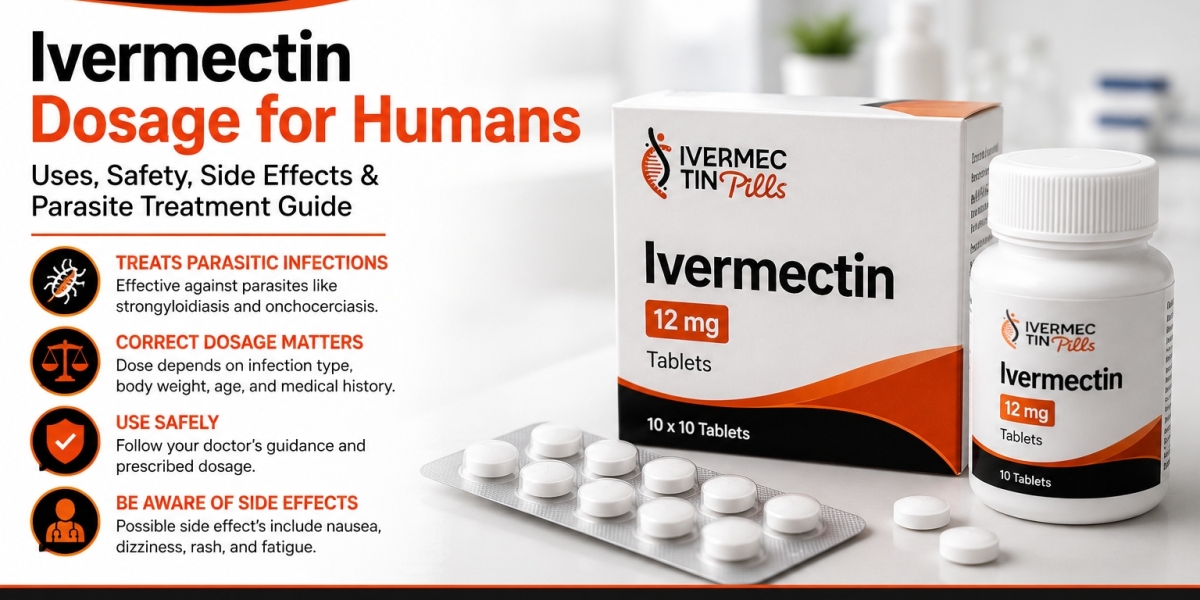

Ivermectin is an antiparasitic medicine used in human healthcare for certain infections caused by parasites. It has an established role in treating conditions such as strongyloidiasis and onchocerciasis, while specific formulations may also be used for other conditions under medical supervision.
People searching for Ivermectin Dosage for Humans often want to know how much medicine is appropriate, how dosing is calculated, whether ivermectin can treat scabies or other parasites, and what side effects may occur. The answer is not the same for everyone. The appropriate treatment depends on the diagnosed condition, body weight, formulation, age, medical history, medications, and other clinical factors.
This guide explains the important facts patients should understand before discussing ivermectin treatment with a healthcare professional.
What Is Ivermectin?
Ivermectin belongs to a class of medicines known as avermectins. It works by interfering with nerve and muscle function in susceptible parasites, helping eliminate or control them.
Human ivermectin is available in different formulations, and approved uses vary according to the specific product. In the United States, oral ivermectin tablets have approved indications for certain parasitic infections, including intestinal strongyloidiasis and onchocerciasis.
Other ivermectin formulations may have different approved uses. For example, topical ivermectin products are used for certain dermatological conditions.
Because formulations are not automatically interchangeable, patients should use the exact product and instructions provided by a qualified healthcare professional.
What Is Ivermectin Used For?
Ivermectin has legitimate medical uses, but it is not a universal treatment for every parasite, infection, or unexplained symptom.
1. Strongyloidiasis
Strongyloidiasis is caused by the parasitic roundworm Strongyloides stercoralis. The infection can occur when larvae come into contact with contaminated soil and penetrate the skin.
Some people have few or no obvious symptoms, while others may experience abdominal discomfort, diarrhea, rash, or other symptoms.
Ivermectin is an established treatment for strongyloidiasis. The appropriate treatment plan depends on the patient's circumstances and clinical evaluation.
Because Strongyloides infection can persist for a long time, follow-up evaluation may be important in certain patients.
2. Onchocerciasis
Onchocerciasis, commonly called river blindness, is caused by Onchocerca volvulus, a parasitic worm transmitted through the bites of infected blackflies.
Ivermectin targets the immature forms of the parasite known as microfilariae. It does not eliminate adult worms, which is one reason treatment strategies can involve repeated administration.
Medical supervision is particularly important when treating patients who may have traveled or lived in regions where other parasitic infections are present.
3. Scabies
Scabies is a contagious skin infestation caused by microscopic mites.
Typical symptoms include intense itching and a rash, often becoming worse at night. Burrows or small bumps may appear between the fingers, on the wrists, around the waist, or in other areas.
Oral ivermectin may be considered by clinicians in certain scabies cases. However, treatment decisions depend on factors such as age, pregnancy status, immune status, severity, previous treatment, and whether close contacts also need treatment.
Persistent itching after treatment does not necessarily mean that treatment has failed. Skin inflammation can sometimes continue even after the mites have been eliminated.
How Is Ivermectin Dosage Determined?
There is no single ivermectin dose that is appropriate for every person or every parasitic infection.
Clinicians may consider:
- The specific parasite being treated
- The patient's body weight
- Age
- Medical history
- Kidney or liver considerations
- Other medications
- Pregnancy or breastfeeding
- The ivermectin formulation
- Severity of the infection
- Whether repeat treatment or follow-up testing is needed
- Possible exposure to other parasites
For some approved uses, dosing is calculated according to body weight. However, the weight-based calculation alone does not determine whether ivermectin is appropriate.
Why You Should Not Choose a Dose From a Tablet Strength
A tablet labeled with a particular number of milligrams does not mean that the entire tablet is automatically the correct dose.
For example, two people with similar body weights may still require different medical management because they have different diagnoses, health conditions, medications, or treatment requirements.
Patients should therefore avoid choosing a dose based solely on an online chart, calculator, product listing, or another person's prescription.
The safest approach is to use the dose and schedule specifically prescribed for the diagnosed condition.
Ivermectin Dosage for Humans: Why Weight Can Matter
For some parasitic infections, clinicians use body weight when determining the appropriate amount of ivermectin.
The general concept of a weight-based medication calculation is:
Body weight × prescribed dose per kilogram = calculated medication amount
However, this is only a general explanation of how weight-based dosing works. It should not be used as a self-prescribing formula.
The prescribed amount, timing, number of doses, and need for repeat treatment depend on the particular infection and the patient's clinical circumstances.
Does Ivermectin Treat All Parasites?
No.
Different parasites have different biological characteristics and respond to different medications.
Ivermectin has established activity against certain parasites, but it should not be considered a general-purpose deworming medicine.
For this reason, people experiencing symptoms that they believe may be caused by parasites should seek an appropriate diagnosis rather than automatically taking ivermectin.
Depending on the suspected infection, healthcare professionals may use:
- Stool testing
- Blood tests
- Skin examination
- Microscopic testing
- Medical and travel history
- Exposure assessment
- Imaging in selected circumstances
- Specialist consultation
Correct diagnosis helps ensure that the treatment is directed at the actual cause of the symptoms.
Common Symptoms of Parasitic Infections
Parasitic infections can produce many different symptoms depending on the organism and the part of the body affected.
Possible symptoms may include:
- Abdominal discomfort
- Diarrhea
- Nausea
- Skin irritation
- Persistent itching
- Unexplained rash
- Fatigue
- Weight changes
- Fever in some infections
- Respiratory symptoms in selected parasitic diseases
These symptoms are not specific to parasites. Similar symptoms can occur with many other medical conditions.
Therefore, symptoms alone should not be used to determine whether ivermectin is needed.
Ivermectin and Scabies Treatment
Scabies requires more than simply taking an antiparasitic medication.
When scabies is confirmed, healthcare professionals may recommend a topical treatment, oral treatment, or another approach depending on the patient's circumstances.
Successful management may also require attention to close household or sexual contacts because scabies can spread through prolonged skin-to-skin contact.
Environmental measures may also be recommended, particularly for clothing, bedding, and other items that have had prolonged contact with affected skin.
If itching continues after treatment, patients should avoid repeatedly taking medication without professional guidance. Persistent symptoms may have several possible explanations, including continuing skin inflammation, reinfestation, incorrect diagnosis, or treatment failure.
Common Side Effects of Ivermectin
Like other medicines, ivermectin can cause side effects.
Some reported side effects may include:
- Dizziness
- Nausea
- Vomiting
- Diarrhea
- Abdominal discomfort
- Weakness
- Loss of appetite
The effects experienced by a patient can vary depending on the underlying infection and other individual factors.
When to Seek Medical Attention
More serious reactions can occur, although they are less common.
Patients should seek prompt medical attention if they experience symptoms such as:
- Severe rash
- Swelling or signs of an allergic reaction
- Confusion
- Loss of consciousness
- Severe weakness
- Seizures
- Other unexpected or serious symptoms
A serious reaction should not be managed by simply changing the dose without medical advice.
Who Should Discuss Ivermectin With a Doctor Before Treatment?
Anyone considering ivermectin should provide a complete medical and medication history to their healthcare professional.
Extra caution may be necessary for people who:
- Are pregnant or planning to become pregnant
- Are breastfeeding
- Are taking prescription medicines
- Use blood-thinning medication
- Take vitamins or supplements
- Have significant medical conditions
- Have immune-system problems
- Have recently traveled internationally
- May have been exposed to other parasitic infections
- Have lived in regions where Loa loa infection occurs
This information can help a clinician determine whether ivermectin is appropriate and whether additional testing or precautions are needed.
Ivermectin Drug Interactions
Medication interactions are an important part of safe treatment.
Patients should tell their doctor or pharmacist about all medicines they use, including:
- Prescription medications
- Over-the-counter medicines
- Vitamins
- Herbal products
- Dietary supplements
Do not assume that a medicine is safe to combine with ivermectin simply because both products are commonly used.
A healthcare professional can review the patient's medication list and determine whether any interaction or adjustment needs to be considered.
Human Ivermectin vs. Veterinary Ivermectin
One of the most important safety issues is the difference between human and veterinary products.
Veterinary ivermectin products are formulated for specific animal species and are not intended to replace human medicines.
Animal products can come in forms such as pastes, injections, pour-on solutions, or other formulations. Their concentrations, inactive ingredients, labeling, and dosing instructions can differ from human products.
Veterinary ivermectin should not be used as a substitute for a human prescription.
Searching for terms such as "ivermectin paste for humans" can lead to unsafe information. Veterinary paste should not be repurposed for human treatment.
Can Ivermectin Be Used for COVID-19?
Ivermectin should not be used to prevent or treat COVID-19 unless it is part of an appropriate research setting or another specific medical indication determined by a healthcare professional.
Ivermectin is an antiparasitic medicine and should not be promoted as a general treatment for viral infections.
Patients should rely on current guidance from qualified healthcare professionals and recognized public-health authorities when making decisions about COVID-19 treatment.
What Happens If Too Much Ivermectin Is Taken?
Taking more ivermectin than prescribed can be dangerous.
An overdose may cause symptoms such as:
- Nausea
- Vomiting
- Diarrhea
- Dizziness
- Low blood pressure
- Loss of coordination
- Confusion
- Seizures
- Reduced consciousness
- Coma
Severe poisoning can be life-threatening.
If someone accidentally takes substantially more ivermectin than prescribed, they should seek urgent medical assistance rather than waiting for symptoms to develop.
Why Online Ivermectin Dosing Charts Can Be Misleading
Online dosing charts can appear convenient, but they often leave out important clinical information.
A chart may not account for:
- The actual diagnosis
- Formulation differences
- Drug interactions
- Pregnancy
- Age-related considerations
- Other medical conditions
- Coexisting parasitic infections
- The need for follow-up testing
- Whether ivermectin is even the correct treatment
A dosing table can therefore create a false impression that medication decisions are simple.
The appropriate treatment should be based on the diagnosis and individual clinical assessment.
How Doctors Evaluate Suspected Parasitic Infections
A proper evaluation generally begins with a medical history and physical examination.
A clinician may ask about:
Travel history
Some parasitic infections are more common in particular geographical regions. Recent or past travel can therefore provide important diagnostic information.
Food and water exposure
Contaminated food or water can transmit certain parasites.
Environmental exposure
Contact with contaminated soil or other environments can increase the risk of particular parasitic infections.
Animal exposure
Some parasites have animal reservoirs or specific transmission cycles.
Symptoms
The timing, duration, severity, and pattern of symptoms can help narrow the possible causes.
Previous treatment
A history of previous antiparasitic treatment can affect both diagnosis and future treatment decisions.
Testing may then be performed when appropriate.
How to Use Ivermectin Safely
If a healthcare professional prescribes ivermectin, patients should follow the instructions carefully.
Follow the prescribed instructions
Do not take more or less medicine than directed. Do not increase the frequency because symptoms have not improved quickly.
Do not share medication
A prescription intended for one patient may not be suitable for another person.
Use the correct formulation
Only use the human formulation prescribed or recommended by an appropriately qualified healthcare professional.
Do not substitute veterinary products
Animal medications are not safe substitutes for human medicines.
Report other medications
Provide a complete list of prescription medicines, over-the-counter products, supplements, and herbal products.
Complete recommended follow-up
Some infections require follow-up testing or additional clinical assessment after treatment.
Frequently Asked Questions
Is ivermectin an antibiotic?
No. Ivermectin is an antiparasitic medication. Antibiotics are medicines used against bacterial infections, while ivermectin is used against specific susceptible parasites.
Does ivermectin work immediately?
The timing of improvement varies depending on the condition, severity of infection, and individual response. Some symptoms may take time to improve even after successful treatment.
Can ivermectin treat scabies?
Oral ivermectin may be used for scabies in selected circumstances under medical guidance. The appropriate treatment depends on the individual patient and the clinical diagnosis.
Can humans use veterinary ivermectin paste?
No. Veterinary ivermectin paste is designed for animals and should not be used as a human medication.
Does ivermectin kill adult worms?
Its effect depends on the parasite. In onchocerciasis, ivermectin primarily targets microfilariae and does not eliminate adult worms.
Is ivermectin safe for everyone?
No medicine is suitable for everyone. Safety depends on factors including the diagnosis, age, body weight, medical history, other medications, pregnancy status, and formulation.
Can I choose ivermectin based on my weight?
Weight can be an important factor in some dosing decisions, but weight alone does not determine the correct treatment. The diagnosis and other clinical factors must also be considered.
Should I take ivermectin if I think I have parasites?
You should not self-diagnose and self-treat solely based on symptoms. A healthcare professional can determine whether a parasitic infection is present and which treatment is appropriate.
Key Safety Takeaways
Before using ivermectin, remember these essential points:
- Ivermectin is intended for specific medical indications, not every infection.
- The appropriate dose depends on the condition and individual patient factors.
- Tablet strength should not be confused with the prescribed dose.
- Weight may be used in some dosing decisions, but it is not the only factor.
- Veterinary ivermectin products should never be substituted for human medicines.
- Ivermectin can cause side effects and may interact with other medications.
- Suspected parasitic infections should be diagnosed rather than treated based only on symptoms.
- Patients should follow their healthcare professional's instructions and avoid self-directed dose changes.
- Serious symptoms after taking ivermectin require prompt medical attention.
- Reliable medical guidance should take priority over online dosing charts and anecdotal recommendations.
Final Takeaway
Ivermectin can be an effective antiparasitic medicine when it is used for an appropriate diagnosis and according to professional medical guidance. However, Ivermectin Dosage for Humans is not a one-size-fits-all calculation. The appropriate treatment depends on the infection, body weight, formulation, medical history, potential drug interactions, and other clinical considerations.
The safest approach is to obtain an accurate diagnosis, use an appropriate human formulation, follow the prescribed instructions, avoid veterinary products, and consult a qualified healthcare professional before making medication decisions.
Medical Disclaimer: This article is provided for general educational purposes and does not replace personalized medical advice, diagnosis, or treatment. Always consult a qualified healthcare professional regarding whether ivermectin is appropriate for your condition and what treatment plan should be followed.