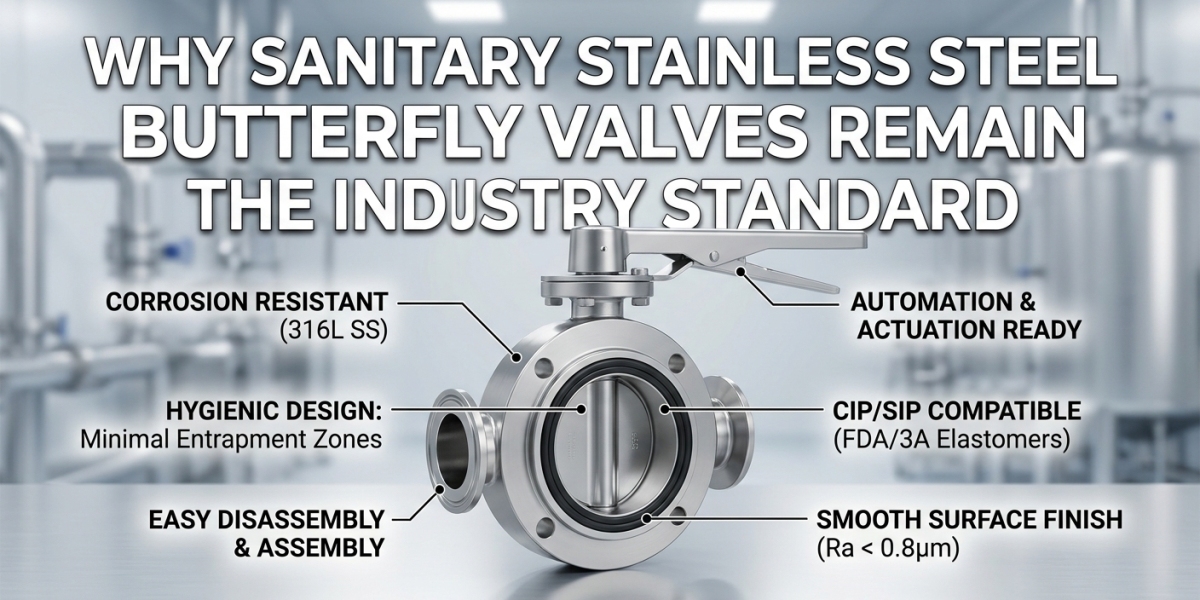

Reliable flow control is essential in industries where hygiene, product safety, and continuous production matter. Food and beverage plants, dairy facilities, pharmaceutical manufacturers, and biotechnology operations need valves that can withstand frequent cleaning while maintaining dependable performance. Sanitary Butterfly Valves offer a practical combination of hygienic construction, corrosion resistance, simple operation, and efficient flow control. However, choosing the right valve requires careful consideration of materials, seals, connections, operating conditions, and maintenance requirements.
Why Sanitary Butterfly Valves Are a Reliable Choice
A well-designed valve should do more than regulate fluid movement. It should also support sanitation, minimize leakage, and remain dependable through repeated production cycles.
Hygienic Construction
Sanitary Butterfly Valves are designed with smooth internal surfaces and streamlined passages that minimize areas where product residue can collect. This makes them suitable for systems that require frequent cleaning and sanitation.
The simple disc-based design also provides an efficient flow path while keeping the valve relatively compact.
Corrosion-Resistant Construction
Stainless steel is commonly used for sanitary butterfly valves because of its resistance to moisture, cleaning chemicals, and many process fluids. Grade 304 is suitable for numerous general applications, while 316 stainless steel can provide additional resistance in more demanding environments.
Simple Operation
Most butterfly valves use a quarter-turn mechanism, allowing quick opening and closing. They can be operated manually or fitted with pneumatic and electric actuators for automated processing systems.
Important Factors When Choosing a Valve
Selecting Sanitary Butterfly Valves for long-term reliability requires looking at the complete application rather than choosing based only on size or price.
Select the Correct Material
The valve body and internal components should be compatible with the process environment. Stainless steel provides a strong combination of durability and corrosion resistance, but the appropriate grade depends on the fluid and cleaning conditions.
Evaluate Seal Materials
The valve seat and seals play a major role in preventing leakage. Common options include EPDM, silicone, PTFE, and other specialized materials.
Seal selection should account for operating temperature, pressure, process fluid, and cleaning chemicals. A chemically incompatible seal can deteriorate quickly and lead to leakage or unexpected maintenance.
Check Pressure and Temperature Ratings
Every valve has defined operating limits. Before installation, engineers should confirm that the selected valve can handle the system's maximum pressure and temperature.
Operating a valve beyond its rated conditions can accelerate wear and compromise sealing performance.
Consider Connection Type
Sanitary butterfly valves are available with different connection configurations, including Tri-Clamp and welded options. The connection should match the existing piping system to simplify installation and future maintenance.
Applications Across Hygienic Industries
The versatility of Sanitary Butterfly Valves makes them valuable in many processing environments.
Food Processing
Food manufacturers use sanitary butterfly valves for sauces, syrups, edible oils, liquid ingredients, and other products. Hygienic surfaces help support clean production conditions.
Dairy Facilities
Milk, cream, yogurt, and other dairy products require carefully controlled processing environments. Sanitary butterfly valves can withstand repeated cleaning cycles when properly specified.
Beverage Production
Beverage manufacturers use these valves in systems handling water, juices, soft drinks, beer, and other liquids. Their compact design is useful in complex processing layouts.
Pharmaceutical and Biotechnology
Pharmaceutical and biotechnology facilities require strict contamination control. Properly selected sanitary valves can support clean fluid transfer and automated processing operations.
Features That Improve Long-Term Performance
Several design features can make sanitary butterfly valves easier to maintain and more reliable over time.
Clean-in-Place Compatibility
Many sanitary butterfly valves can operate as part of Clean-in-Place (CIP) systems. CIP allows processing equipment and piping to be cleaned without extensive disassembly, helping reduce labor and downtime.
Automation
Pneumatic and electric actuators allow valves to be integrated into automated systems. Automation can provide consistent operation and reduce manual handling.
Compact Design
Butterfly valves generally require relatively little installation space. Their compact configuration can make inspection and maintenance easier in crowded processing environments.
Replaceable Seals
Valves with accessible and replaceable sealing components can simplify preventive maintenance. Replacing worn seals before failure can help prevent leaks and unexpected interruptions.
Maintenance Practices for Reliability
Even high-quality Sanitary Butterfly Valves require routine care. Operators should regularly inspect seals, valve seats, stems, discs, actuators, handles, and connections.
Signs such as leakage, unusual operating resistance, damaged seals, or visible corrosion should be investigated promptly. Cleaning procedures should follow manufacturer recommendations to avoid damaging sealing materials or internal surfaces.
Preventive maintenance is especially important in facilities where unexpected valve failure could stop an entire production line.
The U.S. Food and Drug Administration emphasizes equipment designs that facilitate effective cleaning and help prevent contamination in food-processing environments. Properly selected and maintained sanitary valves can support these hygienic objectives.
Conclusion
Choosing Sanitary Butterfly Valves for long-term reliability requires careful attention to material grade, seal compatibility, pressure and temperature ratings, connection type, and maintenance requirements. The right valve can provide dependable flow control while supporting efficient cleaning and hygienic processing.
Whether used in food, dairy, beverage, pharmaceutical, or biotechnology facilities, quality sanitary butterfly valves can help reduce leakage risks, simplify maintenance, and support consistent production. By focusing on application requirements rather than price alone, businesses can select valve solutions that deliver reliable performance and lasting value.