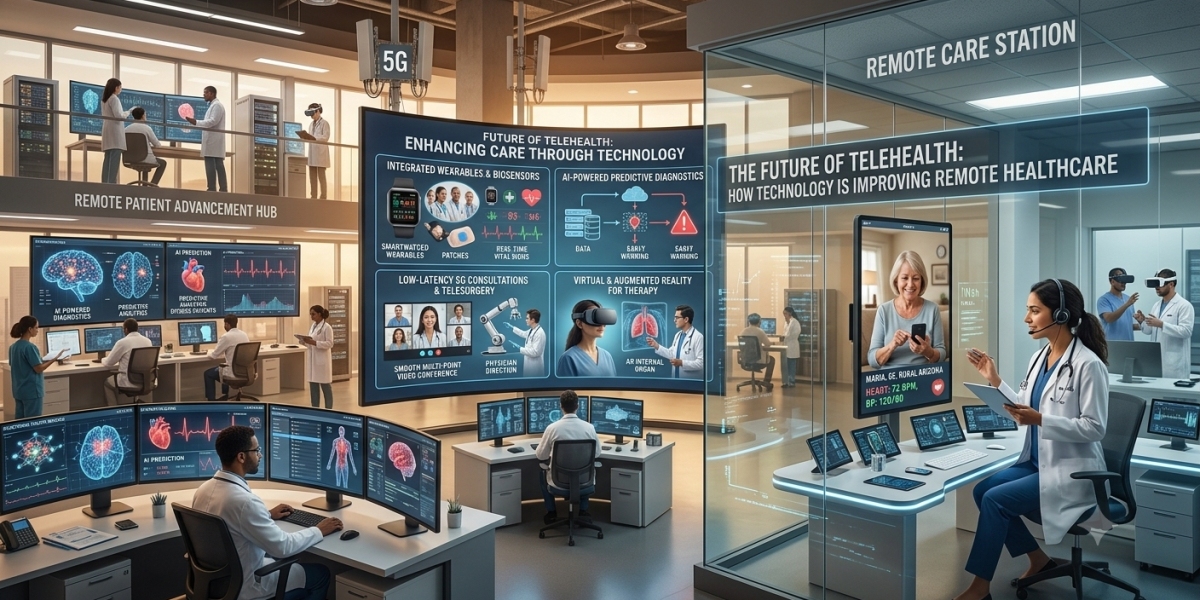

Telehealth is changing the way patients connect with healthcare providers. What once required a physical visit can now be supported through video consultations, online appointments, patient messaging, digital records, and remote healthcare platforms. As smartphones, cloud computing, AI, APIs, and connected devices continue to improve, telehealth is becoming a more practical part of modern healthcare delivery.
The future of telehealth is not only about video calls. It is about creating a connected digital healthcare experience where patients can book appointments, communicate with providers, make payments, access relevant information, and receive care remotely. API DOTS helps businesses build customized telehealth software solutions that combine secure communication, appointment management, digital healthcare workflows, and scalable technology.
What Is Telehealth?
Telehealth is the use of digital technology to support healthcare services remotely.
A patient may use a smartphone or computer to communicate with a doctor instead of visiting a healthcare facility for every interaction.
Depending on the platform, telehealth can include:
Video consultations.
Audio consultations.
Patient messaging.
Online appointment booking.
Remote patient monitoring.
Digital healthcare records.
Online payments.
The exact features depend on the healthcare provider, platform, and type of service being offered.
Why Telehealth Is Becoming More Important
Healthcare access is not always easy for everyone.
Patients living far from hospitals may need to travel long distances. People with mobility challenges may find frequent visits difficult. Even patients living near healthcare facilities may prefer digital consultations when appropriate.
Telehealth can reduce some of these barriers by allowing patients and healthcare professionals to connect remotely.
It can also help healthcare providers serve patients across wider geographic areas without requiring every interaction to happen inside a physical facility.
The New Telehealth Economy
Telehealth is also changing the business side of healthcare.
Healthcare providers are exploring digital models that can make services more accessible while improving operational efficiency. Digital appointments, online payments, remote consultations, and connected healthcare platforms can create new ways for providers to deliver and manage services.
This shift means healthcare organizations are not simply adding video consultations to their existing processes. They are increasingly thinking about complete digital healthcare journeys.
For example:
Patient discovers service → Books appointment → Makes payment → Completes consultation → Receives follow-up communication
Technology can connect these steps into one smoother workflow.
How Video and Audio Consultations Improve Remote Care
Video consultation is one of the most recognizable telehealth features.
Patients can communicate with healthcare professionals from home using a smartphone, tablet, or computer.
However, video is not the only option.
Some platforms can provide multiple consultation methods, including:
Video calls.
Audio calls.
Chat-based consultations.
In-person appointment scheduling.
API DOTS's telehealth platform supports chat, video, audio, and in-person consultation options, giving healthcare providers flexibility in how they interact with patients.
This flexibility is useful because not every healthcare interaction requires the same communication method.
Online Appointment Scheduling Makes Healthcare Easier
Appointment management can become complicated when healthcare organizations manage multiple doctors, patients, schedules, and consultation types.
A digital telehealth platform can centralize this process.
Patients can select available time slots, while administrators can manage doctor availability, rescheduling, cancellations, and appointment tracking.
Automated reminders can also help reduce missed appointments.
API DOTS's telehealth solution includes centralized appointment management, doctor availability controls, automated reminders, rescheduling, cancellation management, and real-time appointment tracking.
How Mobile Technology Is Changing Telehealth
Smartphones have made healthcare services more accessible.
A mobile telehealth application can allow patients to access healthcare services without needing a desktop computer.
Depending on the platform, users may be able to:
Book appointments.
Join consultations.
Message healthcare providers.
Receive notifications.
Access relevant healthcare information.
Make payments.
For healthcare providers, mobile applications can also provide easier access to appointment and patient-management workflows.
The Role of AI in Telehealth
Artificial Intelligence is becoming another important technology for remote healthcare.
AI can support telehealth platforms in areas such as patient communication, appointment assistance, document processing, information organization, and administrative automation.
For example, a patient may ask an AI assistant:
"When is my next appointment?"
The system can understand the question and retrieve the appropriate information from an approved healthcare system.
AI can also help healthcare organizations analyze operational data and identify patterns.
However, AI should not automatically replace qualified healthcare professionals, particularly when a situation requires medical judgment.
How APIs Connect Telehealth Systems
Modern telehealth platforms often need to communicate with multiple systems.
For example, a telehealth application may need to connect with:
Healthcare records.
Appointment systems.
Payment gateways.
Patient applications.
Communication services.
Analytics platforms.
APIs allow these systems to exchange information.
A simple example is:
Patient App → API → Appointment System → Available Slot → Patient App
Another workflow could be:
Consultation → Payment API → Payment Confirmation → Healthcare Platform
API integration helps businesses create a connected telehealth ecosystem instead of managing each system separately.
Cloud Technology Makes Telehealth More Scalable
Telehealth platforms may experience different levels of demand.
A small clinic may have a limited number of daily consultations, while a large healthcare organization may need to support thousands of users.
Cloud infrastructure can provide flexible resources for applications that need to grow.
Cloud technology can support application hosting, data storage, monitoring, backups, deployment, and scalability.
This makes cloud-based infrastructure an important part of modern telehealth software development.
Secure Payments and Digital Healthcare
Payment management is another important part of telehealth.
Some platforms need to process consultation fees, refunds, payouts, or other healthcare-related transactions.
A connected payment workflow can make the process easier for both patients and healthcare providers.
For example:
Patient Books Consultation → Payment → Confirmation → Consultation
API DOTS's telehealth platform includes secure payment processing, transaction history, earnings management, and automated payouts as part of its broader platform capabilities.
Access to Medical History
A telehealth consultation becomes more useful when healthcare professionals have appropriate access to relevant patient information.
Connected healthcare software can help bring approved information into one workflow.
For example:
Patient → Telehealth Platform → Authorized Medical Information → Healthcare Professional
This can reduce the need to manually search across multiple disconnected systems.
At the same time, access to sensitive healthcare information must be carefully controlled through appropriate security and privacy measures.
Remote Patient Monitoring and Connected Devices
Telehealth is also expanding beyond virtual consultations.
Wearable devices and connected healthcare technologies can collect information remotely. Depending on the use case, this data can be sent to healthcare platforms for monitoring and analysis.
A simplified workflow could look like:
Connected Device → Healthcare Platform → Data Analysis → Healthcare Team
This can support remote healthcare models where appropriate.
The future of telehealth may therefore combine virtual consultations with connected devices, AI, analytics, and digital patient management.
Telehealth for Different Healthcare Businesses
Telehealth is not limited to large hospitals.
Healthcare Startups
Healthcare startups can use telehealth platforms to launch digital-first consultation services and reach patients without building an entire healthcare infrastructure from scratch.
Independent Practitioners
Doctors and independent healthcare professionals can use telehealth to offer chat, audio, video, or scheduled in-person consultations from a centralized platform.
Hospitals
Hospitals can use digital healthcare platforms to manage multiple doctors, patients, appointments, and consultation workflows.
Clinics
Clinics can combine appointment scheduling, virtual visits, patient communication, and digital records in one system.
Diagnostic Centers
Diagnostic organizations can use digital platforms to manage reports, communicate results, and improve coordination between patients and healthcare providers.
These use cases align with the different telehealth applications presented by API DOTS on its platform page.
Security and Privacy in Telehealth
Healthcare platforms handle sensitive information, so security cannot be treated as an optional feature.
A telehealth platform should consider:
Secure authentication.
User access controls.
Data encryption.
Secure API communication.
Activity monitoring.
Data protection.
Appropriate regulatory requirements.
Healthcare businesses should also understand the privacy and compliance requirements that apply to their specific market and service.
Building security into the software from the beginning is usually better than trying to add it after the platform is complete.
How Businesses Can Build a Successful Telehealth Platform
Businesses planning a telehealth application should start with the user journey rather than technology alone.
Step 1: Understand the Users
Identify whether the platform is primarily designed for patients, doctors, hospitals, clinics, diagnostic centers, or another healthcare group.
Step 2: Identify the Main Workflow
Decide what the platform should make easier.
For example:
Find Doctor → Book Appointment → Pay → Consult → Follow Up
Step 3: Select the Right Features
Choose features based on the actual business model rather than adding unnecessary functionality.
Step 4: Plan Integrations
Identify healthcare systems, payment providers, APIs, databases, and communication tools that need to connect with the platform.
Step 5: Focus on Security
Plan authentication, access control, encryption, monitoring, and privacy requirements from the beginning.
Step 6: Test With Real Users
Patients and healthcare professionals should be able to use the platform without unnecessary complexity.
A simple and clear user experience can be just as important as the technology behind the platform.
How API DOTS Can Help
API DOTS provides telehealth software development services designed for modern healthcare businesses.
Its telehealth solution brings together appointment scheduling, multiple consultation modes, secure payments, patient management, and administrative functionality.
API DOTS can also combine telehealth with other technologies such as AI/ML development, mobile app development, Web API development, cloud services, and UI/UX design.
This allows businesses to build a telehealth platform around their specific requirements rather than relying only on a generic healthcare solution.
For example, a healthcare startup may need a mobile telehealth application with video consultations, online payments, appointment scheduling, AI-powered assistance, and third-party integrations. A customized development approach can bring these requirements together into one connected platform.
What Is the Future of Telehealth?
The future of telehealth is likely to be more connected than it is today.
Instead of thinking about telehealth as simply a video call, healthcare businesses can build complete digital healthcare journeys.
A future platform might connect:
Patient App → AI Assistant → Appointment System → Video Consultation → Digital Records → Payment → Follow-Up
This type of connected ecosystem can make healthcare services more convenient while helping providers manage their operations more efficiently.
AI, cloud computing, mobile applications, APIs, analytics, and connected devices will continue to influence how telehealth platforms are designed.
Conclusion
The future of telehealth goes far beyond virtual doctor appointments. Technology is creating connected healthcare platforms where patients can book appointments, communicate with providers, make payments, access digital services, and receive remote care through convenient digital channels.
AI can support automation and patient communication. APIs can connect healthcare systems. Cloud infrastructure can provide scalability. Mobile applications can improve accessibility. At the same time, secure software architecture and appropriate privacy controls remain essential.
For healthcare businesses planning a digital transformation, choosing the right technology partner is an important step.
API DOTS combines telehealth software development with AI/ML, mobile applications, APIs, cloud services, UI/UX, and other modern technologies to help businesses build scalable remote healthcare solutions.
Frequently Asked Questions
1. What is the future of telehealth?
The future of telehealth is moving toward connected digital healthcare platforms that combine virtual consultations, mobile applications, AI, remote monitoring, APIs, digital payments, and healthcare management tools.
2. How does telehealth improve patient access?
Telehealth can allow patients to communicate with healthcare providers remotely, reducing the need to travel for certain healthcare interactions and making services more convenient.
3. What features should a telehealth platform have?
Important features can include appointment scheduling, video and audio consultations, patient messaging, secure payments, notifications, patient management, and integration with existing healthcare systems.
4. How can AI improve telehealth?
AI can support appointment assistance, patient communication, administrative automation, information processing, and healthcare analytics. Medical decisions should remain under appropriate professional oversight.
5. Why are APIs important for telehealth software?
APIs allow telehealth platforms to connect with healthcare systems, payment gateways, appointment software, mobile applications, databases, and other digital services.
6. How can API DOTS help with telehealth development?
API DOTS provides customized telehealth software development with features such as appointment management, chat, video and audio consultations, secure payments, and healthcare integrations. It can also combine telehealth with AI/ML, mobile development, APIs, cloud services, and UI/UX.
Tags: Telehealth, Telehealth Software Development, Remote Healthcare, Telemedicine, Healthcare Technology, Digital Healthcare