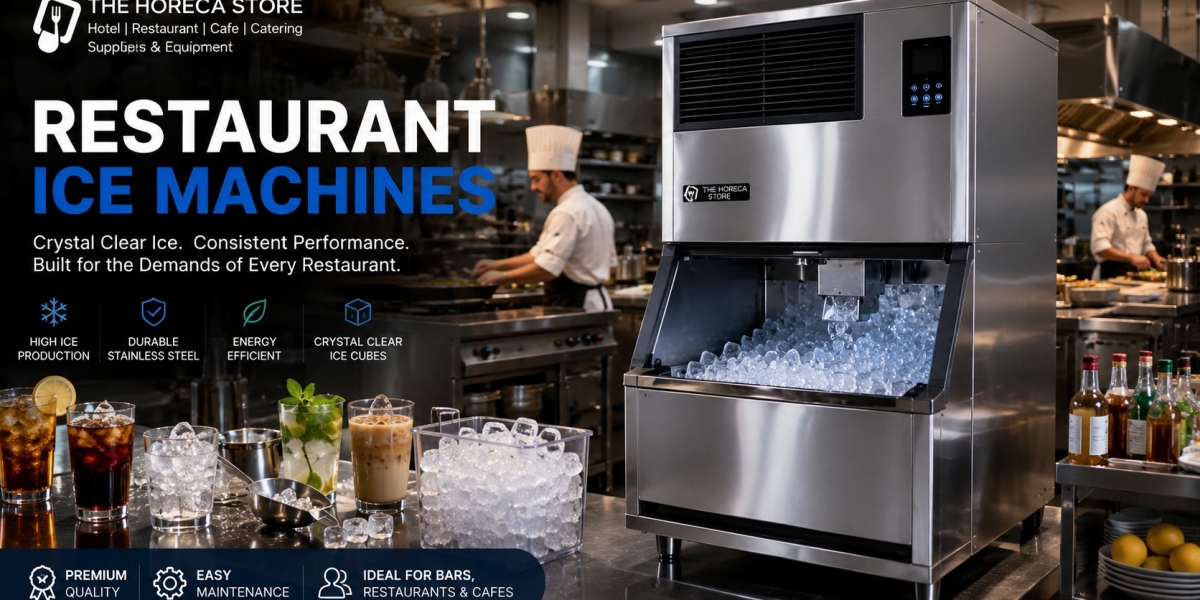

Ice is an essential part of daily operations for many restaurants, bars, cafés, hotels, healthcare facilities, catering businesses, and hospitality venues. From keeping beverages cold to supporting food presentation and preparation, a dependable ice supply can directly affect service quality and operational efficiency.
Unlike residential ice makers, Restaurant ice machines are designed for professional environments where businesses may need large quantities of ice throughout the day. Commercial machines are available in different sizes, configurations, and ice types, allowing businesses to select equipment based on their beverage volume, storage requirements, available space, and workflow.
Choosing the right restaurant ice machine requires careful planning. Businesses should consider ice production capacity, storage capacity, ice type, machine dimensions, water requirements, drainage, cleaning, maintenance, and expected demand.
For professional ice-making and refrigeration equipment,The Horeca Store offers commercial ice machine solutions for restaurants and foodservice operations.
Explore restaurant ice machines from The Horeca Store
What Are Restaurant Ice Machines?
Restaurant ice machines are commercial ice-making systems designed to produce ice for foodservice and hospitality applications.
Restaurants may use ice for:
Soft drinks
Cocktails and beverages
Iced tea
Water service
Food displays
Seafood presentation
Salad bars
Catering
Food preparation
Hospitality service
Commercial ice machines can produce different types of ice depending on the model and application. Common varieties include cube ice, nugget ice, flake ice, and other specialized formats.
The appropriate type depends on how the restaurant intends to use the ice.
Why Restaurants Need Commercial Ice Machines
Ice demand can increase significantly during busy service periods.
A restaurant that relies only on packaged ice may face inconsistent supply, storage challenges, and additional purchasing requirements. An on-site commercial ice machine can provide a dedicated source of ice for daily operations.
Key benefits include:
Consistent ice availability
Convenient on-site production
Reduced dependence on packaged ice
Improved beverage service
Better workflow
Support for high-volume operations
Greater control over ice production
For businesses serving large numbers of cold beverages, having an appropriately sized ice machine can be especially valuable.
Types of Restaurant Ice Machines
Different ice machines are designed for different environments.
Modular Ice Machine
A modular ice machine typically produces ice and is installed on top of a compatible ice storage bin or dispenser.
This configuration can be useful for restaurants that require substantial ice production.
Modular units are often suitable for:
Large restaurants
Hotels
Cafeterias
Hospitals
Catering operations
High-volume foodservice businesses
The appropriate bin size should be selected according to expected ice demand.
Undercounter Ice Machine
Undercounter ice machines combine ice production and storage in a compact footprint.
They can be useful for:
Bars
Cafés
Small restaurants
Beverage stations
Limited-space kitchens
Their compact design allows businesses to install ice production close to where ice is needed.
Countertop Ice Dispenser
Countertop dispensers can provide convenient access to ice and beverages in appropriate foodservice environments.
They may be useful in areas where customers or employees need quick access to ice.
Ice and Water Dispenser
Some commercial machines combine ice production or storage with water dispensing.
These systems can be useful in self-service environments, hospitality facilities, and other locations where both ice and water are required.
Types of Ice for Restaurants
The type of ice produced can affect beverage presentation, cooling performance, and customer experience.
Cube Ice
Cube ice is one of the most common options for beverages.
It can be suitable for:
Soft drinks
Cocktails
Water
Iced tea
Mixed drinks
Cube sizes and shapes vary by machine.
Nugget Ice
Nugget ice has a softer texture and is popular for certain beverages.
It can be particularly appealing in:
Specialty drinks
Soft drinks
Cafés
Bars
Quick-service restaurants
Flake Ice
Flake ice is made from thin, soft pieces of ice.
It can be useful for:
Food displays
Seafood presentation
Salad bars
Food preparation
Certain specialty applications
The ideal ice type depends on the restaurant's specific requirements.
How to Choose the Right Restaurant Ice Machine
Selecting the right equipment starts with calculating your actual ice requirements.
1. Estimate Daily Ice Demand
Determine approximately how much ice your restaurant uses each day.
Consider:
Number of customers
Beverage sales
Number of shifts
Peak service periods
Seasonal demand
Catering
Food presentation
Special events
A restaurant with high beverage sales will generally require more ice than a small café.
2. Plan for Peak Demand
Do not size your machine only around an average day.
Ice consumption can increase significantly during:
Summer
Weekends
Holidays
Special events
Large reservations
Outdoor dining periods
Planning for peak demand can help reduce the risk of running short of ice.
3. Consider Storage Capacity
Ice production and ice storage are two different considerations.
A machine may produce a specific quantity of ice over a given period, while the storage bin determines how much ice can be held at one time.
Make sure both capacities match your operation.
4. Measure Available Space
Before purchasing equipment, measure the installation area carefully.
Check:
Width
Depth
Height
Clearance
Water connection
Drainage
Electrical requirements
Access for maintenance
A machine should be installed according to the manufacturer's requirements.
Ice Machine Production Capacity
Manufacturers typically specify an ice machine's production capacity under particular operating conditions.
Actual production can vary based on factors such as:
Ambient temperature
Water temperature
Ventilation
Machine condition
Usage
Installation conditions
Therefore, businesses should not assume that the published maximum production figure will always represent real-world output.
Choose equipment with appropriate capacity for your operating environment and expected demand.
Importance of Water Quality
Water quality can affect ice machine operation and maintenance.
Minerals and other substances in water can contribute to scale buildup and may affect machine performance over time.
Restaurants should follow manufacturer recommendations regarding water filtration and maintenance.
A suitable filtration system may be useful in areas with challenging water conditions.
Always follow applicable local requirements and manufacturer guidelines.
Ice Machine Placement
Where an ice machine is installed can influence its performance and convenience.
Ideally, the machine should be positioned where employees can access it easily without disrupting kitchen or bar traffic.
Consider placing ice-making equipment near:
Beverage stations
Bars
Kitchen preparation areas
Service counters
Dining service areas
At the same time, avoid locations that expose the machine to excessive heat, poor ventilation, or unnecessary contamination risks.
Restaurant Ice Machine Maintenance
Regular maintenance is essential for reliable ice production.
Clean the Ice-Making Area
Follow manufacturer instructions for cleaning and sanitizing components that come into contact with ice.
Clean Storage Bins
Ice storage areas should be maintained according to appropriate sanitation procedures.
Inspect Water Systems
Water lines, filters, and related components should be checked regularly.
Remove Mineral Buildup
Scale can accumulate in areas with hard water.
Follow the manufacturer's recommended cleaning procedure.
Maintain Airflow
Air-cooled equipment requires appropriate airflow around ventilation areas.
Keep vents unobstructed.
Schedule Preventive Maintenance
Professional servicing can help identify potential issues before they result in unexpected downtime.
Food Safety and Ice Handling
Ice used for beverages or food service should be handled as a food product.
Employees should follow appropriate sanitation procedures when working with ice.
Best practices include:
Using dedicated ice scoops
Keeping ice containers clean
Avoiding direct hand contact
Storing scoops appropriately
Cleaning equipment according to manufacturer instructions
Following local food-safety requirements
Ice should be protected from contamination throughout production, storage, and service.
Common Restaurant Ice Machine Buying Mistakes
Choosing Based Only on Price
The cheapest machine may not provide the right production capacity or long-term value.
Consider the equipment's capacity, installation requirements, maintenance needs, and expected usage.
Underestimating Ice Demand
Running out of ice during peak service can disrupt beverage operations.
Estimate both normal and peak demand before selecting a machine.
Ignoring Storage Capacity
A machine may produce enough ice but still have insufficient storage capacity for busy periods.
Choosing the Wrong Ice Type
Not every ice format is suitable for every application.
Choose the ice type according to your menu and service model.
Ignoring Installation Requirements
Water, drainage, electrical connections, ventilation, and clearance requirements should be reviewed before installation.
Neglecting Maintenance
Poor cleaning and maintenance can affect ice production, sanitation, and equipment performance.
Restaurant Ice Machines and Bar Operations
Bars often have some of the highest ice requirements in a foodservice operation.
Cocktails, mixed drinks, soft drinks, water, and other beverages can consume substantial quantities of ice.
A bar may benefit from an ice machine positioned close to the beverage preparation area.
However, the machine should not interfere with bartender movement or customer service.
For high-volume bars, production capacity and storage capacity should be evaluated together.
Ice Machines for Small Restaurants
Small restaurants do not necessarily need the largest available machine.
A compact undercounter ice maker may be suitable when:
Ice demand is moderate
Floor space is limited
Ice is needed near a service station
The restaurant has a smaller beverage menu
Choosing equipment that matches actual demand can prevent unnecessary equipment costs and space usage.
Ice Machines for Large Restaurants
Large restaurants, hotels, and catering businesses may require substantially more ice.
These operations may benefit from modular ice makers paired with appropriately sized storage bins.
Multiple machines may also be considered when the business has separate beverage stations or requires redundancy.
The final configuration should be based on demand, space, infrastructure, and manufacturer specifications.
Benefits of Investing in Quality Ice Equipment
Reliable Ice Supply
A properly sized commercial ice machine can support consistent daily operations.
Improved Beverage Service
Adequate ice availability helps beverage staff serve customers efficiently.
Better Workflow
On-site ice production can reduce the need to transport and store packaged ice.
Reduced Storage Pressure
Producing ice on-site can reduce the amount of packaged ice that needs to be stored.
Professional Operations
Commercial equipment is designed for demanding foodservice environments.
Frequently Asked Questions
What type of ice machine is best for a restaurant?
The best machine depends on ice demand, available space, ice type, storage requirements, and restaurant workflow. Undercounter machines can suit smaller operations, while modular systems can support higher-volume businesses.
How much ice does a restaurant need?
Ice requirements vary by restaurant. Beverage volume, customer traffic, season, menu, catering, and peak service periods all influence daily demand.
What type of ice is best for restaurants?
Cube ice is widely used for beverages, while nugget and flake ice may be preferred for specific drinks or food presentation applications. The best option depends on the restaurant's menu and service requirements.
How often should a restaurant ice machine be cleaned?
Cleaning frequency depends on the equipment, usage, water conditions, manufacturer recommendations, and applicable sanitation requirements. Restaurants should follow the manufacturer's cleaning and sanitizing instructions.
Conclusion
Restaurant ice machines are an essential investment for businesses that serve beverages, prepare food, or require large quantities of ice throughout the day. Restaurants, bars, cafés, hotels, catering companies, and other foodservice operations can benefit from having a reliable source of commercial ice.
Choosing the right machine requires careful planning. Businesses should evaluate daily ice consumption, peak demand, storage capacity, ice type, available space, water quality, drainage, electrical requirements, and maintenance needs.
Start by estimating how much ice your business uses during an average day. Then consider weekends, holidays, summer demand, special events, and catering requirements. This will help you select equipment that can keep up with your busiest periods.
The type of ice is also important. Cube ice may be ideal for standard beverages, while nugget ice can work well for certain specialty drinks. Flake ice can be useful for food displays and specific foodservice applications.
Installation should be planned carefully. The machine needs appropriate water, drainage, electrical connections, ventilation, and service access. Following manufacturer requirements can help support reliable operation.
Maintenance is equally important. Regular cleaning, sanitizing, water-system maintenance, scale removal, airflow management, and preventive servicing can help maintain ice quality and machine performance.
For restaurants and foodservice businesses looking for commercial ice-making equipment, The Horeca Store provides professional refrigeration and ice machine solutions for a variety of applications.
Ultimately, the best restaurant ice machine is one that matches your ice demand, storage needs, available space, and service requirements. With proper selection, installation, cleaning, and maintenance, commercial ice equipment can support smoother beverage service and more efficient restaurant operations.