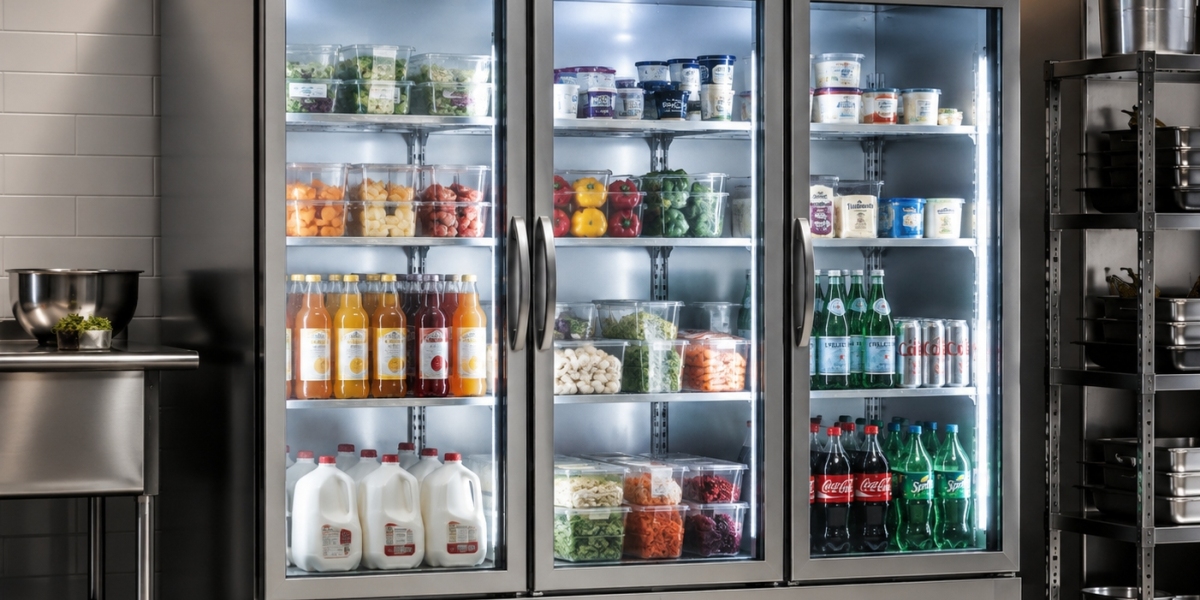

Looking for a reach in chiller? For most commercial kitchens, a reach in chiller is the workhorse that holds ingredients within arm's reach of the line — no walking to a walk-in mid-service, no digging through bins. Choosing the right size, door configuration, and interior layout keeps prep moving efficiently and food held at safe temperatures throughout a busy shift. Because these units cycle open and closed constantly during service, they're often under more real-world stress than any other refrigeration in the building.
Why the Right Reach In Chiller Matters
Reach-in units are designed around speed and organization: adjustable shelving, clear door visibility (on glass models), and compressor placement that keeps kitchen heat from working against the refrigeration system. A reach in chiller sized correctly for your menu keeps mise en place organized and reduces the number of times staff open the door searching for an item — which itself helps hold internal temperature more consistently. Poorly organized or undersized units tend to create bottlenecks right at the point of service, where every second counts.
Key Features to Look For
● One, two, or three-section configurations based on kitchen footprint
● Solid doors for energy efficiency or glass doors for visibility and quick access
● Adjustable, epoxy-coated wire shelving for flexible storage
● Top-mount or bottom-mount compressor based on kitchen airflow and ceiling clearance
● Digital temperature control and self-diagnostic alerts
● Stainless steel exterior and interior for durability and easy sanitation
● Half-door or full-door configurations to control cold air loss during frequent access
Buying Guide: What to Consider
Before purchasing a reach in chiller, map out your prep station layout — the number of sections should match your line's workflow rather than just total volume needed. Bottom-mount compressors free up top shelf space and simplify undercounter access in tight kitchens, while top-mount units are often easier to service. Check door swing direction and clearance too, especially in narrow kitchen aisles where hinge placement can affect traffic flow. If your kitchen runs hot near the line, bottom-mount compressors can also run less efficiently, so ventilation is worth double-checking.
Common Mistakes to Avoid
Overpacking shelves is one of the most common mistakes staff make with a reach in chiller, since blocked airflow around stored items leads to uneven cooling and hot spots that compromise food safety. Propping doors open during heavy prep periods — even briefly — is another habit that drives up internal temperature more than most people realize. Skipping regular gasket inspection is a frequent oversight too, since a worn seal is often invisible until it shows up as a utility bill spike or an inconsistent temperature reading. Lastly, placing the unit without adequate rear clearance can restrict the compressor's airflow and shorten its working life significantly.
Maintenance & Upkeep Tips
Because a reach in chiller sees constant door traffic, gaskets and shelving wear faster here than on lower-traffic units. Check door seals weekly for tears or warping, since even small gaps let warm air in and force the compressor to work overtime. Clean interior shelving regularly to prevent buildup that can harbor bacteria, and vacuum or brush condenser coils every few months to keep airflow unrestricted. A quick daily temperature check at the start of each shift is a simple habit that catches problems before they affect a full prep list.
Why Shop for a Reach In Chiller at The Horeca Store
At The Horeca Store, we carry a wide range of commercial refrigeration equipment sourced from trusted manufacturers, backed by manufacturer warranties and knowledgeable support to help you match the right unit to your operation. Whether you're outfitting a new location or replacing aging equipment, our team can help you compare specs, capacity, and installation requirements before you buy.
Frequently Asked Questions
How many doors do I need on a reach-in refrigerator?
It depends on menu variety and prep volume — busy kitchens with diverse ingredients often benefit from two or three sections so staff aren't waiting to access shared shelving during peak service.
Solid or glass doors on a reach-in unit?
Solid doors are more energy-efficient since they don't lose cold air to light exposure, while glass doors let staff see contents without opening the door, which can reduce unnecessary openings during service.
What's the typical lifespan of a commercial reach-in refrigerator?
With regular maintenance, most commercial reach-in units last well over a decade, though compressor wear and gasket condition are the first components to watch as the unit ages.
Should a reach-in refrigerator sit flush against a wall?
Most units need clearance behind and around them for proper airflow around the condenser, so check the manufacturer's clearance specifications rather than pushing the unit flush against a wall.
Can a reach-in refrigerator be used outdoors?
Most standard reach-in units are designed for indoor use only; outdoor placement requires a model specifically rated for ambient temperature swings and weather exposure.
Final Thoughts
Investing in the right reach-in refrigerator pays off in food safety, product quality, and lower long-term operating costs. Take the time to size the unit around your actual peak demand rather than your average day, weigh energy efficiency alongside the upfront price tag, and build a simple maintenance routine from day one — these three habits do more to protect your investment than any single feature on a spec sheet. Equipment that's matched well to how your operation actually runs tends to disappear into the background, quietly doing its job shift after shift, which is exactly what you want from refrigeration.
If you're ready to compare options, browse our reach in chiller selection and find the right fit for your operation.