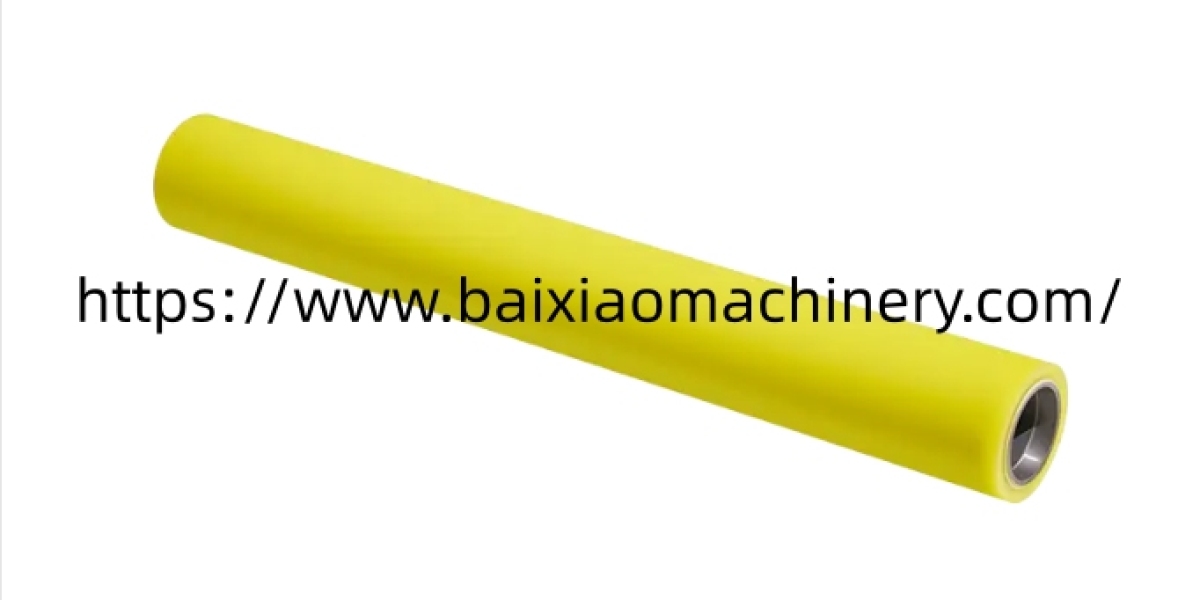

In modern material-handling and processing equipment, a well-designed Rubber Roller can provide a useful combination of controlled contact and mechanical support while helping manufacturers address the specific requirements of different production environments. Unlike a bare metal roller, a rubber-covered design introduces a resilient surface between the roller and the material being handled. This difference can influence traction, cushioning, noise, surface protection, and overall equipment behavior.
Material selection is the first factor worth examining. The metal core provides the structural foundation, while the rubber covering determines many of the roller's contact characteristics. Different rubber compounds can offer different levels of flexibility, resilience, abrasion resistance, and resistance to environmental influences. The appropriate choice depends on whether the roller is intended for conveying, feeding, pressing, guiding, laminating, printing, or another industrial process.
The working environment should also influence material decisions. Moisture, oils, cleaning agents, dust, heat, and other substances may affect rubber surfaces differently. A roller used around sensitive materials may require a surface with particular contact characteristics, while equipment exposed to harsh surroundings may need a compound selected for greater environmental resistance. Considering the complete operating environment helps prevent material choices based only on general assumptions.
Buyers should also examine the relationship between the rubber covering and the roller core. A well-prepared bonding interface can help maintain the integrity of the finished assembly during repeated operation. Core preparation, adhesive selection, rubber application, curing, grinding, and finishing can all influence the final result. Manufacturing consistency is therefore particularly important for rollers that need a uniform working surface.
When selecting a roller, application compatibility should come before visual preferences. Buyers can consider what material the roller will contact, whether the process requires traction or controlled sliding, how frequently the equipment operates, and what kind of maintenance environment surrounds the machine. A roller intended for delicate sheet handling may require a different surface approach from one used for general conveying or industrial processing.
The surrounding machine should also be considered. Bearings, shafts, frames, belts, and adjacent rollers all influence how a roller performs within a system. Proper integration can support stable rotation and consistent material movement. When replacing an existing roller, checking the condition of related components can also help identify whether problems originate from the roller itself or from another part of the machine.
Technology plays an important role in rubber roller production. Precision machining helps prepare the core, while controlled rubber application supports a consistent covering. Curing allows the rubber compound to develop its intended characteristics, and finishing processes can create a suitable working surface. Grinding and balancing may also contribute to smooth rotation and consistent contact, depending on the application.
Quality control should extend throughout the manufacturing process. Surface inspection, bonding checks, dimensional verification, and visual examination can help identify potential defects before delivery. For industrial rollers, consistency matters because irregularities in the working surface may influence material movement, contact pressure, or machine behavior. A controlled production process therefore contributes to both product reliability and predictable equipment operation.
Maintenance is another consideration that should not be overlooked. Rubber surfaces can gradually change through repeated contact, contamination, environmental exposure, or improper cleaning. Regular inspection can help operators identify cracking, surface deterioration, contamination, or uneven wear at an early stage. Cleaning methods should also be compatible with the rubber compound and the operating environment to avoid unnecessary surface damage.
User experience in industrial equipment is closely connected with stable operation. A suitable roller can help materials move more smoothly and can reduce unwanted slipping or abrupt contact. In applications involving delicate surfaces, an appropriate rubber covering may also provide a gentler interaction than a rigid metal surface. For operators, predictable material movement can make production processes easier to monitor and manage.
Noise and vibration can also affect the working environment. The resilient nature of rubber can influence the way a roller interacts with moving materials and surrounding equipment. Although the final operating result depends on the complete machine, appropriate roller construction can contribute to a more controlled interaction between components.
Zhejiang Province, Ruian Baixiao Machinery Co., Ltd. develops conveyor-related machinery and roller products for different industrial applications. Its manufacturing activities reflect the importance of combining structural construction with practical material-handling requirements. For buyers comparing suppliers, evaluating production experience, material processing capabilities, quality management, and the ability to accommodate application-specific requirements can provide useful insight beyond a basic product description.
Design and appearance have both functional and visual significance. The shape of the core, thickness and finish of the rubber covering, edge treatment, shaft arrangement, and overall surface quality can influence how the roller integrates into equipment. A smooth and consistent working surface can also contribute to a professional appearance, particularly when machinery is installed in visible production areas.
For equipment manufacturers, customized roller development can provide greater flexibility when standard products do not fit a particular process. Rubber compound selection, surface treatment, core construction, finishing approach, and connection details can be considered according to the intended application. This allows the roller to become a more integrated part of the machine rather than a generic component added afterward.
For businesses evaluating industrial roller solutions, considering material compatibility, application conditions, machine integration, production technology, maintenance requirements, operator experience, and surface design can create a more complete purchasing approach. Zhejiang Province, Ruian Baixiao Machinery Co., Ltd. provides further information about its roller products, conveyor machinery, and manufacturing capabilities through its official website: https://www.baixiaomachinery.com/