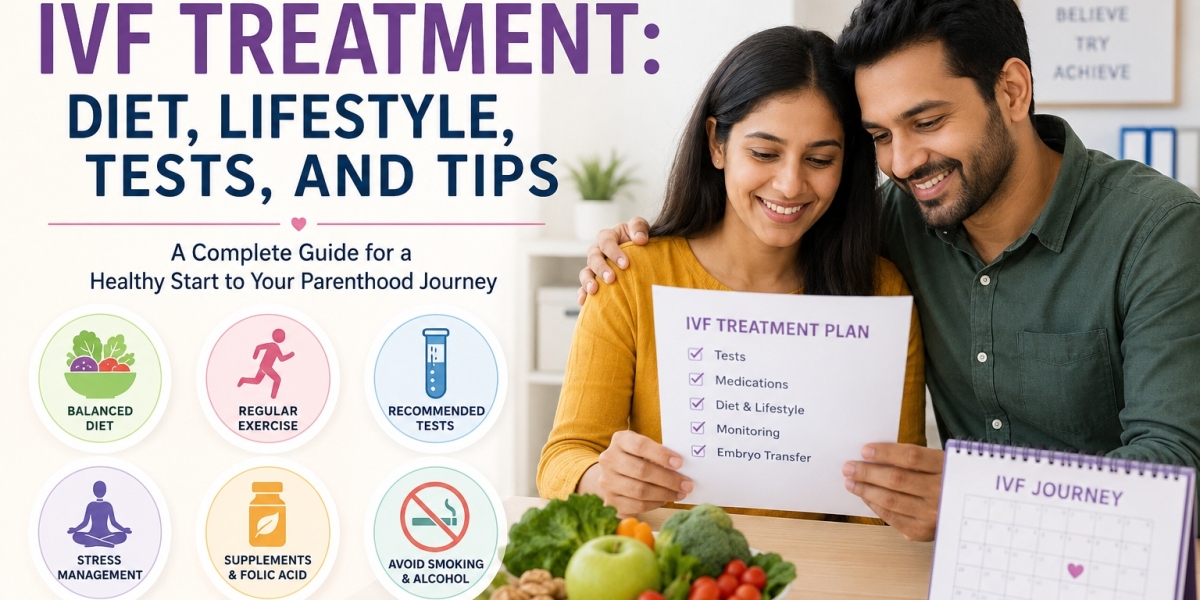

Introduction
Starting IVF can feel exciting, confusing, and sometimes overwhelming. You may wonder, What should I eat? Which tests are needed? Should I exercise? What should I avoid before treatment?
The good news is that preparing for IVF does not mean completely changing your life overnight. Think of it as preparing the soil before planting a seed. A healthy routine, appropriate medical tests, good nutrition, and emotional preparation can help you enter treatment in the best possible condition.
If you are considering treatment, discussing your individual situation with the best IVF doctor in New Delhi can help you understand which preparation steps are appropriate for you. IVF plans are not identical for everyone, so your doctor may recommend different tests, medicines, or lifestyle changes based on your age, medical history, fertility diagnosis, and previous treatment.
Preparing for IVF? Learn about diet, lifestyle, tests, medications, exercise, and practical tips with guidance from the best IVF doctor in New Delhi
1. Understand Your IVF Treatment Plan
Before you begin IVF medications, make sure you understand the treatment plan recommended by your fertility specialist.
IVF typically involves ovarian stimulation, monitoring through ultrasound and blood tests, egg retrieval, fertilization in the laboratory, embryo development, and embryo transfer. The exact method and timeline may vary from patient to patient.
Ask your doctor:
What IVF protocol should I follow?
What medications will I need?
How long will the process take?
What tests are required before treatment?
When should I start or stop specific medications?
What side effects should I look out for?
How many clinic visits will be required?
Understanding your treatment plan can help reduce anxiety and allow you to plan your work, travel, appointments, and daily routine.
2. Start With the Recommended Fertility Tests
Testing is an important part of IVF preparation because your treatment should be based on your individual fertility profile.
Depending on your medical history, your fertility doctor may recommend hormone tests, ultrasound, ovarian reserve assessment, evaluation of the uterus and fallopian tubes, and semen analysis for the male partner.
Common assessments may include:
Hormonal Tests: These can include tests such as AMH, FSH, LH, estradiol, thyroid-related tests, and other hormone tests when clinically appropriate.
Ultrasound: A transvaginal ultrasound can help assess the condition of the uterus and ovaries, pelvic anatomy, and antral follicle count.
Semen Analysis: Male fertility factors are important because sperm quality can influence fertilization and embryo development.
Tubal and Uterine Evaluation: Depending on your medical history, your doctor may recommend tests to evaluate the uterus and determine whether the fallopian tubes are open.
Infection Screening: Clinics may require blood tests for certain infections before IVF. For example, screening for HIV, hepatitis B, and hepatitis C may be required before treatment.
Do not assume that every patient needs every possible fertility test. A qualified fertility specialist will select tests based on your medical history and treatment requirements.
3. Follow a Balanced IVF-Friendly Diet
There is no magic IVF diet that can guarantee pregnancy. However, eating a healthy, well-balanced diet can support general health and provide your body with important nutrients before pregnancy.
Try to plan meals around:
Fruits and vegetables
Whole grains
Beans and lentils
Nuts and seeds
Eggs and other protein-rich foods
Fish that is appropriate during preconception and pregnancy
Lean meats or other sources of protein
Healthy fats such as olive oil
Adequate water
Research on specific dietary patterns and IVF outcomes is not completely consistent. However, healthy eating and lifestyle habits are generally considered important aspects of preconception health.
Instead of searching for one “fertility superfood,” focus on your overall eating pattern. A balanced diet containing protein, vegetables, whole grains, and healthy fats is generally more useful than relying on expensive fertility products or powders.
Foods to Limit
Try to reduce highly processed foods, foods high in added sugar, trans fats, and processed meats.
Be cautious with unregulated herbal supplements and products advertised as fertility boosters. “Natural” does not automatically mean safe during fertility treatment.
4. Take Folic Acid and Recommended Supplements
Folic acid is particularly important when preparing for pregnancy. Professional guidance recommends folic acid supplementation to help reduce the risk of neural tube defects. ASRM guidance recommends at least 400 micrograms of folic acid daily for women attempting conception.
Your fertility physician may recommend other supplements based on your nutritional status, medical history, and laboratory results.
However, avoid taking multiple supplements without discussing them with your doctor.
Some fertility supplements contain combinations of antioxidants, vitamins, herbal extracts, and other ingredients that may not be suitable for everyone.
The objective is not to take as many supplements as possible. The aim is to take only what you need.
5. Maintain a Healthy Weight
Body weight can affect fertility and pregnancy health. Both very low and high body weight may be associated with reproductive and pregnancy-related concerns.
If you are above or below your healthy weight range, do not attempt an extreme crash diet before IVF.
Instead, consult your fertility specialist or a qualified nutritionist to discuss a realistic approach.
Healthy changes may include:
Eating balanced meals regularly
Increasing vegetables and fibre
Choosing healthy sources of protein
Limiting sugary drinks
Staying physically active
Getting sufficient sleep
Your doctor can advise whether weight management should be considered before starting IVF or whether treatment should begin without delay.
6. Exercise Regularly but Sensibly
Regular exercise and moderate physical activity can support general health and help maintain a healthy weight.
Walking, gentle cycling, yoga, swimming, and other moderate activities can fit into a regular routine before IVF.
However, IVF treatment is different from normal exercise because the ovaries may become enlarged during ovarian stimulation. Your fertility specialist may therefore recommend reducing or avoiding certain high-impact activities during specific stages of treatment.
Be sure to follow your doctor's exercise recommendations once ovarian stimulation begins.
The correct approach isn't “exercise as much as possible.” Instead, focus on exercising appropriately for the stage of treatment you are currently in.
7. Stop Smoking and Avoid Recreational Drugs
Smoking is one of the lifestyle factors that may negatively affect reproductive health. Tobacco use has been associated with reduced fertility, and medical guidance recommends quitting smoking before infertility treatment.
If you smoke, consider speaking with a healthcare professional for support rather than relying on willpower alone.
The same principle applies to recreational drugs. Be honest with your fertility specialist about any substances you use so they can provide appropriate medical advice.
Second-hand smoke should also be avoided whenever possible.
Your partner's lifestyle matters too. Male smoking and other lifestyle factors can affect reproductive health, so IVF preparation should involve both partners.
8. Limit Alcohol and Excessive Caffeine
Alcohol intake is something you should discuss with your fertility specialist, particularly as you move closer to pregnancy and during fertility treatment.
Professional fertility guidance recommends limiting alcohol and excessive caffeine while trying to conceive and avoiding recreational drug use.
Instead of assuming how much alcohol or caffeine is appropriate for you, ask your IVF clinic for specific guidance based on your treatment plan.
Simple changes can help:
Choose water or non-alcoholic alternatives instead of alcohol.
Reduce energy drinks.
Keep track of your daily caffeine intake.
Drink enough water throughout the day.
After pregnancy is confirmed, follow your doctor's advice regarding caffeine, alcohol, and food safety.
9. Review Medicines and Supplements
Before IVF begins, give your fertility doctor a complete list of everything you are taking.
This includes:
Prescription medicines
Over-the-counter medicines
Vitamins
Herbal remedies
Protein and fitness supplements
Traditional medicines
Other regularly or occasionally used medicines
Do not stop prescribed medication on your own.
Certain medications may need to be changed, continued, or temporarily stopped depending on your health and IVF protocol.
This simple step can help avoid unnecessary problems and allow your fertility team to make safer treatment decisions.
10. Prepare Your Partner for IVF
IVF isn't only a woman's treatment. The male partner may also require assessment and fertility testing.
A semen analysis is commonly part of fertility evaluation. Your doctor may also ask about previous health conditions, treatments, surgeries, medications, lifestyle habits, and reproductive history.
Your partner can support the process by:
Healthy Eating: Include vegetables, fruits, whole grains, protein, and healthy fats.
Avoiding Smoking: Tobacco can negatively affect reproductive health.
Limiting Alcohol: Follow the recommendations provided by your fertility clinic.
Maintaining a Healthy Weight: Overall metabolic health is important for reproductive health.
Attending Appointments: Understanding the treatment together can make the process easier emotionally and practically.
Most importantly, avoid blaming one partner or the other. Infertility can involve male factors, female factors, both partners, or sometimes no clearly identified cause.
11. Take Care of Your Emotional Health
IVF can bring many emotions, including anticipation, hope, anxiety, disappointment, and relationship stress.
It is completely normal to experience mixed emotions.
Create a support system before treatment begins. This could include your partner, close family members, trusted friends, a counsellor, or a fertility support group.
Helpful strategies may include:
Maintaining a regular sleep schedule
Taking short walks
Practising breathing exercises
Avoiding excessive fertility-related searches online
Connecting with supportive people
Taking breaks from fertility-related discussions
Remember that stress is not your fault, and experiencing anxiety does not mean you have ruined your chances of IVF success.
You do not need to remain perfectly calm throughout the treatment process.
12. Prepare for IVF Injections and Monitoring
Many IVF procedures involve fertility medications that stimulate the ovaries to develop multiple follicles. During this stage, the clinic will monitor your response through appointments, ultrasound scans, and sometimes blood tests.
Before starting injections, ask your doctor:
How should I store the medication?
How should I administer the injections?
What time of day should I take them?
What should I do if I miss a dose?
What side effects are expected?
When should I contact the clinic urgently?
Do not change the medication dosage yourself.
Your doctor may adjust the dosage according to how your ovaries respond. IVF treatment is similar to following a personalised roadmap rather than following a fixed recipe.
13. Prepare for Egg Retrieval and Embryo Transfer
Egg retrieval takes place after ovarian stimulation and follicle maturation. The eggs are then fertilized in the laboratory.
An embryo may later be transferred into the uterus. The exact timing and method depend on your individual treatment plan.
Your doctor will provide specific instructions about:
Food and drinks before the procedure
Medications
Arrival time
Anaesthesia or sedation
Transportation home
Activity restrictions
Embryo transfer preparation
Pregnancy testing
Follow your clinic's instructions instead of relying on advice from social media or friends who have undergone IVF.
After embryo transfer, complete bed rest is generally not necessary unless your physician specifically advises otherwise. Ask your doctor about appropriate activity levels.
14. Common IVF Preparation Mistakes to Avoid
Preparing for IVF can become confusing when you receive different opinions from different people.
Here are some common mistakes to avoid:
1. Following an extreme diet: There is no need to follow a highly restrictive diet or eliminate entire food groups without a medical reason.
2. Taking too many supplements: More supplements do not automatically mean better fertility.
3. Stopping medication without medical advice: Always speak with your doctor before changing prescribed medication.
4. Exercising excessively: Follow your clinic's exercise recommendations during ovarian stimulation.
5. Smoking or using recreational drugs: These should be avoided.
6. Ignoring male fertility: Both partners should be assessed when appropriate.
7. Comparing your IVF cycle with another patient's: Every patient can respond differently to treatment.
8. Believing that IVF guarantees pregnancy: IVF can provide an important treatment option, but success depends on several factors, including age, fertility diagnosis, embryo-related factors, and individual circumstances.
15. When to Consult the Best IVF Doctor in New Delhi
Choosing the right fertility specialist is an important part of IVF preparation. If you are searching for the best IVF doctor in New Delhi, look beyond marketing claims.
Consider the doctor's qualifications, experience, treatment approach, communication style, clinic facilities, laboratory standards, and whether the treatment plan is personalised to your needs.
During your consultation, consider asking:
What is the most likely cause of our infertility?
What tests do we really need?
Is IVF the best option for us at this stage?
Which IVF protocol would you recommend and why?
What are the possible risks?
How should we prepare for treatment?
What happens if the first IVF cycle does not work?
What are the expected costs and additional charges?
A good consultation should give you a clearer understanding of your options rather than simply providing you with a long list of procedures.
Conclusion
Preparing for IVF is about building a healthy foundation rather than searching for a miracle food, supplement, or technique. Focus on healthy nutrition, appropriate exercise, weight management, avoiding smoking and recreational drugs, reviewing medications, completing recommended tests, and taking care of your emotional health.
Most importantly, follow a personalised treatment plan created by a qualified fertility specialist. If you are considering IVF in Delhi, consulting the best IVF doctor in New Delhi for your individual circumstances can help you understand the appropriate tests, treatment options, and preparation steps.
Frequently Asked Questions
1. What foods should I eat before IVF treatment?
A balanced diet containing fruits, vegetables, whole grains, protein, legumes, nuts, seeds, and healthy fats is a sensible approach. There is no single food proven to guarantee IVF success.
2. Should I exercise before starting IVF?
Moderate physical activity can support general health. However, exercise recommendations may change during ovarian stimulation because the ovaries can become enlarged. Follow your fertility specialist's advice.
3. What tests are typically performed before IVF?
Depending on your medical history, testing may include hormone tests, ovarian reserve assessment, ultrasound, evaluation of the uterus or fallopian tubes, semen analysis, and infectious-disease screening. Your fertility specialist will determine which tests are appropriate for you.
4. Should both partners make lifestyle changes before IVF?
Yes. Male and female fertility factors can both contribute to infertility. Both partners should focus on healthy lifestyle habits, and the male partner may require fertility testing such as semen analysis.
5. How do I choose the best IVF doctor in New Delhi?
Look for a qualified fertility specialist with relevant experience, a personalised treatment approach, clear communication, appropriate laboratory support, and transparent information about treatment benefits, risks, expected outcomes, and costs.