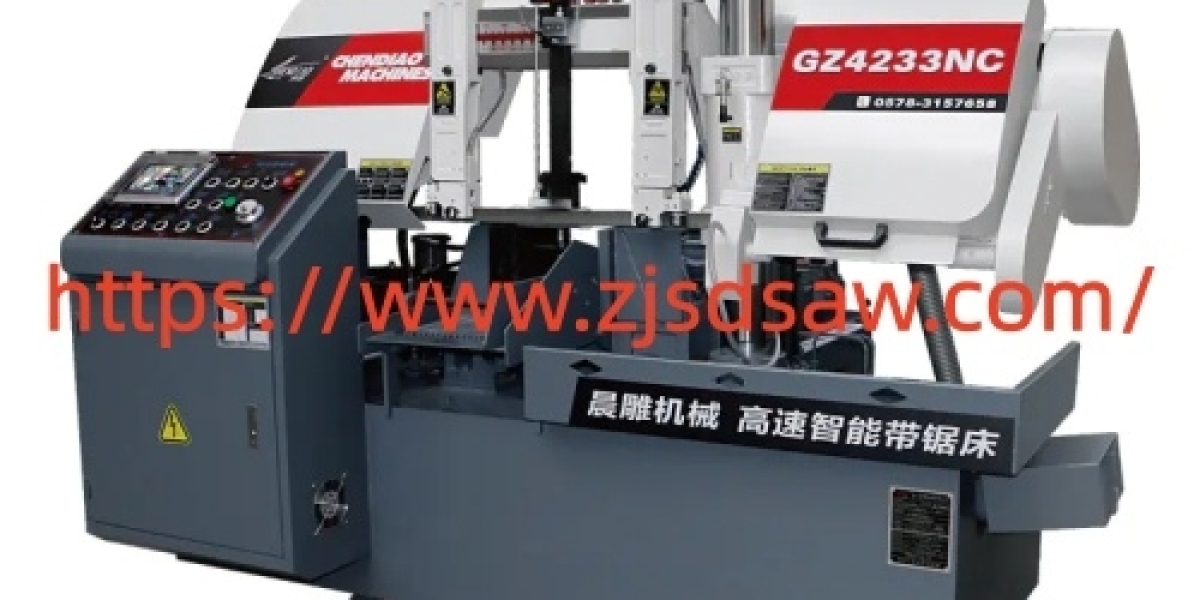

Fully Automatic Metal Cutting Band Saw Machine selection should start with a clear picture of the work being handled on the production floor. Material type, workpiece shape, dimensions, cutting quantity, required lengths, operator involvement, and workshop layout all affect whether a particular configuration is suitable. Buyers should consider capacity, feeding, blade control, coolant, material support, and service arrangements rather than focusing only on the purchase price.
Before contacting a manufacturer, buyers can prepare basic information about their regular jobs. The material may include round bars, square sections, rectangular profiles, pipes, plates, or other metal stock. The maximum size matters, but the commonly processed size is equally useful because equipment should match everyday production rather than an occasional job.
Production volume is another important consideration. A workshop handling several pieces each day may have different requirements from a factory processing repeated batches throughout multiple shifts. Automatic feeding and programmed cutting cycles can be useful when the same dimensions need to be processed repeatedly. Buyers should consider how many pieces are normally handled within a production cycle and whether operators need to make frequent manual adjustments.
Material feeding has a direct connection with the overall workflow. A suitable arrangement should move stock into the cutting area in a controlled manner while keeping positioning consistent between cycles. Buyers should ask about feed length, positioning method, material support, clamping arrangements, and how different workpiece dimensions are accommodated. Chendiao offers equipment with automatic feeding configurations designed around different production requirements, including models equipped with roller feeding and programmable control functions.
Specifications deserve practical attention. A longer feed stroke may be useful for particular applications, while another workshop may place greater importance on flexible material handling and quick adjustment between jobs. The suitable configuration depends on the relationship between material dimensions, production quantity, available space, and the way stock is loaded into the processing area.
A modern control system should fit the way operators actually work. Programmable settings can make repeated cutting tasks easier to organize and can reduce the need to manually adjust every cycle. Buyers can check whether the interface allows convenient parameter setting, whether cutting programs can be stored, and how operators handle changes between different jobs.
The relationship between the control system and the feeding mechanism should also be considered because both functions work together during automated production. The goal is not to select equipment simply because it has more digital functions. The useful question is whether those functions support the production process without making routine operation unnecessarily complicated.
Blade selection should correspond with the material and section being processed. Different metals can require different blade specifications and cutting conditions. Buyers should therefore discuss material composition, dimensions, cutting frequency, and desired surface condition with the supplier.
Cooling and chip removal deserve attention as well. A suitable coolant arrangement can support blade operation and help manage heat and chips during cutting. Regular inspection of guides, tensioning components, coolant systems, and other working parts should also form part of the operating routine.
Maintenance access is particularly important for production equipment. Buyers should ask how blades are replaced, which components require periodic inspection, and whether commonly needed replacement parts are readily available. A clear maintenance arrangement can make routine service easier to organize and may help reduce unnecessary interruptions during production.
Mechanical stability is another purchasing point that should not be overlooked. The frame, guide system, vise, hydraulic components, and material support work together during cutting. Secure clamping helps prevent unwanted movement while the blade passes through the workpiece.
For larger sections, material support before and after the cutting zone can influence handling. Buyers should examine how the machine integrates with existing conveyors, loading equipment, and storage areas. The installation environment also matters. Electrical requirements, floor area, lifting access, material flow, and operator access should be confirmed before delivery.
Automation makes the greatest practical difference when it fits the complete workflow. If operators still need to repeatedly reposition heavy material or manually organize every finished piece, some of the potential benefit may be reduced. Buyers should therefore look beyond the cutting cycle itself.
Consider how raw material arrives, how it enters the machine, how pieces leave the cutting area, and where finished components are stored. This broader view can reveal whether additional conveyors, supports, or handling equipment would make sense. It is also useful to compare current production routines with the planned workflow.
The manufacturer should be able to discuss the application in practical terms. Providing material specifications, workpiece dimensions, cutting lengths, expected quantities, and preferred automation level gives the supplier useful information for configuration planning. Chendiao develops metal sawing equipment and offers customized solutions according to user requirements.
For buyers, communication before purchase can be just as important as the machine specification sheet. Questions about installation, operator training, maintenance, spare parts, and technical assistance can help create a clearer picture of the ownership process.
A purchasing decision should bring together capacity, feeding, control, blade management, clamping, material handling, installation, and support. Comparing these areas side by side gives buyers a more useful basis for discussion than looking at one specification in isolation.
The right configuration depends on the materials, workload, workshop arrangement, and production goals of each customer. Taking time to define those requirements can make equipment selection more straightforward and help manufacturers recommend a configuration that fits the intended application.
For product information, machine configurations, and available metal sawing solutions, visit https://www.zjsdsaw.com/