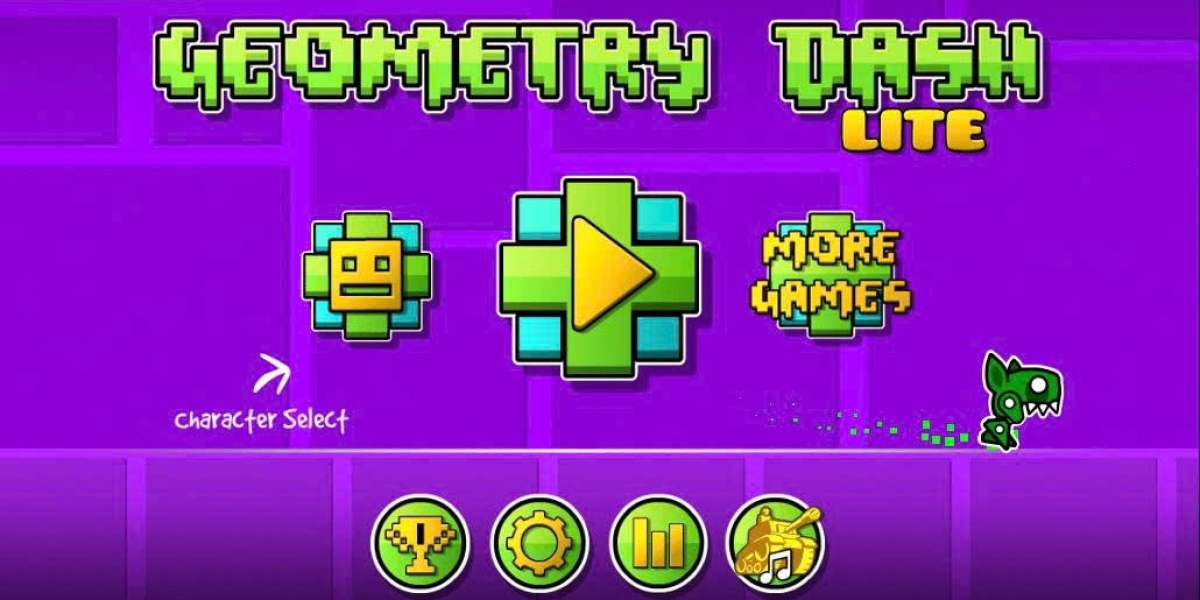

That, in a nutshell, is the strange pull of rhythm platformers — a genre that looks ridiculously simple and turns out to be quietly addictive. If you've never tried one, Geometry Dash is the place to start, because it embodies everything that makes these games both frustrating and impossible to put down.
Does It Come With an Instruction Manual? (Sort Of)
Here's the first thing that surprises newcomers: there are essentially no rules explained to you. A colored square sits on the left side of the screen, the level scrolls toward you at a steady beat, and you have exactly one job — tap or click to make the square jump. That's it. There are no lives, no health bars, no inventory, no power-up shops. Die, and you instantly snap back to the start of the level to try again.
What makes it so much deeper than it looks is the music. Every obstacle is placed on a specific beat, so the game stops being about pure reaction and starts becoming about rhythm. Once you stop trying to "watch" each spike and start feeling the pulse of the song, everything clicks. It's less like playing a platformer and more like dancing with a keyboard.
You'll clear straightforward jumps within your first attempt or two. Then the game quietly introduces timing puzzles, triple spikes, and sections where the ground itself disappears. The difficulty curve is real, but it never feels unfair — every death is your own timing mistake, which is exactly why you can't blame the game and have to keep going.
Small Moves That Make a Big Difference
If 900 deaths taught me anything, it's that brute force rarely works. Here are the habits that genuinely moved the needle for me:
Tap, don't hold, unless you must. A short tap gives you a small hop; holding gives a higher leap. Learning the difference is everything. Most early levels reward quick, feather-light taps over panicked mashing.
Treat the first few attempts as recon. The first time through a level, don't try to win — try to memorize where the hazards hide. Watch which jumps are easy and which ones are traps. This may feel like cheating, but it's honestly just how the game is meant to be played. Death is part of the learning loop.
Hum the song in your head. Sounds silly, but it works. The levels were built on rhythm, so if you're tapping along to the melody rather than reacting to the pixels, your timing improves noticeably. When your ears and fingers agree, the square follows.
Practice the hard bit in isolation. Don't redo the entire level just to conquer one nasty section. A single well-timed jump only makes you faster if the rest is already automatic.
Take breaks. This one sounds counterintuitive, but it's the most important. After about twenty minutes of failing the same jump, your hands start making the same mistake on autopilot. Walk away, make tea, come back, and you'll often clear it in two tries. Your brain solves these puzzles better when it's not grinding directly on them.
More Than One Way to Play
Here's the part I think a lot of guides skip: the real depth of Geometry Dash isn't just in completing levels — it's in everything the community has built around it. Once you finish the official ones, a whole universe opens up.
There's a built-in level editor, and people have used it to create everything from friendly easy levels to brutal challenges that make experienced players sweat. Some levels are pure art, with colors and effects that move in sync with the soundtrack. If you ever feel stuck, there's always someone else's level waiting for you that's a better match for your skill.
There's also an enormous multiplayer and speedrunning scene. Watching expert players conquer supposedly impossible stages is oddly calming — it reminds you that those players were once beginners missing the exact same jumps you're missing right now.
Closing Thoughts, and a Gentle Warning
Is Geometry Dash for everyone? No. If you hate repetition, or if your frustration tolerance is low, it may drive you up the wall within ten minutes. But if you enjoy games where each small victory genuinely feels earned — where beating a section is a real accomplishment even if nobody else sees it — you'll find a home here.
Just remember to hydrate, stretch your hands now and then, and above all, keep your promise about "one more level" honest. The square will always be there waiting for you tomorrow. Happy jumping.