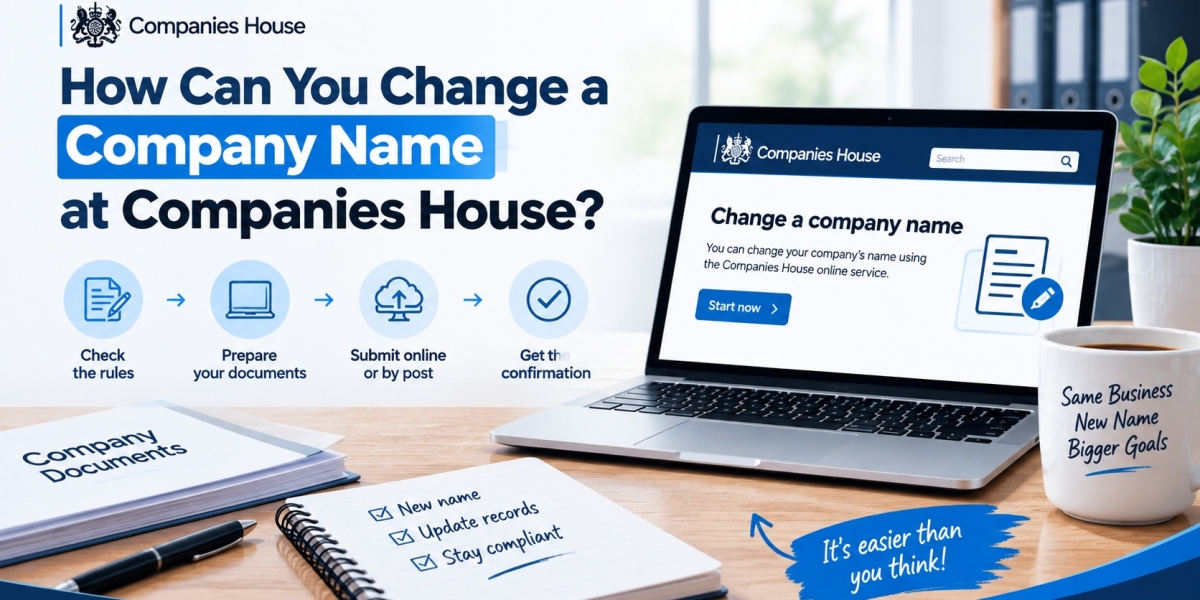

How Can You Change a Company Name at Companies House?
Changing the registered name of a limited company is a common step when a business rebrands, expands into new markets, changes its services, or simply wants a name that better reflects its direction. In the UK, a company can change its legal name through Companies House, provided the proposed name meets the relevant legal requirements.
If you are wondering how to change company name Companies House, the process is relatively straightforward when the correct approvals and filings are completed. The new name only becomes the company's official legal name once Companies House registers the change.
Why Might a Company Need a Change of Company Name?
There are several reasons why directors or shareholders may decide to make a change of company name. A company's original name may no longer represent its activities, target market, or long-term business strategy.
Common reasons include:
- Rebranding the business to create a stronger market identity.
- Expanding services beyond what the original name suggests.
- Entering new markets in the UK or internationally.
- Changing the company's business direction after growth or restructuring.
- Improving brand recognition with a simpler or more memorable name.
- Reflecting a merger or acquisition involving another business.
- Moving away from an outdated name that no longer fits the company.
A legal name change does not necessarily mean that the company itself is being replaced. The existing company continues with the same company number, while its registered name is updated.
Can You Change the Name of My Company Through Companies House?
Yes, you can change the name of your company through Companies House if you follow the appropriate procedure.
A company can generally change its name through a special resolution or, where permitted by its articles of association, through the procedure provided in those articles.
Before submitting the change, it is important to check whether the proposed name can legally be used.
Your proposed name should generally:
- Be sufficiently different from existing registered company names.
- Not contain prohibited or offensive wording.
- Follow the rules concerning sensitive words and expressions.
- Use the appropriate ending, such as "Limited" or "Ltd", where required.
- Not create an inappropriate impression of a connection with government or another public authority.
Checking name availability before making the application can help prevent unnecessary delays or rejection.
How Does Changing the Name of Your Company Work?
The process for changing the name of your company involves several important stages. While the exact route can depend on the company's articles and the way the name change is authorised, the process typically includes the following:
1. Choose a New Company Name
Start by selecting a name that reflects your company's brand and future objectives.
Before making a decision, check:
- Whether the name is available.
- Whether it is too similar to another registered company.
- Whether it contains sensitive words.
- Whether it could conflict with an existing trade mark.
- Whether the spelling and wording are suitable for your intended branding.
2. Obtain the Required Approval
Depending on your company's constitutional documents, you may need shareholder approval through a special resolution.
The company's articles of association should be checked to determine the correct procedure.
3. Submit the Change to Companies House
Once the appropriate approval has been obtained, the company must notify Companies House using the applicable filing method.
For a change made by special resolution, form NM01 is commonly used. Other forms can apply where the company's articles provide a different method of changing the name.
4. Wait for Registration
The company name does not officially change simply because shareholders have approved it. Companies House must register the new name.
Once registered, Companies House issues a certificate confirming the company's new name and the date on which the change took effect.
What Is the Companies House Change Company Name Form?
The form required depends on how the company is authorised to change its name.
The most commonly relevant forms include:
- NM01 – notice of change of name by resolution.
- NM04 – notice of change of name by means provided for in the articles.
- NM02 – notice of a conditional change of name.
- NM05 – notice of change of name by resolution of directors in specific circumstances.
For a standard change approved by company members through a resolution, NM01 is generally the relevant filing route.
How Much Does It Cost to Change Company Name in the UK?
The cost of a change company name UK application depends on the filing method and service used.
Companies House currently lists an online fee for a standard change of name by special resolution, with an additional charge for the same-day service. Paper applications have a separate filing fee.
Because Companies House fees can change, businesses should check the current fee before submitting an application.
How Long Does a Change Company Name Companies House Application Take?
The timing can depend on how the application is submitted and whether Companies House needs additional information.
An online application can generally be more convenient than a paper filing, provided the company is eligible to use the online service.
The important point is that the company's legal name remains unchanged until Companies House registers the new name. After registration, the company receives confirmation showing the new name and registration date.
Does Changing the Company Name Change the Company Number?
No. A change of company name does not normally create a new company.
The company's existing legal identity continues, including its company registration number. The registered name shown on the Companies House register is simply updated after the change has been accepted.
This distinction is important because changing the legal name is different from incorporating an entirely new company.
What Happens After You Change Company Name?
Once Companies House has registered the new name, there are several practical updates a business should consider.
What Should You Update After the Name Change?
Consider updating:
- Business website and branding
- Email addresses and email signatures
- Invoices and quotations
- Contracts and commercial documents
- Banking information
- HMRC records where applicable
- Accounting and payroll systems
- Insurance policies
- Supplier and customer records
- Marketing materials
- Social media profiles
- Business stationery
Companies House confirms that other government departments, including HM Revenue & Customs, may also need to be notified about relevant company changes.
Do You Need to Tell HMRC About a Company Name Change?
A company name change should not be treated as a Companies House-only administrative task.
Depending on the company's circumstances, you may need to ensure that HMRC and other relevant organisations have the updated information. This is particularly important where the company has Corporation Tax, VAT, PAYE or other tax-related responsibilities.
Keeping government records, accounting records and commercial documents consistent can help prevent confusion.
Can You Change Company Name Without Creating a New Company?
Yes. In most ordinary situations, you can change company name while keeping the existing company.
The company can continue its operations under the new registered name once the change has been registered. Its existing company number remains associated with the business.
This can make a legal name change considerably simpler than closing an existing company and establishing a completely new one.
What Mistakes Should You Avoid When Changing a Company Name?
Although the process is straightforward, mistakes can cause delays or create unnecessary administrative work.
Avoid these common errors:
- Choosing a name that is already registered.
- Selecting a name that is too similar to another company.
- Ignoring trade mark considerations.
- Failing to obtain the required company approval.
- Using the wrong Companies House form.
- Providing inconsistent company details.
- Forgetting to update banks, customers and suppliers.
- Assuming the name has changed before Companies House registers it.
- Continuing to use outdated legal information on official documents.
- Forgetting to review tax and accounting records.
Careful preparation before filing can make the change company name Companies House process considerably smoother.
Is Changing Your Company Name the Same as Changing Your Trading Name?
No. A registered company name and a trading or business name are not necessarily the same.
A company may trade under a different business name while retaining its registered legal name. However, business names are also subject to certain restrictions, including rules concerning sensitive words and terms such as "Ltd", "LLP" and "plc".
If the objective is to change the company's official legal identity shown on the Companies House register, a formal company name change is required.
When Should You Consider a Company Name Change?
A company name change may be appropriate when your existing name no longer supports your business strategy.
It may make sense when:
- Your company has significantly expanded.
- Your original services have changed.
- You are repositioning your brand.
- Customers misunderstand what your company does.
- You are entering a different market.
- Your existing name is difficult to remember.
- Your business has undergone a merger or acquisition.
- Your current branding feels outdated.
The best company names are generally aligned with the business's long-term objectives rather than being selected solely for short-term marketing purposes.
How Can Professional Support Make a Company Name Change Easier?
Although many businesses can complete the process themselves, professional support can help reduce administrative errors and ensure that the appropriate procedure is followed.
Professional assistance can be useful for:
- Checking the company name requirements.
- Reviewing the appropriate filing procedure.
- Preparing the necessary resolution.
- Completing Companies House documentation.
- Reviewing the company's articles of association.
- Coordinating post-registration updates.
- Identifying other records that may need to be changed.
For businesses that want to change the name of my company without dealing with every administrative detail themselves, professional company secretarial or accounting support can provide additional peace of mind.
What Is the Key Takeaway About Changing a Company Name in the UK?
Changing a company name through Companies House is a manageable process when the correct steps are followed. The business should first select a compliant name, check its availability, obtain the necessary approval and submit the correct filing to Companies House.
Most importantly, the name does not become the company's official legal name until Companies House registers the change. Once registration is complete, businesses should update their tax records, banking information, contracts, website, branding and other commercial records to ensure everything reflects the new identity.
Whether the reason is rebranding, expansion or a change in business direction, understanding the change company name UK process can help your company make the transition efficiently while maintaining accurate legal and business records.