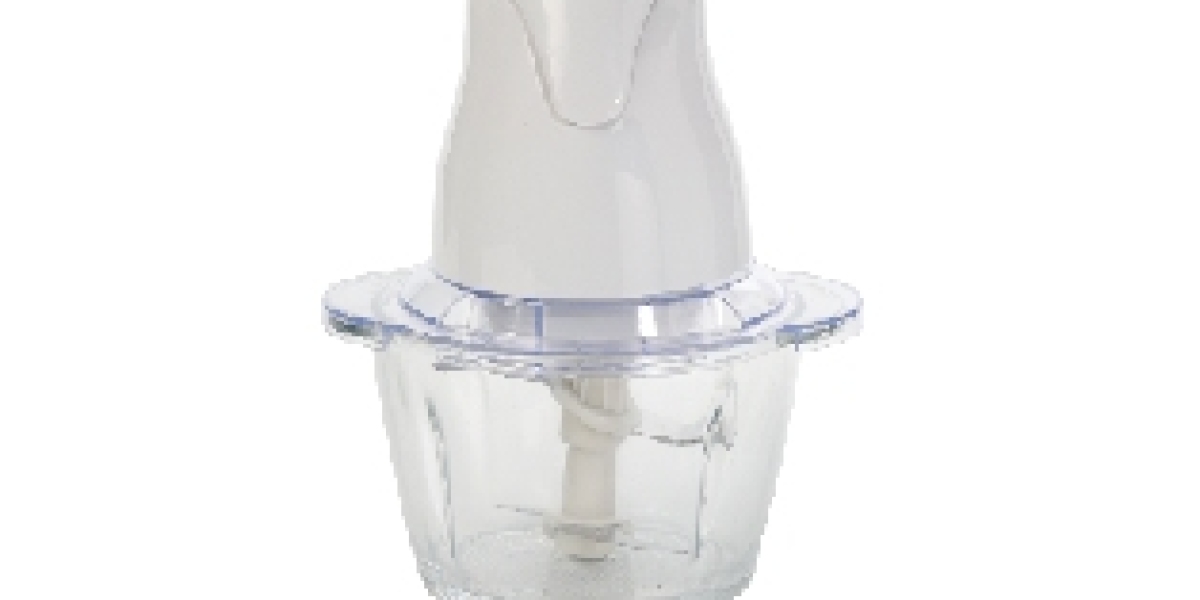

Modern kitchens increasingly rely on compact appliances to simplify repetitive preparation tasks, and a Food Chopper Factory plays an important role in turning functional concepts into commercially viable products. From material selection and component molding to motor integration and final assembly, every stage can influence how efficiently an appliance operates and how easily it fits into everyday cooking routines.
The manufacturing process begins with product architecture. A compact food chopper normally integrates a processing container, cutting assembly, drive shaft, motor, housing, lid, control interface, and safety structure. These components must work together within a relatively small space. Engineers therefore need to consider mechanical alignment, electrical routing, structural support, and user interaction before production tooling is developed.
Material selection is central to this process. The processing container and other food-contact components require materials appropriate for repeated kitchen use and cleaning. Structural housing parts have different requirements because they need to support internal components while contributing to the appliance's appearance and ergonomics. Selecting materials according to the function of each component helps manufacturers balance manufacturability, durability, appearance, and practical kitchen use.
Injection molding is widely suited to the production of complex plastic appliance components. It can create housings, lids, containers, buttons, supports, and internal structures with repeatable geometries. However, good molding results depend on tooling design, material preparation, process control, and dimensional inspection. Features such as locking points, assembly interfaces, ribs, and sealing areas require careful attention because they can affect both production efficiency and finished-product performance.
The cutting mechanism requires equally thoughtful engineering. Blade assemblies must be positioned correctly relative to the container and drive system. The shape of the container can influence how ingredients move around the cutting area, while the blade arrangement determines how different food textures are processed. Engineers may therefore assess common ingredient types during development to ensure that the internal configuration supports practical kitchen applications.
Motor integration is another important manufacturing consideration. The motor must be properly connected to the drive system while remaining securely supported inside the housing. Mechanical alignment between the motor shaft, transmission components, and cutting assembly helps reduce unnecessary vibration and mechanical stress. At the same time, electrical connections need to be organized carefully so that the internal structure remains serviceable and suitable for safe production.
Safety engineering should be incorporated throughout product development. Because chopping appliances contain moving cutting components, the relationship between the lid, container, drive mechanism, and controls is particularly important. Mechanical interlocks or other protective structures can help prevent unintended operation when components are not correctly assembled. Clear user interaction and straightforward assembly can further support safe everyday operation.
Manufacturing inspection provides another layer of control. Quality teams may examine molded components, blade assemblies, motor connections, sealing areas, switches, and completed units. Inspection procedures can identify dimensional inconsistencies, assembly problems, surface defects, or functional issues before products move into packaging. Maintaining consistent production processes is especially valuable for brands purchasing appliances under private-label or OEM arrangements.
Cleaning considerations should also be incorporated into manufacturing design. Food particles and moisture can remain around joints, lids, blades, and container interfaces if these areas are difficult to access. A thoughtful product architecture can reduce unnecessary recesses and make removable components easier to handle. This improves convenience for users while also making the appliance easier to maintain during its service life.
Ergonomics is another factor that connects manufacturing with user experience. Handle positions, lid mechanisms, button placement, container proportions, and appliance balance can all affect how naturally the product is used. These details must be translated into manufacturable components without compromising structural integrity or production efficiency. A successful design therefore requires collaboration between industrial designers, engineers, tooling specialists, and production teams.
For B2B buyers, manufacturing flexibility can be particularly valuable. Different markets may require customized housings, branding, packaging, accessories, or control configurations. A capable Food Chopper Factory can support these requirements by coordinating product development, mold production, component sourcing, assembly, and quality inspection within an organized manufacturing workflow.
The broader objective is not simply to produce a motorized cutting appliance, but to create a complete kitchen solution through coordinated engineering. Material choices, mechanical structures, electrical systems, safety features, manufacturing processes, and user convenience all contribute to the final product. Companies evaluating OEM or private-label kitchen appliance opportunities can explore additional manufacturing and product information at https://www.blmeas.com/ when assessing potential cooperation.