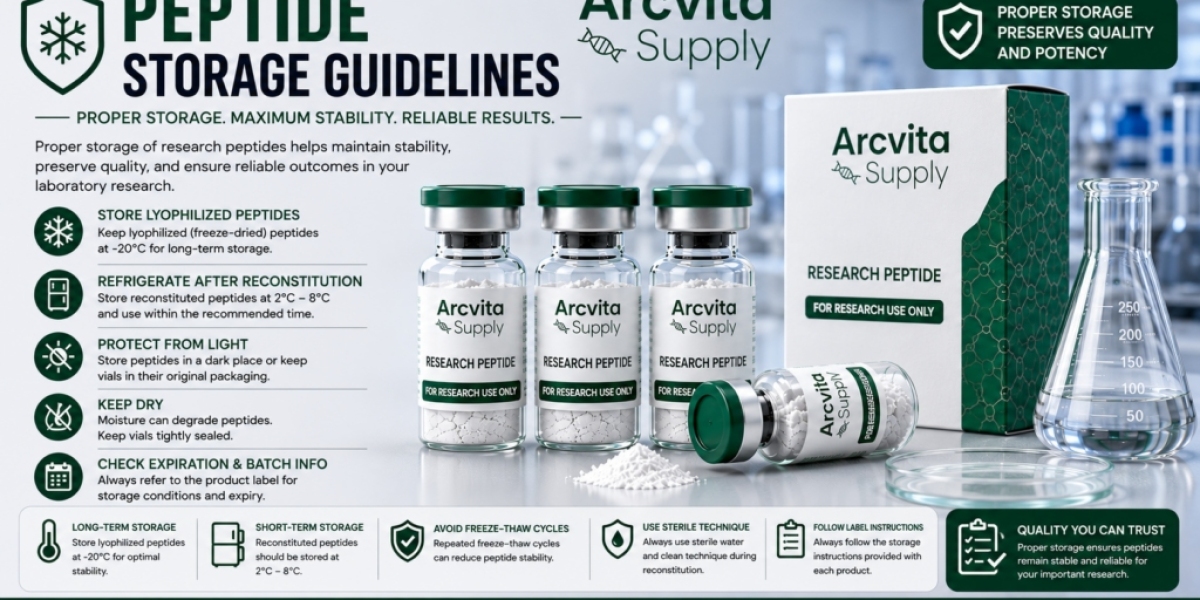

Proper storage is an important part of maintaining the quality and integrity of research peptides. Peptides can be sensitive to environmental conditions such as temperature, moisture, light, oxygen, and repeated handling. Without appropriate storage practices, researchers may increase the risk of degradation or changes in the material over time. Following clear peptide storage guidelines can help laboratories establish consistent handling procedures and protect research materials throughout their intended storage period.
Why Proper Peptide Storage Matters
Research peptides are often supplied as lyophilized powders or prepared solutions. These different forms can have different storage requirements. Factors such as peptide sequence, formulation, concentration, solvent, container, and expected storage duration may influence stability.
For this reason, there is no single storage method that applies to every peptide. Researchers should always check the product documentation and supplier recommendations before deciding how a specific peptide should be stored.
A well-organized storage process can also make laboratory inventory easier to manage. Clear labels, batch information, storage records, and appropriate environmental monitoring help researchers track materials and reduce avoidable handling errors.
Storing Lyophilized Peptides
Many research peptides are provided in a lyophilized, or freeze-dried, form. Removing moisture during manufacturing can improve the stability of certain peptides, but the material should still be protected from environmental exposure.
Lyophilized peptides should generally remain in their original, properly sealed container until they are required for laboratory research. Excessive exposure to humidity or air may affect some materials, particularly when the container is repeatedly opened.
Researchers should also avoid unnecessary temperature changes. Repeatedly moving a vial between significantly different environments can increase the risk of condensation and other storage-related issues. Whenever possible, maintain a stable storage environment according to the supplier's documented recommendations.
Temperature and Peptide Stability
Temperature is one of the most important considerations when storing research peptides. However, colder does not automatically mean better. The appropriate temperature depends on the specific peptide and its formulation.
Some research materials may require refrigerated or frozen conditions, while others may have different manufacturer-specified requirements. Researchers should therefore avoid applying a universal temperature rule to every peptide.
Storage equipment should also be monitored regularly. A refrigerator or freezer operating outside its expected range can potentially affect sensitive research materials. Laboratories should maintain appropriate temperature records where required by their internal procedures.
Protect Peptides From Moisture and Light
Moisture can be an important concern for lyophilized peptide materials. Researchers should keep containers tightly closed and minimize unnecessary exposure to humid laboratory environments.
Light exposure may also be relevant for certain peptide materials. If the supplier identifies a peptide as light-sensitive, it should be stored using the recommended protection method.
Keeping materials in their original containers and following product-specific instructions can help reduce unnecessary environmental exposure.
Handling Peptide Solutions
Storage requirements can change after a lyophilized peptide has been prepared as a solution. Dissolved peptides may have different stability characteristics depending on factors such as concentration, solvent, pH, temperature, and formulation.
Researchers should follow the supplier's documentation and established laboratory protocols when preparing and storing peptide solutions. Avoid unnecessary repeated warming and cooling, and use appropriately labeled containers to distinguish prepared solutions from unopened materials.
The recommended storage period for a prepared solution should also come from applicable product documentation or validated laboratory procedures rather than a general assumption.
Labeling and Inventory Management
Good storage practices include more than temperature control. Every research material should be clearly identified so that researchers can determine what it is, which batch it belongs to, and when it was received or prepared.
Useful inventory information may include:
- Peptide or material name
- Batch or lot number
- Date received
- Preparation date, where applicable
- Storage condition
- Relevant supplier documentation
- Expiration or retest information, when provided
Maintaining accurate records helps laboratories reduce confusion and supports better material traceability.
Common Peptide Storage Mistakes
Several avoidable mistakes can affect research material management. These include leaving containers open unnecessarily, exposing materials to moisture, ignoring supplier instructions, repeatedly changing storage temperatures, using poorly labeled containers, and assuming that every peptide has identical storage requirements.
Another common mistake is selecting storage conditions based solely on general recommendations rather than reviewing the documentation for the specific product.
Best Practices for Research Laboratories
A consistent storage workflow can make peptide management easier. First, review the supplier's storage instructions before placing the material into storage. Next, confirm that the container is properly labeled and intact. Store the material under the specified environmental conditions and minimize unnecessary exposure during handling.
Laboratories should also monitor relevant storage equipment and periodically review their inventory. If a vial appears compromised, damaged, improperly sealed, or otherwise inconsistent with its documented condition, researchers should follow their laboratory's procedures for evaluating the material.
Conclusion
Following appropriate peptide storage guidelines helps laboratories protect research materials and maintain organised storage practices. Temperature stability, moisture control, light protection, proper handling, labeling, and inventory management are all important considerations. However, peptide stability can vary considerably between materials, so researchers should always prioritise supplier-specific documentation and established laboratory protocols.
For research purposes, careful storage begins with understanding the specific peptide, its physical form, and its documented requirements. A consistent storage system can help researchers manage materials more effectively while reducing avoidable environmental exposure and handling-related problems.