

Every business wants its marketing budget to generate meaningful results. However, simply spending more on advertising does not guarantee better performance. A campaign can receive thousands of impressions and clicks while producing very few valuable customers. This is why businesses need to focus on return on investment, or ROI, when planning their advertising strategies. Paid advertisement can become a powerful marketing tool when campaigns are carefully targeted, measured, and continuously improved.
Improving ROI is not necessarily about reducing advertising costs as much as possible. Instead, it is about using the available budget more intelligently. Businesses need to understand their audience, choose suitable platforms, create relevant advertisements, track conversions, and identify where money is producing the strongest results. With the right approach, Paid advertisement can support customer acquisition while helping businesses make more informed marketing decisions.
What Does ROI Mean in Paid Advertising?
Return on investment measures the value a business receives compared with the amount it spends. In advertising, ROI helps marketers understand whether a campaign is contributing enough value to justify its cost.
For example, a campaign that generates many clicks but very few sales may not be performing efficiently. Another campaign with fewer clicks could produce more qualified leads or customers and therefore provide greater value.
Businesses should consider meaningful outcomes such as:
Sales generated
Qualified leads
Customer acquisition
Bookings
Enquiries
Revenue attributed to campaigns
Looking beyond surface-level metrics can provide a clearer picture of advertising performance.
1. Define Your Advertising Goal
The first step toward improving ROI is establishing a clear objective. A business should know exactly what it wants its Paid advertisement campaign to achieve.
Possible objectives include:
Generating qualified leads
Increasing online sales
Promoting a specific product
Increasing bookings
Driving relevant website traffic
Building brand awareness
A clear objective makes it easier to select the right audience, advertisement format, landing page, and performance metrics.
2. Understand Your Target Audience
Advertising becomes more efficient when businesses understand who they are trying to reach. Before launching a campaign, research customer needs, interests, problems, purchasing behaviour, and common questions.
Audience research can help businesses create advertisements that speak directly to potential customers. It can also reduce unnecessary spending on people who are unlikely to need the product or service.
The more clearly a business understands its audience, the easier it becomes to develop relevant advertising messages.
3. Choose the Right Advertising Platform
Not every advertising platform is suitable for every business. Some businesses may benefit from search advertising because potential customers are actively looking for their services. Others may achieve better results through social media, display advertising, video campaigns, or shopping advertisements.
Consider factors such as:
Where your audience spends time online
Search or purchase intent
Advertising costs
Available targeting options
Campaign objectives
Competition
Choosing the right platform can help businesses avoid spending money where their target audience is unlikely to engage.
4. Use Specific Audience Targeting
Broad targeting can expose advertisements to many people who have little interest in the offer. More focused targeting can help businesses concentrate their budget on audiences that are more relevant.
Depending on the platform, businesses may be able to target users according to location, interests, demographics, search behaviour, or previous interactions.
For example, a local service provider may focus on people within its service area rather than advertising to an entire country. This can make the campaign more relevant and potentially improve efficiency.
5. Write Clear and Relevant Ad Copy
An advertisement has only a limited opportunity to capture attention. The message should quickly communicate what the business offers and why it may be useful.
Effective ad copy should be:
Clear
Relevant
Specific
Honest
Focused on customer needs
Avoid making unrealistic promises simply to attract clicks. Misleading advertisements may generate short-term attention but can damage trust and produce poor-quality traffic.
6. Create Strong Calls to Action
A clear call to action tells users what they should do next. Without one, potential customers may not know how to continue their journey.
Depending on the campaign, calls to action could encourage users to:
Request a quote
Contact the business
Book a service
Shop now
Learn more
Register
The call to action should match the campaign objective and provide a logical next step.
7. Improve Your Landing Pages
A successful Paid advertisement campaign does not end when someone clicks. The landing page plays an important role in converting that visitor into a lead or customer.
The landing page should closely match the advertisement's message. If an advertisement promotes a specific service but sends users to an unrelated homepage, visitors may become confused and leave.
A useful landing page should provide:
Relevant information
Clear headings
Easy navigation
Strong calls to action
Simple forms
Mobile-friendly design
Improving the landing page can help businesses get more value from existing advertising traffic.
8. Track Conversions Instead of Just Clicks
Clicks can be useful, but they do not always represent business success. A campaign may generate a large number of visitors without producing sales or qualified leads.
Businesses should therefore track conversions that relate directly to their objectives. Conversion tracking can help identify which advertisements, audiences, and campaigns are generating meaningful actions.
Useful metrics may include:
Conversion rate
Cost per lead
Cost per acquisition
Revenue
Return on advertising spend
Qualified leads
These measurements provide more useful insights than impressions alone.
9. Test Different Advertisements
The first version of an advertisement is not always the most effective. Testing different versions can help marketers discover which messages and creative approaches perform better.
Businesses can test:
Headlines
Images
Descriptions
Calls to action
Offers
Audience segments
Landing pages
Testing should be structured so that businesses can understand which changes influence performance.
10. Control Your Advertising Budget
A carefully controlled budget can help businesses reduce unnecessary spending. Instead of increasing expenditure immediately, marketers can start with a manageable budget and evaluate performance.
If a campaign produces promising results, the business can consider increasing investment gradually. If performance is weak, the campaign can be reviewed before more money is committed.
Budget control is particularly important for businesses that have limited marketing resources.
11. Stop Wasting Money on Poor Campaigns
Not every campaign will perform equally well. Continuing to spend heavily on advertisements that consistently produce poor results can reduce overall ROI.
Regular performance reviews can help businesses identify campaigns, audiences, or advertisements that are not contributing enough value.
However, businesses should avoid making decisions from extremely limited data. Give campaigns an appropriate opportunity to generate meaningful information before making major changes.
12. Use Retargeting Strategically
Some users may visit a website, view a product, or interact with an advertisement without converting immediately. Retargeting can provide another opportunity to reach users who have already demonstrated interest, where platform rules and privacy requirements permit it.
Retargeting can be useful for:
Returning website visitors
Previous product viewers
Users who started but did not complete an action
People who interacted with previous campaigns
Frequency should be managed carefully so advertisements remain useful rather than becoming repetitive.
13. Improve Lead Quality
Getting more leads does not always mean getting better results. If advertisements attract people who are unlikely to become customers, the business may spend considerable time and money following up with low-value enquiries.
Audience targeting, advertisement messaging, landing pages, and lead forms can all influence lead quality.
Businesses should focus on attracting people who genuinely match their target market rather than simply maximising the number of enquiries.
14. Optimise for Mobile Users
Many people interact with advertisements through mobile devices. If the advertisement leads to a website that is difficult to use on a smartphone, potential customers may leave before completing an action.
Businesses should check:
Page loading speed
Button visibility
Form usability
Text readability
Navigation
Mobile layout
A smooth mobile experience can help reduce unnecessary losses after an advertisement click.
15. Use Data to Make Decisions
Successful Paid advertisement campaigns should be guided by evidence rather than assumptions. Review performance data regularly and look for patterns.
Ask questions such as:
Which audiences generate the best results?
Which advertisements receive meaningful engagement?
Which campaigns generate the most qualified leads?
Which landing pages convert better?
Where is the advertising budget being wasted?
Using data to answer these questions can help businesses make smarter optimisation decisions.
16. Optimise Campaigns Continuously
Digital advertising is not a set-and-forget activity. Customer behaviour, competition, advertising platforms, and market conditions can change.
Businesses should regularly review targeting, advertisements, budgets, landing pages, and conversion results. Small improvements made consistently can contribute to stronger campaign efficiency over time.
The goal should be continuous improvement rather than expecting one campaign to remain perfect indefinitely.
17. Combine Paid and Organic Marketing
Paid advertisement can provide targeted visibility, but businesses can strengthen their overall strategy by combining paid campaigns with organic marketing.
SEO, content marketing, social media, email marketing, and useful website resources can support customers at different stages of their journey.
For example, a customer might first discover a business through a paid advertisement and later return after reading an informative article. Combining channels can create a more complete marketing experience.
Common Mistakes That Reduce Advertising ROI
Several mistakes can make advertising less efficient:
Advertising without a clear objective
Targeting an overly broad audience
Ignoring customer intent
Using weak or unclear ad copy
Sending traffic to irrelevant landing pages
Failing to track conversions
Focusing only on clicks and impressions
Ignoring mobile users
Spending too much on poor-performing campaigns
Making decisions without enough data
Avoiding these mistakes can help businesses protect their advertising budgets and focus on meaningful outcomes.
Final Thoughts
Paid advertisement can deliver stronger ROI when businesses focus on the right audience, clear objectives, relevant messaging, and measurable outcomes. Simply increasing the advertising budget is not a reliable way to improve performance.
Businesses should track conversions, test different campaign elements, improve landing pages, and regularly review where their budget is producing the greatest value. These steps can help reduce wasted spending and improve campaign efficiency.
Long-term success also requires continuous optimisation. Audience behaviour and market conditions can change, so businesses should use performance data to adjust their strategies rather than relying on assumptions.
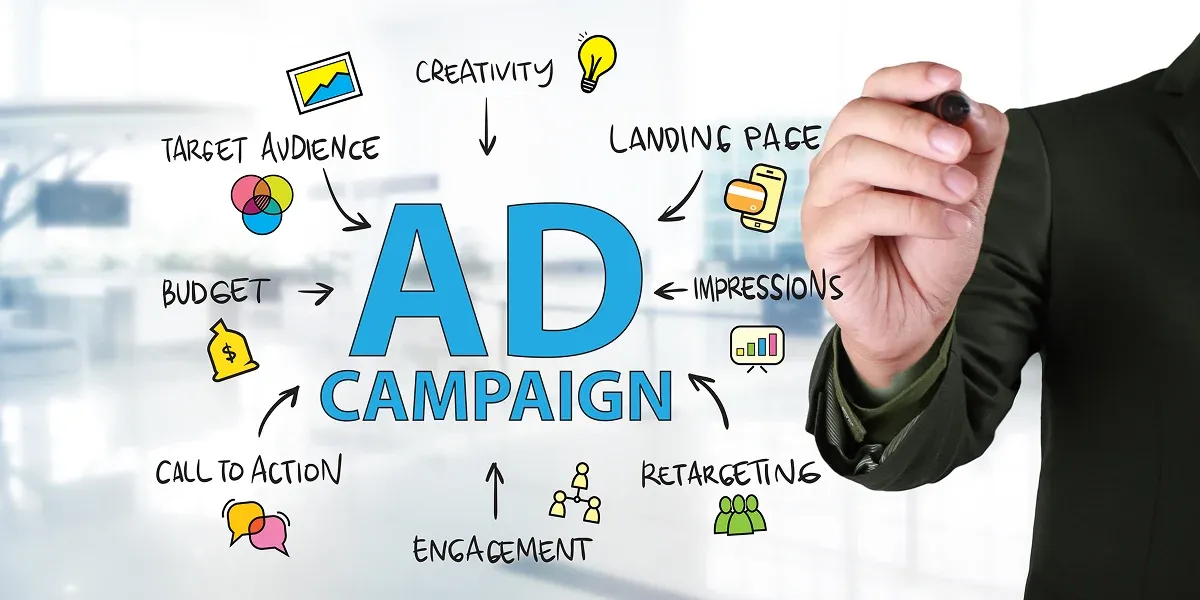
Ultimately, improving advertising ROI is about making smarter decisions with the available budget. When targeting, creative content, landing pages, measurement, and optimisation work together, Paid advertisement can become a valuable part of a sustainable marketing strategy.