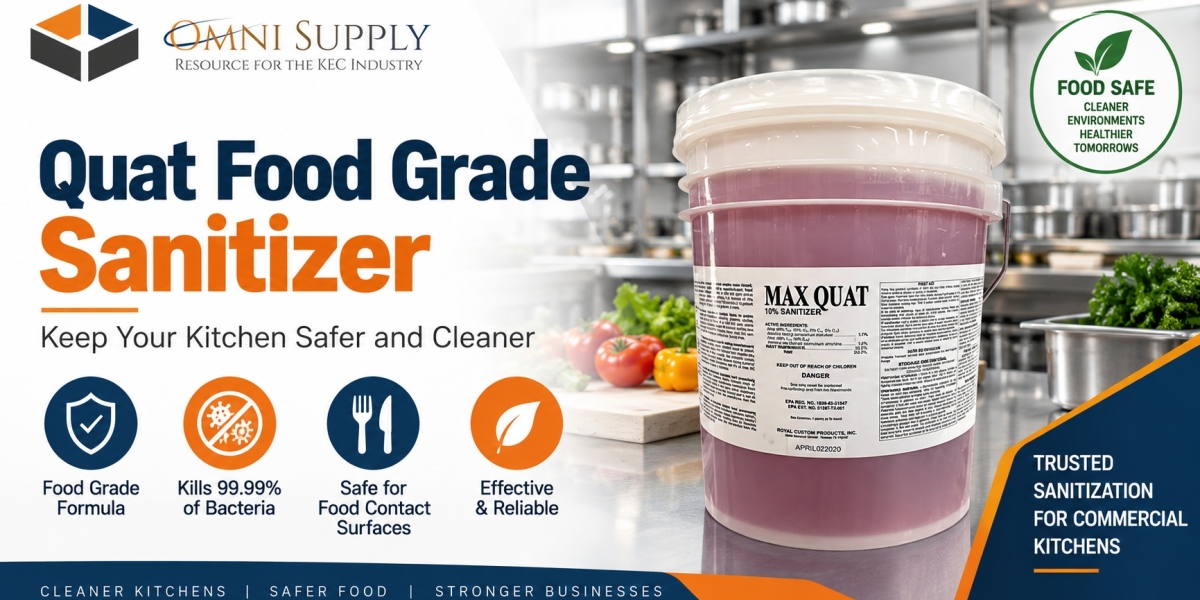

Food safety depends on many different practices, from receiving ingredients to storing food and maintaining clean preparation areas. Sanitation plays an important role in this process. A properly selected Quat Food Grade Sanitizer can help food businesses maintain appropriate sanitation procedures for eligible surfaces and equipment. Restaurants, food processors, bakeries, catering businesses, cafeterias, and institutional kitchens can all benefit from establishing clear sanitation procedures.
The Role of Sanitizing in Food Safety
Food-contact surfaces can potentially become contaminated during normal operations. Ingredients, hands, utensils, equipment, and environmental factors can all introduce microorganisms onto surfaces. Cleaning removes physical contamination, while sanitizing is used after cleaning to reduce microorganisms according to established requirements. This makes sanitation an important part of a broader food safety system.
How Quat-Based Sanitizers Work
Quaternary ammonium compounds are active ingredients used in various sanitation products. They work by interacting with microorganisms and disrupting their cellular structures. However, effectiveness depends on proper product use. Factors such as sanitizer concentration, contact time, surface condition, and application procedure can affect results. That is why businesses should never assume that a stronger solution is automatically better.
Preventing Cross-Contamination
Cross-contamination can occur when microorganisms move from one surface, ingredient, utensil, or piece of equipment to another. A sanitation program can help reduce this risk by establishing clear procedures for frequently touched and food-contact surfaces.
Businesses may establish sanitation schedules for:
- Preparation counters
- Food processing equipment
- Utensils
- Cutting surfaces
- Handles and other frequently touched areas
- Other approved surfaces
Employees should follow facility-specific sanitation procedures consistently.
Proper Storage and Handling
Sanitizers should be stored and handled according to the manufacturer's directions. Containers should be clearly identified, kept in appropriate storage areas, and protected from conditions that could affect product quality. Employees should also follow workplace safety procedures when handling concentrated chemical products.
Documentation and Monitoring
Professional food operations may benefit from documenting cleaning and sanitation procedures. Records can help managers verify that routine tasks are being completed and identify areas where additional training may be needed. Monitoring sanitizer concentration, where applicable, can also help ensure that employees are preparing and using solutions correctly.
Working With Omni Supply
Having reliable access to sanitation products can help businesses maintain their established cleaning programs. Omni Supply offers professional supply solutions for businesses that require cleaning and sanitation products. When selecting Quat Food Grade Sanitizer, businesses should evaluate the product label and ensure that its approved uses align with their facility's sanitation requirements.
Conclusion
Food safety requires a comprehensive approach, and sanitation is an essential component. Quat Food Grade Sanitizer can support sanitation procedures when used correctly on appropriate surfaces and according to manufacturer instructions. Businesses should combine proper cleaning, correct sanitizer preparation, employee training, monitoring, and documentation to maintain consistent hygiene standards.
FAQs
1. Does quat sanitizer eliminate every microorganism?
No sanitizer should be assumed to eliminate every microorganism. Effectiveness depends on the product, organism, concentration, contact time, and conditions of use.
2. Can quat sanitizer help prevent cross-contamination?
Proper sanitation can help reduce microorganisms on eligible surfaces and therefore support cross-contamination control procedures.
3. Why should sanitizer be used after cleaning?
Food debris and soil can interfere with sanitation, so surfaces should generally be cleaned before the sanitizing step.
4. Is stronger sanitizer always better?
No. Sanitizers should be prepared and used according to the manufacturer's specified concentration.
5. Who supplies professional sanitation products?
Omni Supply provides professional supply options for businesses with cleaning and sanitation requirements.