
Introduction
The growing popularity of digital home services has created strong opportunities for entrepreneurs who want to build an online cleaning marketplace. Customers can discover cleaning professionals, compare services, schedule appointments, and make payments through a convenient digital platform. However, attracting users and providers is only one part of creating a sustainable business. Entrepreneurs also need a clear monetization strategy that generates revenue without making the platform unattractive to customers or cleaning professionals.
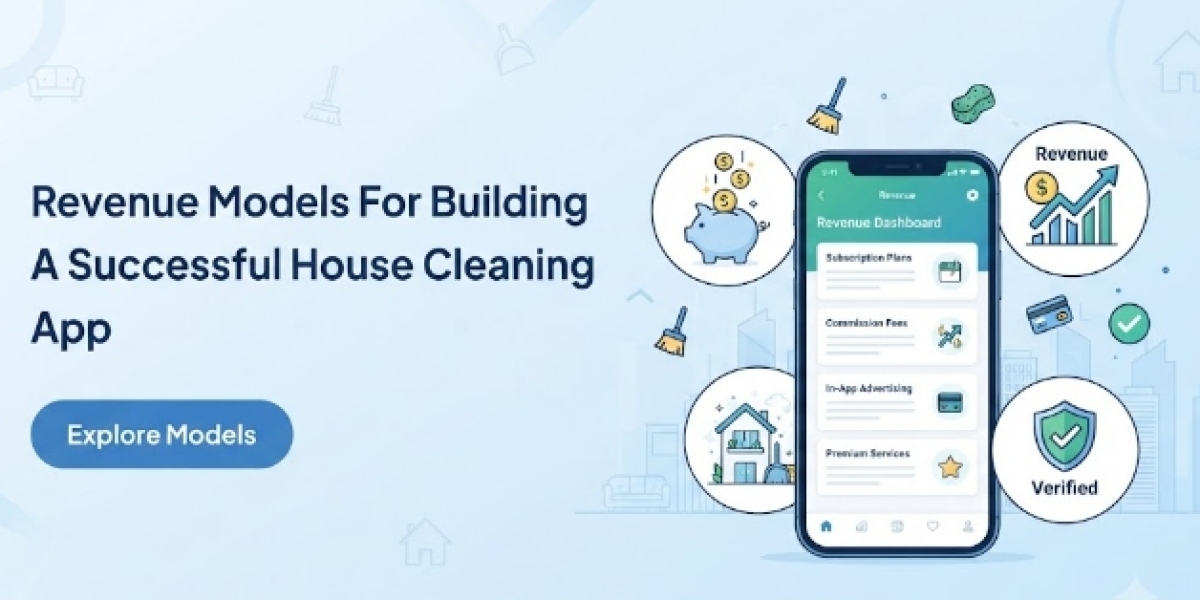
A house cleaning app can support several revenue models depending on its target audience, operating structure, service categories, and growth stage. A marketplace may earn from completed bookings, subscriptions, service fees, promotional placements, premium services, or other value-added offerings. Industry marketplace guidance identifies commissions as a common foundation, while featured listings, subscriptions, and additional services can be layered on as the platform develops.
The most effective approach is not necessarily to introduce every possible revenue stream immediately. Instead, businesses should begin with a model that fits their marketplace and gradually introduce additional options as customer and provider activity grows.
Understanding the House Cleaning App Business Model
A digital cleaning marketplace generally connects three groups: customers, cleaning professionals, and the platform operator.
Customers use the application to discover and book services. Cleaning professionals use it to receive jobs and manage their schedules. The platform provides the technology, marketplace infrastructure, payment processing, communication tools, and administrative controls.
Revenue can therefore come from either side of the marketplace or from additional services offered through the platform.
Before selecting a monetization strategy, entrepreneurs should determine whether they are operating as:
A multi-provider marketplace
A cleaning company with its own workforce
A subscription-based cleaning platform
A lead-generation marketplace
A hybrid home-service platform
The answer will influence which revenue model is most practical.
1. Commission on Every Booking
Commission-based monetization is one of the most common approaches for service marketplaces.
Under this model, the platform retains a percentage of the value of each completed cleaning appointment. For example, if a customer books a service worth $100 and the platform applies a 20% commission, the marketplace retains $20 before other applicable costs.
The advantage is that platform revenue grows alongside transaction volume. Providers do not necessarily need to pay a large upfront amount to participate.
Commission rates should be carefully planned because excessively high fees can make providers less competitive or encourage them to leave the marketplace. Current home-cleaning marketplace guidance commonly discusses provider commissions in the 15–25% range, though the appropriate rate depends heavily on the market and economics.
2. Customer Booking or Service Fees
A platform can charge customers a separate booking, convenience, protection, or service fee.
For example, a customer might see:
Cleaning service: $80
Platform fee: $5
Total: $85
This creates a direct revenue stream without requiring the platform to increase the provider's commission.
Transparency is important. Customers should understand applicable fees before confirming their booking. A clearly communicated fee structure can help prevent confusion and improve trust.
3. Subscription Plans for Customers
Subscriptions can turn occasional customers into recurring users.
A cleaning platform could offer plans such as:
Basic Plan
Customers receive discounted rates or selected booking benefits.
Regular Plan
Customers receive recurring cleaning appointments at a preferred frequency.
Premium Plan
Customers receive additional benefits such as priority booking, special discounts, preferred-provider options, or premium support.
Recurring cleaning is particularly suitable for subscription strategies because many customers require services on a weekly, biweekly, or monthly basis. Subscription models can create more predictable revenue while encouraging repeat bookings.
4. Provider Subscription Plans
Subscriptions do not have to be limited to customers.
Cleaning professionals can also be offered paid membership plans that provide additional marketplace benefits.
Possible benefits include:
Lower commission rates
Priority access to leads
Enhanced profile visibility
Advanced analytics
Promotional tools
Larger service areas
Additional business-management features
This model can be useful after the platform has established sufficient customer demand. Providers are more likely to pay for membership when the platform consistently provides measurable business value.
5. Featured Listings
Competition can increase as more cleaning professionals join the marketplace.
A featured-listing model allows providers to pay for enhanced visibility in relevant search results.
For example, a cleaning company could pay to appear prominently when customers search for deep cleaning in a particular location.
The platform can offer different promotional packages based on:
Listing duration
Location
Service category
Search position
Audience reach
Featured placements can create additional revenue without increasing the standard booking price for customers.
6. Lead Generation Fees
Not every cleaning requirement needs to follow an instant-booking model.
Some customers may submit a request for a larger or customized cleaning project and receive quotes from multiple providers.
In this model, the platform can charge providers for qualified leads or customer inquiries.
For example, a customer could request post-construction cleaning for a large property. Interested professionals can respond with estimates, and the platform can charge a lead fee for access to the request.
This approach can work particularly well for specialized or high-value services where final pricing depends on the scope of work.
7. Premium Cleaning Services
A successful house cleaning app can increase its revenue per customer by offering premium services.
Examples include:
Deep cleaning
Same-day cleaning
Express appointments
Move-in cleaning
Move-out cleaning
Post-event cleaning
Appliance cleaning
Eco-friendly cleaning packages
Customized cleaning plans
Premium services can command higher prices because they address specific customer requirements.
The important point is to clearly communicate what each premium service includes so customers understand the additional value.
Read more :- Build a Doctor Appointment Booking App | Startup Guide
8. Peak-Time or Dynamic Pricing
Demand for cleaning services may vary according to time, location, season, weekends, and holidays.
A platform can introduce higher prices during periods when demand exceeds available provider capacity.
For example, weekend or holiday appointments could carry a premium, while off-peak weekday appointments could have promotional pricing.
This approach can help balance supply and demand while creating an additional revenue opportunity. Dynamic or peak pricing is already included among monetization options used by cleaning-platform providers.
However, pricing changes should be transparent and easy for customers to understand.
9. Advertising Revenue
Once a house cleaning app develops a substantial audience, advertising can become another monetization channel.
Relevant advertisers could include:
Cleaning product brands
Home improvement companies
Furniture businesses
Appliance manufacturers
Property management companies
Insurance providers
Home-service businesses
Advertisements can appear as sponsored listings, promotional banners, recommended products, or targeted campaigns.
The advertising strategy should remain relevant to the audience. Excessive advertising could negatively affect the user experience.
10. Cancellation and No-Show Fees
A cleaning professional may lose a valuable time slot when a customer cancels shortly before an appointment or fails to appear.
A clearly defined cancellation policy can protect providers and generate limited platform revenue.
The application can establish different rules based on how close the cancellation occurs to the scheduled appointment.
For example, early cancellations may be free, while late cancellations may incur a fee.
These policies should be clearly displayed before customers confirm bookings.
11. Premium Add-Ons
Additional services can increase the value of an individual booking.
A customer booking standard cleaning could be offered optional add-ons such as:
Refrigerator cleaning
Oven cleaning
Interior window cleaning
Balcony cleaning
Cabinet cleaning
Extra bathroom cleaning
Instead of creating a completely separate booking, customers can add these services during checkout.
This can increase average order value while giving customers greater flexibility.
Choosing the Right Revenue Combination
The strongest monetization strategy may combine several complementary models rather than depending on one source.
A new platform could begin with:
Primary revenue: Booking commission
Secondary revenue: Customer service fee
Growth-stage revenue: Provider subscriptions and featured listings
Advanced revenue: Premium services, advertising, and lead generation
This gradual approach allows the platform to test customer and provider reactions before introducing additional charges.
Entrepreneurs should monitor metrics such as average booking value, repeat booking rate, provider retention, customer acquisition cost, commission revenue, and revenue per customer.
Conclusion
Building a successful house cleaning app requires more than attracting customers and cleaning professionals. Entrepreneurs need a monetization strategy that supports marketplace growth while maintaining value for everyone involved.
Commission-based bookings can provide the foundation, while customer fees, subscriptions, featured listings, lead-generation charges, premium services, peak pricing, advertising, cancellation fees, and add-ons can create additional revenue opportunities.
The right combination depends on the target market, service structure, provider network, and stage of business development. Instead of launching with too many charges, entrepreneurs should begin with a simple model and expand monetization as the platform gains traction.
Working with an experienced clone app development company can help businesses customize the platform around their preferred revenue model, payment structure, provider workflow, and long-term expansion strategy.
FAQs
1. What is the best revenue model for a house cleaning app?
Commission on completed bookings is a common starting point because platform revenue increases with transaction volume. Additional models can be introduced as the marketplace grows.
2. Can a house cleaning app use multiple revenue models?
Yes. A platform can combine commissions with service fees, subscriptions, featured listings, premium services, advertising, and other suitable revenue streams.
3. How do provider subscriptions work?
Cleaning professionals pay a recurring fee in exchange for benefits such as better visibility, additional leads, reduced commissions, analytics, or promotional tools.
4. Can customers be charged a booking fee?
Yes. A platform can add a clearly disclosed booking, convenience, or service fee to eligible transactions.
5. How can premium cleaning services increase revenue?
Premium services and add-ons can increase the value of individual bookings by allowing customers to purchase specialized or additional cleaning services alongside their primary appointment.